The blue velvet box sat in his palm. The digital clock above us ticked to 0:16:10. The smell of damp asphalt and lake water hung heavy in the Chicago morning. The other runners were high-fiving volunteers, grabbing foil blankets, laughing in the crisp autumn air. But the world had shrunk to just the two of us. The white tents flapped in the wind. The PA system announced the next wave of runners, but the sound was muffled, distant.
“You came,” I said. My voice was raspy. I wiped the sweat and tears from my eyes. My legs were shaking, the lactic acid burning in my calves. “I thought you were in a board meeting. I thought you were in Tokyo.”
Arthur shook his head. He looked older. The sharp, arrogant lines of his face had softened, replaced by deep, exhausted wrinkles. His light blue button-down shirt was wrinkled, the top button undone. He looked like a man who had been running himself. “I retired, Maya. Three months ago. I sold my shares.”
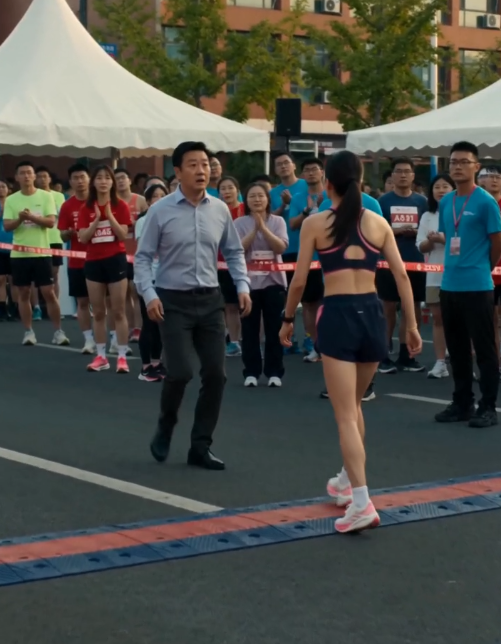
I blinked. The wind whipped my ponytail across my face. “You never retire. You told me the firm was your life. You told me family was a distraction.”
“The firm was a cage,” he said. He looked down at the blue box. His hands were trembling. “Your mother… she didn’t just die from the cancer, Maya. She died from the stress. The stress I caused. I was so obsessed with making senior partner that I didn’t see her fading. I didn’t see you fading. I missed her last birthday. I missed your graduation. I was a ghost in my own house.”
My stomach twisted into a tight, painful knot. The crowd around us blurred into a sea of neon running shirts. I remembered the empty chair at the funeral. I remembered the cold silence of the house after the guests left.
“I spent the last five years paying for my arrogance,” he continued. His voice dropped to a harsh whisper, cracking on the last word. “I paid off the medical bills. I donated her art collection to the hospital. I liquidated the portfolio. But I couldn’t look at you. Because every time I saw you, I saw her. And I saw the father who wasn’t there.”
He opened the box. Inside wasn’t a medal. It wasn’t a check. It was a silver stopwatch. The glass was scratched. The leather strap was frayed and worn smooth.
My breath hitched. I stopped shivering. “Mom’s stopwatch.”
“She gave it to me the day you were born,” Arthur said. A tear slipped down his weathered cheek, catching the dull morning light. “She told me to give it to you when you finished your first race on your own. When you proved you didn’t need me to push you. When you proved you were stronger than I was.”
He looked up at the digital clock, then back at me. “You signed up for the Lakefront 10K. Your mother ran this exact course in 1998. She finished in 15 minutes and 40 seconds. You finished in 15:42. You beat her time, Maya. You beat her time.”
I reached out. My trembling fingers brushed the cold silver. I had run ten miles to escape him. I had run to prove I didn’t need him. But I had crossed the finish line to find myself.
I looked up at him. The arrogant senior partner was gone. In his place stood a broken, grieving man who had finally learned how to love.
“I finished, Dad,” I whispered.
He didn’t say anything. He just stepped forward and wrapped his arms around me. He smelled like old paper and expensive cologne. I buried my face in his light blue shirt, the silver stopwatch pressed tight against my chest, while the lake wind blew cold across the finish line.