I stood on the stage with the blue ribbon heavy against my chest and tried to keep my face still while they read the citation.
The general at the podium had a voice like gravel. “For conspicuous gallantry and intrepidity at the risk of his life above and beyond the call of duty…”
I kept my eyes on the back wall. My wife was in the front row holding our daughter’s hand. My mother was already dabbing her eyes with a tissue.
I had practiced this moment in my head for weeks. I would thank the Marines I served with. I would say the real heroes were the ones who didn’t come home. I would try not to cry.
Then I heard the chair.
It was the kind of sound that makes every head in a room turn.
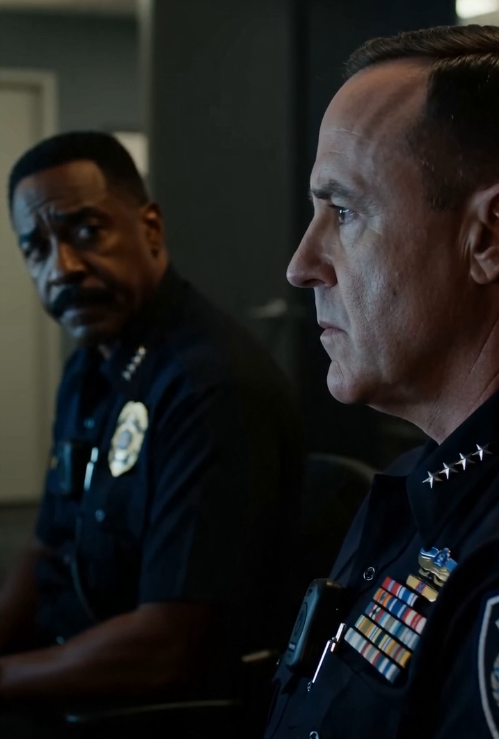
An old man in a uniform that looked older than I was slowly rose to his feet in the third row. Four silver stars on his shoulders. A chest full of ribbons I didn’t recognize. He used a polished wooden cane to steady himself.
He looked directly at me.
“He was unconscious when the vehicle was hit,” the old general said. His voice was not loud, but it carried. “The rescue happened after Captain Reyes had already fallen.”
A murmur ran through the crowd.
I felt my wife’s eyes on me. I didn’t dare look at her.
The old man continued. “Private First Class Thomas Reilly — nineteen years old — pulled Captain Reyes from the burning vehicle. He carried him three hundred meters under fire while taking two rounds himself. He got the captain to the casualty collection point, then went back for the others. He was never seen again.”
The old general’s hand shook as he pointed at the medal around my neck.
“That medal belongs to him.”
I felt like someone had poured ice water down my spine.
Because I remembered the explosion. I remembered the world going white and then nothing. I had woken up three days later in a hospital in Germany with burns on my arms and a story already written for me.
They told me I had saved my men.
I had believed them.
I had let my wife believe them. My daughter. My mother.
I had worn the uniform and accepted the thanks and the handshakes and the quiet respect in every room I walked into.
And I had never once asked what happened to the private who was listed as missing in action that same day.
I reached up with both hands and lifted the medal over my head. The ribbon caught on my ear for a second before it came free.
I walked off the stage, past the stunned dignitaries, straight down the aisle to where the old general was still standing.
I stopped in front of him and held the medal out with both hands.
“Sir,” I said, and my voice cracked on the word, “I didn’t know.”
He looked at me for a long time. His eyes were pale blue and very tired.
“I know you didn’t,” he said finally. “That’s why I stood up.”
He didn’t take the medal.
“Thomas Reilly’s mother is still alive,” he said. “She lives in Ohio. She’s been waiting twenty-five years for someone to tell her what her son actually did.”
He turned and slowly walked out of the hall, leaning on his cane.
I stood there holding the medal until my wife came and took my hand.
Three weeks later I flew to Ohio with the medal in a wooden box.
I sat with Mrs. Reilly on her front porch for four hours. I told her everything I could remember about the day her son saved my life. I told her he was brave. I told her he was the reason I came home.
When I left, I left the medal with her.
She didn’t want it at first.
I told her it had never really belonged to me.
Some nights I still wake up reaching for it around my neck.
But then I remember the old general’s voice in that quiet hall.
And I remember that the real story — the one that mattered — finally got told.