Victoria’s heels clicked sharply against the hardwood as she stepped into the aisle. The sound was like a metronome counting down to an execution. She stared at the yellowed envelope in my hand.
“That’s a prop,” she said. Her voice was tight, vibrating with a controlled rage. “You’re a theater kid, Leo. You’re playing a game.”
Arthur didn’t sit down. He stood tall, his brown jacket hanging off his thin shoulders. He looked at the stage, his eyes tracing the ghost lights.
“It’s not a game, Victoria,” Arthur said. His voice was steady, carrying the rich, resonant baritone that had sold out this very house for forty years. “It’s a contract.”
I walked down the rest of the aisle. I stopped three feet from her. The smell of her expensive perfume mixed with the musty scent of the old theater.
“Open it,” I said. I held out the envelope.
Victoria didn’t take it. She crossed her arms, the black blazer pulling tight across her chest.
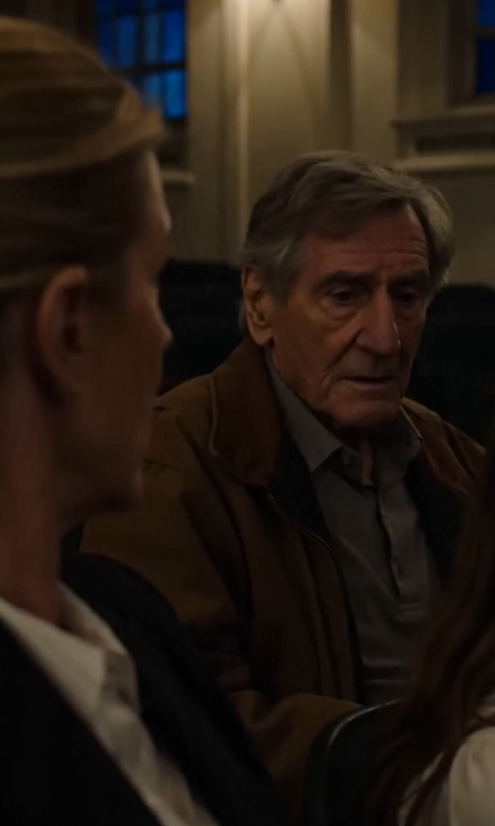
“I don’t need to open it. The bank holds the primary mortgage. If Arthur misses the payment on Friday, we own the building. It’s that simple.”
“The bank holds a mortgage on the physical structure,” I corrected her. “Not the land. And not the operating trust.”
She let out a short, dismissive laugh. “There is no operating trust. I’ve been trying to buy this dump for six months. My team ran the title search three times.”
“Your team ran a title search on Arthur Vance,” I said. “They didn’t run it on the Majestic Theater Foundation.”
Arthur reached out. His trembling hand took the envelope from me. He didn’t open it. He just held it against his chest, like a shield.
“You tried to bully a sick old man,” Arthur said, looking directly at Victoria. “You thought because my memory was fading, my legal rights were fading too. You thought I wouldn’t remember.”
“I thought you were senile,” Victoria snapped. The polite corporate mask slipped. Her face twisted in disgust. “You are a relic, Arthur. This building is a fire hazard. It’s a tear-down. I’m doing you a favor.”
She took a step toward him. “Give me the paper, Arthur. Don’t make me call security to drag you out.”
My heart hammered against my ribs. I stepped between them. I’m six feet tall, but she had the energy of a freight train.
“Touch him, and I’ll have you arrested for elder abuse,” I said. My voice was dead calm. “And I have the security cameras from the lobby recording this entire conversation.”
She froze. Her eyes darted to the small black dome camera in the corner of the ceiling.
“You’re bluffing,” she whispered.
“Am I?” I pulled my phone from my pocket. I tapped the screen. The auditorium’s ancient PA system crackled to life.
The sound of Victoria’s voice echoed through the speakers, loud and clear.
“If you don’t sign today, the bank forecloses tomorrow. You’ll be on the street.”
Then my voice.
“Touch him, and I’ll have you arrested.”
Victoria’s face drained of color. She looked like a wax figure melting under the stage lights.
“You recorded us,” she breathed.
“In the state of Illinois, one-party consent is legal for recording conversations where there is no expectation of privacy in a public commercial space,” I said. “And I’m the other party.”
Arthur finally opened the envelope. He pulled out a thick stack of legal documents, bound in red tape. The paper was heavy, official.
“In 1998,” Arthur said, his voice filling the silent theater, “I transferred the deed of the Majestic Theater into a blind trust. The beneficiary is my grandson, Leo Vance. The trust stipulates that the property cannot be sold, mortgaged, or transferred without the unanimous consent of the three original trustees.”
He looked at Victoria. His eyes were sharp, clear, and utterly merciless.
“The three trustees were me, my late wife, and the Mayor of Chicago. My wife is dead. The Mayor is dead. And I am the only one left.”
He paused. The silence in the room was absolute. The dust motes danced in the single beam of light from the stage.
“And I do not consent,” Arthur said.
Victoria stared at the documents. She looked at the red tape. She looked at the notary seals.
“This… this means the mortgage is invalid,” she stammered. “The bank can’t foreclose if the borrower doesn’t own the collateral.”
“Exactly,” I said. “The bank called me this morning. They realized their mistake. They’re restructuring the loan under the trust’s name. The payments are manageable now.”
Victoria took a step back. Her heels clicked again, but this time it sounded weak. Defeated.
“You planned this,” she said. She looked at me, then at Arthur. “You let me come here. You let me threaten him. You let me record myself.”
“We needed proof of your coercion,” I said. “The bank required it to void your predatory lending clause. You just provided it.”
She looked around the empty theater. The folding chairs. The peeling paint on the balcony. The red velvet curtains. It wasn’t a dump to us. It was a cathedral.
“You’re making a mistake,” she said quietly. “This place will never make a profit. You’ll go bankrupt anyway.”
“Maybe,” I said. “But it will be on our terms.”
Arthur folded the documents carefully. He placed them back in the yellowed envelope and handed it to me.
“Come on, Leo,” he said. His voice was softer now. The booming actor was gone, replaced by the tired old man. “Let’s go home.”
I took his arm. He leaned on me slightly as we walked down the aisle.
Victoria didn’t move. She just stood there in the dark, holding her empty leather folio, watching us walk toward the exit.
I pushed open the heavy wooden doors of the theater. The bright afternoon sun from the Chicago street spilled into the dark hallway.
Arthur stepped out into the light, and I let the heavy doors close behind us.