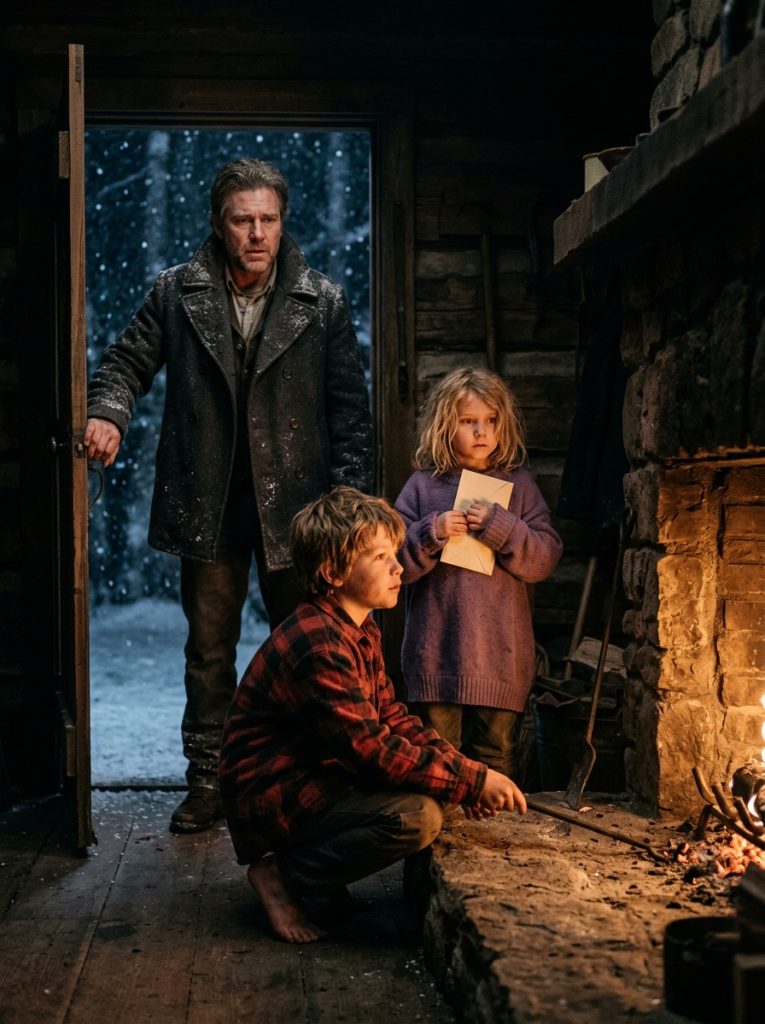
Thomas opened the envelope with shaking hands.
Claire’s handwriting. Neat. Small. The same careful script she’d used for grocery lists and love notes and the card she left on his pillow the morning she went into the hospital for the last time.
The paper was dated three years ago. The week she died.
“My dearest Thomas,
I’m writing this from the cabin. The kids are asleep by the fire. I can hear their breathing from here — it’s the most peaceful sound I’ve ever known, next to yours.
I need to tell you something I should have told you months ago. But I was afraid. Not of you. Of what you’d say. Of what it would mean.
Six months before my diagnosis, I found two children in the woods behind our property. Caleb and Sophie. Brother and sister. Running from a house I won’t describe in this letter because you don’t need those images in your head.
I brought them inside. Fed them. Clothed them. And made a decision I never consulted you about.
I kept them.
Not legally. I started the process, but the diagnosis came before the paperwork was done. And after that — everything moved too fast.
I asked Margaret Patterson to check on them. To bring food. To keep the fire lit. I left money — enough for a year, I thought. Maybe more.
I told the children someone would come for them. I told them it would be you.
I know that’s unfair.
I know you’re grieving. I know you haven’t been back to the cabin. I know you might not come for a long time.
But Thomas — these children are real. They’re here. They’re alive because I found them, and they’ll stay alive because of whoever comes next.
I’m asking you to be that person.
Not because you owe me. Not because it’s easy. Because I know your heart. And I know that if you’d been there the night I found them in those woods — barefoot, terrified, holding each other — you would have done exactly what I did.
You would have opened the door.
Please open it now.
I love you. I love them. And I’m sorry I ran out of time to make this right.
Claire.”
Thomas read it three times.
The fire crackled behind him. Sophie hadn’t moved. Caleb was watching — not with fear anymore, but with something that looked dangerously close to hope.
“She left you a letter too,” Sophie said softly.
Thomas looked up.
“What?”
“There’s another one. In the box under the loose floorboard. She said that one was for after you read the first one.”
Thomas stared at her.
This child knew things about his wife’s cabin that he didn’t know.
He found the floorboard. Under the rocking chair by the window — Claire’s chair. The board lifted easily. Beneath it: a metal lockbox. Inside: more letters. A folder of documents. And a photograph.
The photograph showed Claire. Sitting on this porch. Summer. Smiling wider than Thomas had seen in the last year of her life.
Caleb on one side of her. Sophie on the other.
All three laughing.
Thomas held the photo and felt the full weight of what his grief had cost.
Three years.
Three years these children had waited. Three years of Margaret Patterson driving up the mountain with groceries and firewood and the kind of care a seventy-eight-year-old woman shouldn’t have to carry alone.
Three years of Caleb keeping the fire lit because a dying woman told him to.
Three years of Sophie holding a letter she couldn’t read, waiting for a man she’d never met.
Because Thomas was too broken to come back.
The documents confirmed what Claire’s letter said. She’d filed preliminary foster paperwork. It was incomplete — expired now, but it showed intent. It showed names. It showed a caseworker who’d been assigned and never followed up after Claire’s death.
The system had failed.
And Margaret had filled the gap.
But Margaret was seventy-eight. And last month, according to the date on a note pinned to the refrigerator, she’d had a fall. Broken her hip. Was recovering at her daughter’s house in town.
The groceries in the pantry were running low.
The firewood pile was almost gone.
And two children had been alone for eleven days.
Thomas put the photo down.
Looked at Caleb.
Looked at Sophie.
“Are you hungry?”
Caleb nodded. Slowly.
Sophie nodded faster.
“Okay.” Thomas stood up. Brushed off his coat. Walked to the kitchen.
The pantry was sparse. Canned soup. Rice. A bag of dried beans. Enough to last maybe three more days.
He heated soup. Found bowls. Set them on the table.
The children came to the table without being called — like they’d been trained to appear when food was ready but not before.
They ate in silence.
But a different silence than before. Not the silence of fear.
The silence of waiting to see if this was real.
Thomas watched them eat.
Advertisement
And felt something shift inside him. Not healing — it was too early for that. Not even forgiveness, for himself or for the time he’d lost.
Just clarity.
The understanding that grief had a deadline now.
Because these children were alive.
And alive requires showing up.
After dinner, Thomas carried wood in from the last of the pile outside. Built the fire back up. Properly this time — logs stacked, kindling beneath, flame steady.
Caleb watched him.
“You know how to do that,” Caleb said. Not a question.
“Claire taught me.”
Caleb nodded. Like that made sense. Like they shared something now — a woman who’d taught them both to keep a fire burning.
“She said you were kind,” Sophie offered from the couch, wrapped in a blanket, eyes half-closed.
“What else did she say?”
“That you were sad. But that sad people can still love.”
Thomas’s hands stilled on the poker.
Claire. Even from beyond. Even from a letter dated three years ago. Still teaching him things he needed to hear.
“She was right,” Thomas said.
Sophie smiled.
Small.
Careful.
But real.
The next morning, Thomas drove to town. Bought groceries. Called a lawyer. Called the Department of Social Services. Called Margaret Patterson’s daughter to thank her — and to promise that the children would not be alone again.
The legal process took four months.
Emergency placement. Background checks. Home studies. Court appearances.
Thomas sold the Richmond apartment.
Moved to the cabin full-time.
Repaired the porch. Stacked firewood for winter. Enrolled Caleb in the county school. Found Sophie a speech therapist for the stutter she’d hidden under silence.
He didn’t replace Claire.
Nothing could.
But he could continue what she started.
On the day the adoption was finalized — a bright Tuesday in April, eight months after he’d first stood in that doorway — the judge asked Caleb and Sophie if they had anything to say.
Caleb looked at Thomas.
“The fire never went out,” he said.
The judge smiled.
“And now it won’t have to,” she said.
Sophie reached up and took Thomas’s hand.
Small fingers. Still cautious.
But holding on.
And Thomas held back.
The way Claire would have.
The way he should have, three years ago.
But the thing about fire is this:
It doesn’t care how late you arrive.
Only that you keep it burning once you do.
And Thomas did.