I stood there frozen, my hand still resting on Mrs. Lorraine Beck’s shoulder, while Harlan Voss’s face turned the color of old brick.
“Deputy Santos, I gave you a direct order,” he barked. His voice bounced off the high ceiling. “Remove her or I call Chief Donnelly myself.”
Mrs. Beck didn’t flinch. She simply reached up, patted the back of my hand once, like she was comforting me, and stood on her own. The folding chair scraped the old wooden floor.
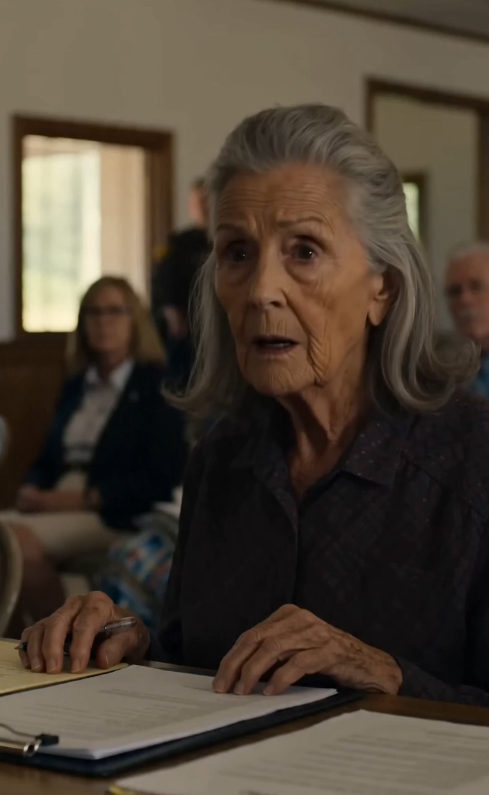
“I’ll go,” she said quietly. “But before I do, you should know the name of the woman who actually kept those people alive when your evacuation plan left them behind.”
She looked straight at Harlan Voss. “Her name was Lorraine Beck. She was seventy-nine years old then too. She used her own canned food, her own blankets, and the last of her savings to feed forty-seven people — children, old folks, a woman in labor — for three days while the water rose to her second-floor windows. And when the National Guard finally reached her street, she made them take the children first.”
A murmur ran through the room. Someone in the back row whispered, “That’s the Beck house on Maple.”
I felt my throat close. My grandmother’s name was Elena Santos. She had been one of those forty-seven.
Harlan Voss slammed both palms on the table. “This is ancient history! We are here to honor progress, not dredge up every sob story from the last century!”
Mrs. Beck kept her voice even. “Progress doesn’t erase what happened to the people on the wrong side of the tracks. You ordered the barriers closed on the south side to protect the downtown businesses you owned shares in. My house sat in six feet of water because of that choice. I still have the water line on my kitchen wall. You can come see it if you like.”
I took one step forward so I was standing beside her instead of behind her. My bodycam light was still red. Recording.
“Sir,” I said, surprised my voice didn’t shake, “maybe the council should hear the rest before they vote on naming anything after anybody.”
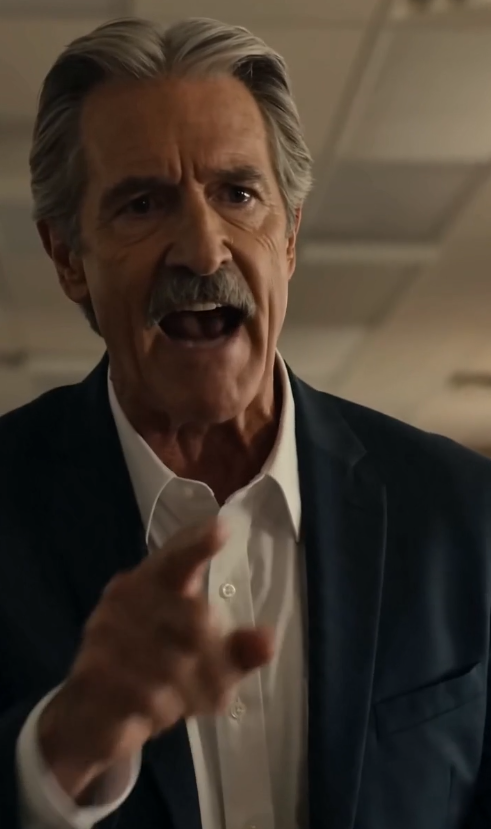
Harlan Voss’s eyes snapped to me like I had slapped him. “You’re finished, Santos. You hear me? Finished.”
Mrs. Beck turned to me. For the first time she smiled, small and tired. “It’s all right, Deputy. I’ve lived with this a long time. You don’t have to lose your job over an old woman and a flood nobody wants to remember.”
I looked at the badge on my chest. Then at the flag. Then at the faces in the folding chairs — some confused, some starting to remember, one woman in the second row already crying quietly into a tissue.
I keyed my radio. “Dispatch, this is Santos at city hall. I’m going to need a supervisor here. Code yellow. No immediate threat, but we have a situation that needs documentation.”
Harlan Voss’s mouth opened and closed like a fish pulled onto a dock.
Mrs. Beck walked toward the side door on her own. She moved slowly, one hand brushing the backs of the chairs for balance. I stayed right beside her the whole way. When we reached the hallway, she stopped and looked up at me.
“Your grandmother made the best corn chowder I ever tasted,” she said softly, so only I could hear. “She kept the little ones calm by telling them stories about her own mother coming over from Mexico. I still remember her voice.”
My eyes burned. I blinked hard.
Outside, the afternoon light hit the old brick of city hall. Mrs. Beck’s car was an ancient Buick with a faded “Support Our Troops” sticker on the bumper. She opened the driver’s door, then paused.
“You did the right thing in there, Jake,” she said. She knew my first name. I never told her. “Most men would have just followed the order.”
I helped her into the car even though she didn’t need it. Before I closed the door she reached into the glove box and pulled out a small, creased photograph. Black and white. A much younger Lorraine Beck standing in front of a flooded house, arm around a young woman holding a baby. My grandmother.
“Keep it,” she said. “Your family already paid the price once. No sense paying it again by forgetting.”
I watched her drive away, the Buick’s tail lights disappearing around the corner. Then I walked back inside.
Harlan Voss was still at the podium, but the room had changed. People were standing now. Two council members had moved their chairs away from him. Someone had started recording on their phone.
I stood at the back again, bodycam still running, and for the first time in six years I felt like the badge on my chest actually meant something.
Two weeks later the council voted 5-2 to table the naming of the park. Harlan Voss resigned before they could finish the investigation. The local paper ran the story with my bodycam footage and Mrs. Beck’s name in the headline: “The Woman Who Hid Half the Town.”
I still drive past her house on Maple sometimes. The water line is still there on the siding, about four feet up. She waves from the porch when she sees the patrol car.
Some nights I take the old photograph out of my wallet and look at it under the dome light. My grandmother smiling in the middle of a flood, standing next to the woman who saved her.
I keep meaning to stop by and return it.
I haven’t yet.