Lena Voss had waited three years for this hearing. Not the official one with the cameras and the stenographer. The real one that happened in rooms like this when powerful men were forced to sit still and listen. Her brother Marcus had been twenty-four when the Internal Affairs investigation closed. A rookie cop with a clean record and a habit of writing down everything. He had stumbled onto a pattern — overtime fraud, evidence rooms that emptied before cases went to trial, a network of favors that reached the chief’s office. When he refused to look the other way, the department found a way to make him the problem instead of the solution.
They built a case on a confidential informant who later recanted. They leaked photos to the press of Marcus leaving a bar with a woman who turned out to be the girlfriend of a man he had arrested. The promotion Harlan received two months later was announced the same week Marcus took a plea to avoid a trial that would have destroyed what was left of their mother’s health.
In the hearing room Lena kept her voice even. She had learned that anger made powerful men feel justified. Calm made them nervous.
“His name is Marcus Daniel Voss,” she said. “He is my brother. He is also the man whose body camera footage from the night in question was ‘accidentally’ erased from the server the same week you received your commendation for cleaning up the evidence room. The same evidence room that somehow lost two kilos of cocaine and a stack of cash that was never logged.”
Harlan’s mouth opened then closed. His eyes flicked to his lawyer at the side table. The lawyer was already shaking his head.
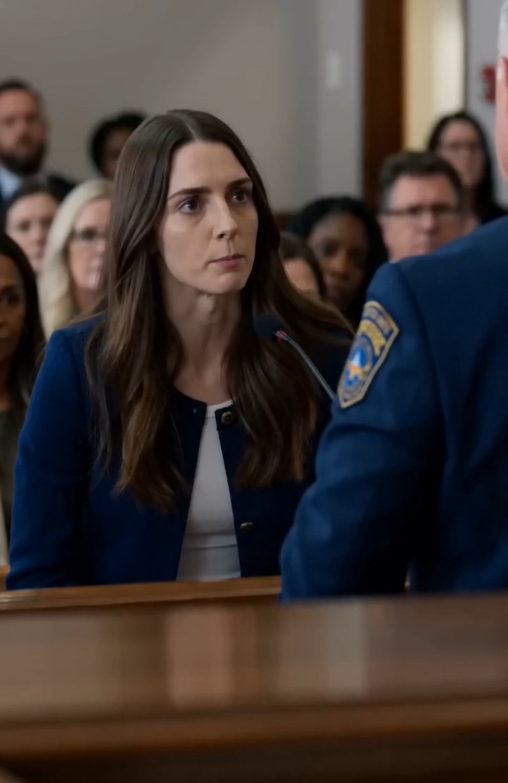
Lena continued. “You told the review board that Marcus was a bad apple who panicked under pressure. What you didn’t tell them was that your brother — your actual blood brother — called you the night before the arrest and asked you to make sure ‘the kid with the notebook’ stayed quiet. We have the phone records. We have the witness who heard the call. And we have the letter Marcus wrote to Internal Affairs two days before they took his badge.”
She slid a single sheet of paper across the table. It stopped just short of the microphones.
“Say his name, Chief. Not because I need to hear it. Because every person in this room who still believes in the uniform deserves to hear you say it out loud.”
Harlan looked at the letter. Then at Lena. The cameras kept rolling. For the first time in thirty years of wearing the badge, he had no answer that would save him. The flag behind him suddenly looked smaller. Lena Voss sat back in her chair, her hands still folded, and waited for the man who had taken everything from her brother to finally give something back — even if it was only a name.