Sarah had spent weeks going door to door in the tight-knit Edgewood neighborhood. Families scraped together every penny, nickel, and crumpled bill they could find. Their modest community center — built by their own hands over decades — was slated for demolition by a large development firm.
She walked into the polished offices of Rorte Roter Properties with the sack over her shoulder. The receptionist, Ms. Caldwell, barely hid her amusement at first.
But when Sarah quietly explained that this was the collective savings of 43 families fighting for their home, the mood shifted.
The firm’s regional director, Mr. Harlan, emerged from his office. He had been the one pushing the project. As Sarah spoke, her voice steady and eyes clear, he saw the faces of the community she represented — the elderly who played cards there, the children who learned after school, the families who gathered for holidays.
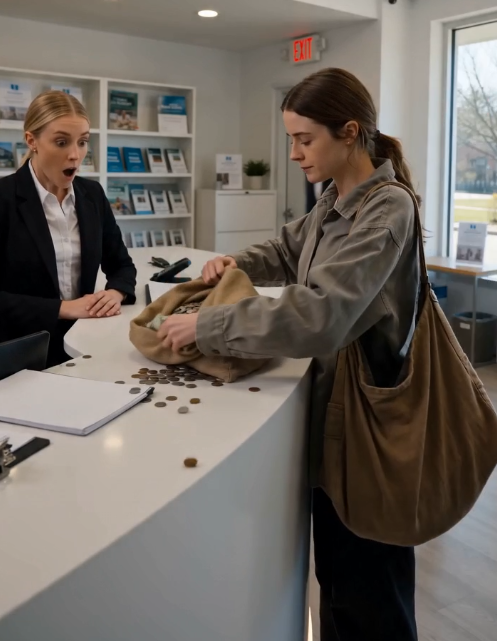
Harlan initially resisted, citing contracts and profits. But Sarah placed a small photo on the counter: the community center filled with laughing neighbors.
Moved by the raw determination and the sheer number of people who had contributed, Harlan called an emergency meeting. The company ultimately agreed to sell the property back at a significantly reduced price, funded in part by corporate goodwill and matching donations.
The community center was saved. Sarah became a local hero, and the event sparked a larger movement for preserving neighborhood landmarks. Years later, she used the same spirit of collective action to start a nonprofit helping other communities protect what mattered most to them.