I was standing in the cafeteria line holding my tray when the older woman behind the counter suddenly stopped moving.
She had been scooping mashed potatoes onto a student’s plate, but when she looked up and saw me, her hands went still. Her eyes — dark and kind and very tired — studied my face like she was trying to solve a puzzle.
“You said that in fourth grade,” she said.
I glanced behind me, thinking she was talking to someone else.
“Excuse me?” I asked.
She stepped closer to the counter. Her name tag read “Miss Ruth” in faded letters. She had to be in her late seventies now, but her back was still straight and her voice was steady.
“During the lockdown,” she said. “You hid under my table. You kept saying, ‘I want my mama.’ I told you the police were coming.”
The noise of the cafeteria — kids laughing, trays clattering, chairs scraping — seemed to fade into the background.
I was nine years old when it happened. A man with a gun had entered the building. We were already in the cafeteria for early lunch. Miss Ruth had been the one who told everyone to get down. I had crawled under the table closest to the serving line because I was too scared to move farther.
She had stayed standing the whole time, her body between us and the door, one hand resting on the table above my head like she could shield all of us at once. She had sung to us. The same song, over and over, until the police finally came.
I never knew her last name. I never saw her again after my family moved away that summer.
And now she was standing in front of me, thirty years later, in the exact same cafeteria.
“You had on a blue shirt with a dinosaur on it,” she said softly. “You kept whispering that you were sorry for getting your pants dirty.”
I felt something tight in my chest.
“I remember your hand,” I told her. “You kept patting the table so we would know you were still there.”
Miss Ruth smiled, but her eyes were shining.
“I didn’t know what else to do,” she said. “The police told us to stay quiet, so I sang. I figured if I kept singing, maybe you kids would think everything was going to be okay.”
She reached across the stainless steel counter and touched the badge on my chest with one finger.
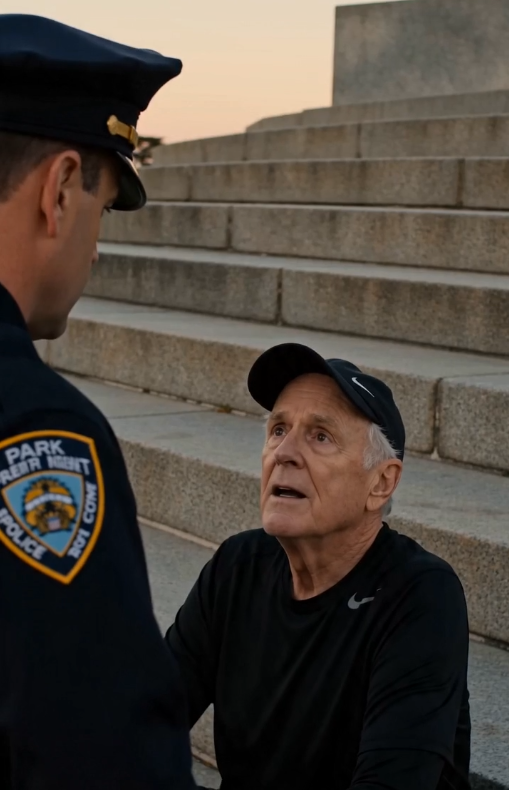
“Look at you now,” she whispered. “You became one of the ones who came through the door.”
I had to clear my throat twice before I could speak.
“I became a police officer because of that day,” I said. “Because someone stayed with us when they didn’t have to. Because someone made us feel safe when everything was falling apart.”
Miss Ruth wiped her eyes with the corner of her apron.
“I’m still here,” she said. “Still feeding these babies every day. Still standing in the same spot.”
She looked at me for a long moment.
“I’m proud of you, baby,” she said. “Real proud. Your mama would be too.”
I stayed in that cafeteria for another twenty minutes, even though I was supposed to be moving on to the next classroom. I helped her serve the last few kids. When the bell rang and the children started filing out, she reached over and squeezed my hand one more time.
“Next time you come,” she said, “you don’t have to stand in line. You come straight back here and I’ll fix you a plate myself.”
I nodded, because my throat was too tight to answer.
Some people save your life once and disappear.
Others stay in the same place for thirty years, still saving children every single day — just in quieter ways.