The replies came faster than I expected.
Within ten minutes of sending that message to the original forty creators’ group chat, eight people had responded. Within an hour, twenty-two. By morning, thirty-one of the original forty early-access creators had confirmed they still held vested equity and they were ready to use it.
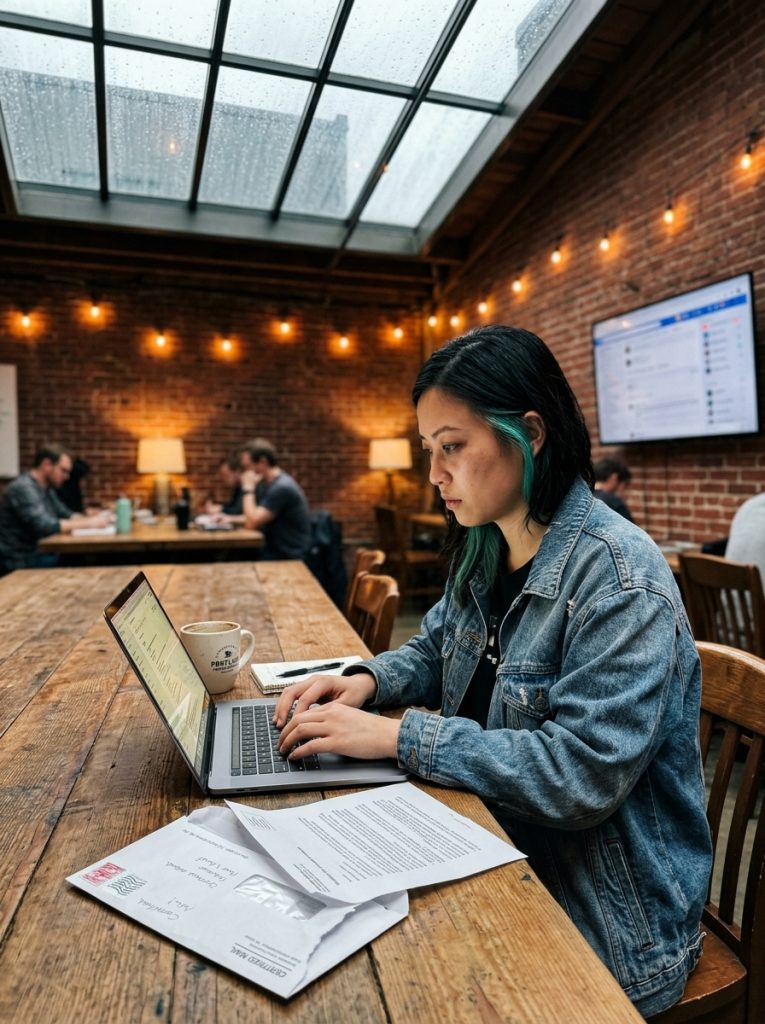
I sat at my co-working desk in Portland with rain hammering the skylights and I watched the chat fill up with names I hadn’t seen in two years.
“I’m in. What do you need?” — Marcus, documentary filmmaker from Chicago.
“They tried to cancel me last year too. Nobody showed up. I’m showing up for you.” — Deja, fashion creator from Atlanta.
“I still have my shares. I didn’t even know what they were worth until you sent this. Count me in.” — Tom, woodworking channel from Vermont.
Thirty-one creators. All holding equity from the early-access program. All quiet for years because nobody had ever told them those shares meant anything beyond a PDF in an email.
But they meant something now.
Combined, the original forty held 4.2% of outstanding shares. Not a controlling stake. But enough — under the platform’s corporate bylaws — to invoke a board-observer seat and request an emergency governance review.
I didn’t sleep that night. I read the bylaws three times. I called my friend Mel, who’s a corporate attorney in Seattle. She read them twice more.
“You have standing,” she said at 6 AM. “You can invoke the observer seat and formally request a review of the platform’s content moderation decisions as they relate to coordinated harassment campaigns.”
“Can they ignore us?”
“Not without violating their own governance charter. Which they filed with the SEC when they went public last year.”
I hung up. I opened my laptop. I drafted the formal letter.
By 9 AM, it was signed by thirty-one creators and sent via certified mail to the platform’s general counsel.
The response came in four hours. Not a rejection. An acknowledgment. And an invitation to attend the next quarterly board meeting as observers — scheduled for the following Tuesday.
Jordan Kade found out about the letter on Thursday.
I know because his video went up at 2 PM Pacific. Same ring light. Same branded hoodie. Same smug expression.
“So apparently some legacy creators think they own the platform because they joined early.” He laughed. “That’s not how equity works, people. You can’t just—”
The comments told a different story.
Because the community had started to shift. The same people who’d flooded my DMs with hate a week earlier were now reading the thread my friends had posted — a factual timeline of the cancel campaign, the coordinated mass-reporting, the templated brand-partner emails that all went out within the same hour.
People saw the pattern.
And patterns are harder to defend than emotions.
By the weekend, three of Jordan’s Coalition members had publicly distanced themselves. One posted a statement saying she’d been pressured to participate. Another deleted his original video.
Tuesday came.
I put on my denim jacket. I took the equity statement. I took the bylaws printout. And I took a train to San Francisco.
The boardroom was on the thirty-second floor of a glass tower south of Market. Mel came with me. So did Marcus and Deja, who’d flown in the night before.
Ms. Okafor — the platform’s Head of Creator Relations, forties, tailored burgundy blazer — met us in the lobby. She shook my hand.
“Ava. Thank you for being here.”
“Thank you for letting us in.”
She smiled. It wasn’t corporate-friendly. It was real.
“I’ve been trying to get this conversation on the board agenda for six months,” she said quietly. “Your letter gave me the leverage.”
We sat in observer seats along the wall. The board — seven people around a polished table — went through their agenda. Financials. Growth metrics. Advertiser retention.
Then item seven: “Coordinated Harassment Policy Review.”
Ms. Okafor presented. She showed the data. The mass-report timestamps. The brand-partner email templates. The follower-purge patterns that all originated from accounts connected to Jordan Kade’s Coalition.
The board listened.
They asked questions.
They looked at us — the four creators sitting along the wall with our equity statements and our tired eyes and our quiet determination.
Then the chair said: “Recommendation?”
Ms. Okafor pulled up a slide. “Immediate enforcement of Section 4.7 — Coordinated Inauthentic Behavior. The accounts that organized and executed this campaign violated terms of service. The affected creator’s content should be restored and spotlighted per our algorithmic fairness protocol.”
“Motion to approve?” the chair said.
Unanimous.
Seven hands.
I exhaled so hard my shoulders dropped three inches.
Mel squeezed my arm.
Marcus put his head in his hands — not from despair. From relief.
And Deja — Deja, who’d been canceled last year and nobody had shown up — she was crying.
My account was restored by the end of the day. Not just restored — featured. The algorithm pushed my content to people who’d never seen it before. My follower count didn’t just recover — it doubled within a week.
But that wasn’t the part that mattered.
The part that mattered was the group chat. The thirty-one creators who showed up. The original forty — well, thirty-one of them — who remembered what this platform was before it became a place where people like Jordan Kade could weaponize community.
We built this. Together. When it was nothing. When there were forty of us and no money and no algorithm and just — ideas. Content. Connection.
Jordan Kade’s account wasn’t banned. The board decided that was outside their scope for this meeting. But his Coalition was flagged. His coordinated reporting privileges were revoked. And three brands quietly ended partnerships with him in the following month.
He’s still online. Still posting. Still ring-lit and branded.
But the power he had — the ability to point at someone and make them disappear — is gone.
I’m back at my co-working desk now. Rain on the skylights. String lights along the brick. Laptop open. Coffee half-empty.
The certified letter — the equity statement that started all of this — is framed on my wall. Not because of the money. Not because of the shares.
Because it reminded me that I wasn’t alone.
That I’d never been alone.
That the community I thought I’d lost was always there — scattered, quiet, holding their shares and their memories and their willingness to show up — waiting for someone to send the message.
I sent the message.
Advertisement
They showed up.
And that’s the whole story.
Almost.
One more thing.
Last week, a new creator joined the platform. Nineteen years old. Makes videos about thrift fashion and body positivity. Twenty-three followers. Her first video got sixty views.
She sent me a DM. One line: “I just started and I’m already scared. Any advice?”
I responded immediately.
“Make the work you believe in. Document everything. Save every email. And if anyone ever tries to make you disappear — find your people. They’re closer than you think.”
She wrote back: “Thank you. I don’t know anyone here yet.”
I added her to a group chat. Not the original forty. A new one. Creators who’ve been through it. Creators who survived. Creators who know what it feels like to wake up to a wall of red notifications and wonder if your work matters.
It matters.
It always mattered.
The platform didn’t save me. The equity didn’t save me. The bylaws didn’t save me.
People saved me.
Marcus on the first flight from Chicago. Deja crying in a boardroom. Tom from Vermont who’d never met me in person but sent a voice message at midnight saying “I’ve got your back, kid.”
Mel reading corporate law at 6 AM because her friend needed her.
Ms. Okafor waiting six months for the right moment to push a policy change.
Community.
Not the word Jordan uses. The real thing. The thing that shows up when showing up costs something.
I close my laptop.
The rain has stopped. Portland sunlight breaks through the skylights — rare and golden.
I pick up my coffee. It’s cold but I drink it anyway.
And on the brick wall behind me, framed in simple black, the equity statement catches the light.
Four point two percent of something bigger than any one creator.
But enough.
It was always enough.