The Signature That Held My Husband’s Empire and My Parents’ Luxury Home Together
PART 3 (FULL STORY)
The message stayed on my screen long after my attorney stopped typing.
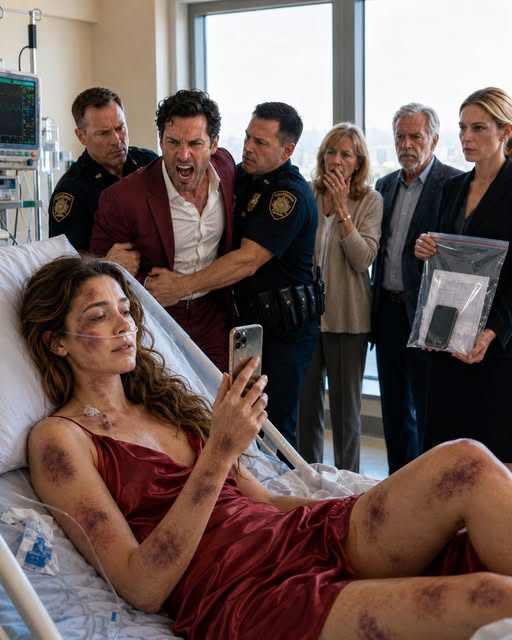
I read it again, then locked my phone beneath the hospital blanket as a nurse came in to check the IV in my arm.
“Everything okay?” she asked.
I almost laughed.
“No,” I said. “But I think it’s finally going to be.”
She adjusted the monitor and left.
A few minutes later, my attorney, Rebecca Hale, called.
Her voice was careful in the way lawyers speak when they know one sentence can change the direction of someone’s life.
“Charlotte, I need you to listen before you make any decisions.”
“I’m listening.”
“The seventeen transfers total just over six hundred thousand dollars.”
I closed my eyes.
“How?”
“Some were direct transfers. Some went through vendors connected to Andrews Development. A few were listed as consulting payments.”
“And the $80,000?”
“That one went to a company your father’s accountant controls.”
My throat tightened.
“What company?”
Rebecca gave me the name.
I knew it immediately.
It was an entity I had created years earlier to hold a small commercial property my parents owned.
At the time, I had structured it for liability protection.
My father had thanked me for saving them thousands in taxes and legal fees.
Apparently, he had learned how to use the structure without learning that I could still see the seams.
“Rebecca,” I said quietly, “does Garrett know?”
“I don’t know yet.”
“Then find out.”
There was a pause.
“I already started.”
That answer frightened me more than anything else.
Rebecca knew Garrett.
She had reviewed enough of his business paperwork over the years to understand how carefully he separated what belonged to him from what appeared to belong to someone else.
“What are you going to do?” I asked.
“First, protect you. Second, preserve the records. Third, make sure nobody moves another dollar before we understand the entire structure.”
“And my parents’ house?”
“If your guarantee is released properly, the lender will reassess their position.”
I looked toward the ceiling.
“They’re closing this week.”
“Not if the lender no longer has your guarantee.”
I felt something unfamiliar.
Not triumph.
Relief.
For seven years, I had believed I was trapped because Garrett controlled the money.
The truth was more complicated.
He controlled the money because I had spent years making sure the machinery underneath it worked.
I knew which entities owned which properties.
I knew which loans depended on which guarantees.
I knew which trusts had been created for legitimate estate planning and which agreements had quietly expanded beyond their original purpose.
And I knew where my signature appeared.
That signature had been treated like decoration.
Now it was evidence.
By morning, detectives had returned to the hospital.
One of them was a woman named Detective Morales.
She pulled a chair beside my bed and placed a folder on her lap.
“We need to go over what happened at your house,” she said.
I told her everything.
Not just the punches.
Not just the broken ribs.
I told her about the $80,000 transfer.
I told her about the years of excuses.
I told her what Garrett had said while I was lying on the kitchen floor.
“You would be nothing without me.”
Detective Morales wrote it down.
“Did anyone ever witness previous incidents?”
“I don’t know.”
“Did you tell anyone?”
“My parents.”
“And what did they do?”
I looked at her.
“They told me I knew what I was getting into.”
She stopped writing for a moment.
Then she asked, “Do you have access to your financial records?”
“Yes.”
“Don’t delete anything.”
“I won’t.”
“Don’t confront him either.”
“I won’t.”
That was the first time someone had said something to me that sounded like protection rather than criticism.
Garrett came to the hospital that afternoon.
He arrived carrying flowers.
White lilies.
The kind my mother used to bring whenever someone in the family was sick.
He stood at the doorway in an expensive suit, looking exhausted and concerned.
If I had been the woman I was seven years earlier, I might have believed him.
Instead, I looked at the flowers.
Then at his face.
Then at the security officer standing outside my room.
“Charlotte,” Garrett said softly.
“I heard you were awake.”
I didn’t answer.
He stepped closer.
“I don’t know what happened that night.”
The lie was almost effortless.
“I remember,” I said.
His expression changed.
Only slightly.
But I saw it.
Fear.
Not fear for me.
Fear of what I remembered.
“You fell,” he said.
“No.”
He looked toward the nurse.
“I think you’re confused because of the medication.”
“I remember you kicking me.”
His jaw tightened.
“You need rest.”
“I remember you telling me nobody would believe me.”
He stopped.
For the first time since I had known him, Garrett didn’t have an immediate answer.
Then his phone buzzed.
He checked it.
I saw his face drain.
“What happened?” I asked.
“Nothing.”
He left the flowers on the table.
“I’m going to give you some space.”
He walked out.
I waited until the door closed.
Then I picked up my phone.
Rebecca had sent me a photograph.
It was a copy of an internal transfer authorization.
My electronic signature appeared at the bottom.
But the timestamp was from a night when I had been out of the country.
I stared at it.
“I never signed this.”
Rebecca called immediately.
“We know.”
“How?”
“Your passport records place you in Toronto that night.”
I felt a cold pressure settle in my stomach.
“So someone forged my signature.”
“Yes.”
“Who?”
“We’re still tracing the login.”
I looked at the hospital ceiling again.
“Rebecca, how many?”
“Sixteen documents so far.”
Sixteen forged authorizations.
Not seventeen transfers.
Seventeen transfers, and at least sixteen suspicious signatures.
That evening, my parents finally came.
My mother entered first.
She wore a cream coat and carried a designer handbag I had helped her buy two Christmases ago.
My father followed her.
Neither looked at the bruising around my neck for long.
My mother sat beside the bed.
“Oh, Charlotte.”
She reached for my hand.
I moved it away.
Her fingers froze.
“We’ve been worried sick.”
“Have you?”
My father pulled a chair closer.
“We came to talk.”
“About me?”
“About the situation.”
There it was.
Not my injuries.
Not what Garrett had done.
The situation.
My mother lowered her voice.
“Garrett is under a tremendous amount of pressure.”
I almost smiled.
“My ribs are broken.”
“We know.”
“My lung was punctured.”
“We know.”
“And you’re explaining his stress?”
My father looked irritated.
“You don’t understand how complicated the business has become.”
“I understand it better than you do.”
That made him silent.
My mother leaned closer.
“You shouldn’t make decisions while you’re emotional.”
“I’ve made decisions while emotional for seven years.”
“Charlotte—”
“No.”
The word came out quietly.
That seemed to frighten her more than shouting would have.
“I called you because I needed my parents.”
My father looked away.
“We were trying to protect the family.”
“You protected Garrett.”
My mother shook her head.
“You’re married to him.”
“I was.”
She looked at me sharply.
My father finally understood.
“You’re leaving him.”
“Yes.”
He stood.
“You can’t do that right now.”
“Why?”
“Because there are financial obligations.”
I looked directly at him.
“Your financial obligations?”
His face changed.
My mother grabbed his arm.
“Don’t.”
I knew then.
They had already spoken to someone.
Maybe Garrett.
Maybe the accountant.
Maybe the bank.
But they were no longer asking me to forgive him.
They were asking me to keep the machine running.
Rebecca sent another message.
“Do not sign anything they bring you.”
I typed back.
“I won’t.”
My father took a slow breath.
“Charlotte, the house is scheduled to close Friday.”
“I know.”
“You guaranteed the loan.”
“I know.”
“If you withdraw that guarantee, the bank may refuse the financing.”
“Yes.”
My mother stared at me.
“You wouldn’t do that to us.”
I remembered her voice from the night I called.
You know how to set him off.
I remembered my father’s answer.
You chose him.
Now live with the consequences.
I looked at both of them.
“You chose the house.”
My mother’s eyes filled with tears.
“That isn’t fair.”
“No,” I said. “It wasn’t.”
Neither of them spoke.
I reached for the call button.
“I need my parents to leave.”
My father stared at me as if I had become someone he didn’t recognize.
Maybe I had.
Maybe I was simply the person they had spent years refusing to see.
They left.
The next forty-eight hours changed everything.
Rebecca obtained emergency orders protecting company records and preserving the financial evidence.
The bank paused the closing on my parents’ house.
Andrews Development’s outside accountant was questioned about several payments.
Detectives obtained the electronic access records for the documents carrying my forged signature.
The login had come from inside Garrett’s office.
Garrett stopped calling me.
That frightened me more than his calls had.
On Thursday morning, Rebecca arrived at the hospital.
She placed a thick folder on the table.
“We found the source.”
I opened it.
The access records showed that Garrett had logged into the compliance system repeatedly.
But he hadn’t done it alone.
Another name appeared beside his.
My father’s.
I stared at the page.
“No.”
Rebecca didn’t argue.
“Your father accessed the system six times.”
“For what?”
“To approve transfers and retrieve copies of your old signature files.”
I felt sick.
“So they worked together.”
“We don’t know the full extent yet.”
I turned another page.
There were emails.
Garrett asking my father for authorization.
My father warning him not to move money directly from certain accounts.
And one message from my mother.
It was short.
Keep Charlotte calm until the closing.
I put the page down.
For years, I had wondered why my parents never noticed.
Why they never asked why I wore long sleeves.
Why they believed Garrett’s excuses.
Why they seemed almost offended whenever I admitted I was unhappy.
They hadn’t been unaware.
They had been invested.
The realization hurt more than I expected.
Not because I had lost them.
I had already lost them the night they told me to endure my own broken body.
It hurt because I finally understood that I had spent years protecting people who had been protecting the life built around me.
Friday morning, Garrett was arrested.
The charges related to the assault were only the beginning.
The financial investigation continued separately.
He was not dragged away in front of cameras.
There was no dramatic confession.
He simply walked out of his office in handcuffs while employees watched from behind glass doors.
My father resigned from the board of Andrews Development before investigators could remove him.
My mother sold several personal assets to cover legal expenses.
The luxury house never closed.
The bank withdrew from the transaction after my guarantee was formally released.
A month later, I filed for divorce.
Garrett’s attorney tried to argue that the company had always been his.
Rebecca disagreed.
The records showed exactly how much of its structure depended on work I had performed, agreements I had drafted, and guarantees I had personally carried.
I didn’t ask for everything.
I asked for what was legally mine.
That distinction mattered to me.
I didn’t want Garrett’s life.
I wanted mine back.
Months passed.
My ribs healed slowly.
My breathing improved.
The bruises faded.
The first morning I walked outside without feeling pain, I stood on the hospital steps for several minutes and listened to traffic.
It was an ordinary sound.
That made it beautiful.
My mother sent letters.
I read the first one.
I didn’t answer.
The second one stayed unopened.
The third contained a photograph from the house they had almost purchased.
I threw it away.
My father never apologized directly.
Instead, his attorney sent a statement saying he regretted the circumstances and hoped the family could eventually reconcile.
I declined.
Some things did not need another meeting.
Andrews Development survived, but Garrett no longer controlled it.
The company was restructured under independent management.
Several properties were sold.
The legitimate employees kept their jobs.
The fraudulent transactions were unwound where possible.
Rebecca eventually helped me create a new practice of my own.
Not a large firm.
Not a glamorous office.
Just a quiet place where I could work without someone standing behind me asking what I had spent.
One afternoon, months after I left the hospital, I opened an old drawer in my new office.
Inside was the pen I had used to sign my parents’ original mortgage guarantee.
I held it between my fingers.
For years, I had thought that signature proved how much I loved my family.
Now I understood something different.
A signature could be a promise.
It could also be a boundary.
I put the pen back in the drawer and closed it.
Then I turned toward the window and went back to work.
For the first time in seven years, nobody was waiting for me to sacrifice myself to keep their perfect life intact.