The San Diego sun was relentless that afternoon.
PART 4
The recording ended, but the voice remained in my head.
For five years I had replayed those words every night, wondering whether memory had betrayed me.
It hadn’t.
I looked at Admiral Hale.
“It’s Rear Admiral Victor Sloane.”
Several officers exchanged stunned glances.
Hale gave a slow nod.
“We reached the same conclusion, but we needed the only surviving field commander to confirm it.”
Within minutes, federal investigators who had been waiting nearby stepped onto the beach.
They weren’t there by accident.
The SUV hadn’t come simply to find me.
It had come to finish an investigation that had taken half a decade.
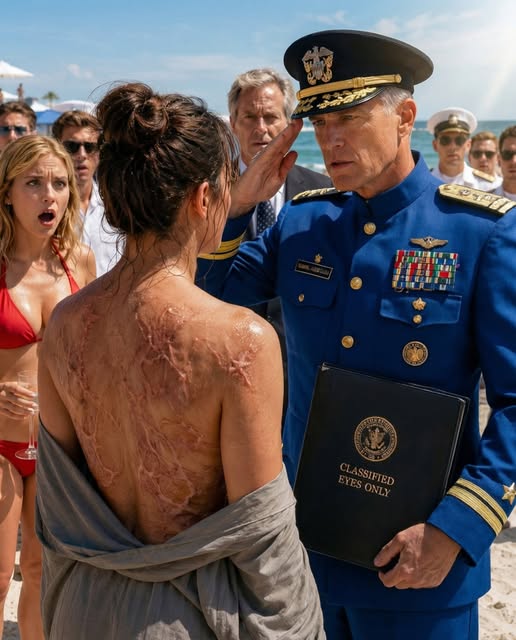
No one arrested Sloane on the sand.
The law rarely works that way.
Instead, warrants were executed that afternoon.
His office was sealed.
His communications were seized.
The chain of command he had hidden behind finally disappeared.
Over the following months, military hearings exposed everything.
Operation Nightfall had never failed because of poor decisions in the field.
It failed because one senior officer ignored intelligence, issued an unlawful strike, and then blamed the only commander who refused to obey it.
The official record was corrected.
Every document clearing my name became public within the limits allowed by national security.
My discharge status was amended.
My citations, previously classified, were restored.
Families of the thirty-seven personnel who survived because I delayed the strike wrote letters I never expected to receive.
Some thanked me.
Some simply said their children were alive because someone had chosen conscience over orders.
Those letters meant more than any medal.
The military held a private ceremony several weeks later.
There were no cameras.
No reporters.
Just the people who knew what had really happened.
Admiral Hale handed me the commendation that had waited five years for my return.
“You carried the weight of other people’s lies longer than anyone should have,” he said.
“You don’t have to carry it anymore.”
After the ceremony, my father approached me alone.
His posture was still straight, but his voice wasn’t.
“I spent my career teaching Marines to protect their own,” he said.
“When it mattered most, I failed my own daughter.”
I believed he meant it.
Forgiveness didn’t arrive instantly.
Some wounds heal slower than burns.
“I can’t give you back five years,” he whispered.
“No,” I answered.
“But you can stop wasting the years we still have.”
He nodded once.
Nothing dramatic.
Nothing theatrical.
Just a father finally accepting the truth.
Vanessa never apologized.
She quietly disappeared from family gatherings after the investigation became public.
Without an audience, cruelty lost its purpose.
Months later, I returned to La Jolla Shores alone.
The same waves rolled onto the sand.
The same breeze crossed the beach.
This time I wore a short-sleeved shirt.
The scars were still there.
They always would be.
Children ran past without staring.
Tourists laughed.
The ocean didn’t care what my skin looked like.
As the sun dipped toward the horizon, I stood facing the water with my shoulders uncovered for the first time in years.
The scars had never been proof that I was broken.
They were proof that I had come home.