The Night I Left the Billionaire Who Thought Money Could Replace Me
PART 3 (FULL STORY)
The room was already empty, and on the desk was the one thing I had forgotten to take.
My passport.
I had noticed it only after sunrise, when I reached into my duffel bag for cash and found the compartment empty. For a few seconds, I sat on the edge of the cheap hotel bed staring at the wall.
Then I laughed.
Not because anything was funny.
Because after three years of living in a world where Nico had a solution for everything, I had managed to leave the one document that could actually make leaving difficult.
I called the hotel.
The manager told me someone had already asked about it.
“Mr. Vale’s security team?”
I closed my eyes.
“Yes.”
“I’m sorry,” he said. “I didn’t give them your location.”
“Thank you.”
He hesitated.
“They left a message.”
I almost hung up.
“What did it say?”
“He said you could collect your passport whenever you were ready. He also said no one would follow you.”
I stared at the cheap curtains moving slightly in the morning air.
That didn’t sound like Nico.
I stayed silent long enough that the manager finally said, “There’s one more thing.”
“What?”
“He told me to tell you he was sorry.”
I ended the call.
Across Manhattan, Nico was still standing in the bedroom.
Arthur had left the hotel’s information on the kitchen counter, along with my passport.
Nico picked it up carefully.
The cover was worn at the corners because I had carried it through every trip we had taken together. Paris. London. Tokyo. A week in Aspen when Nico spent most of the trip on conference calls while I sat beside a fireplace pretending I wasn’t lonely.
He opened it.
Inside were the same photographs I had taken years earlier, before I moved into his penthouse.
A younger version of me smiled from one of them.
No designer clothes.
No diamonds.
No black card.
Just me.
Arthur watched him turn the pages.
“You can stop this,” he said.
Nico didn’t look up.
“Stop what?”
“Trying to find her.”
“I haven’t found her.”
“You know what I mean.”
Nico closed the passport.
“She left because she heard me.”
“Yes.”
“She believed me.”
Arthur said nothing.
That silence was worse than an argument.
Nico walked to the window.
The city below was already awake. Cars moved through the streets. People hurried toward offices, trains, restaurants, hospitals. Everyone had somewhere to be.
For three years, Nico had assumed I would always be somewhere inside his world.
Waiting.
Available.
Close.
He had mistaken access for devotion.
“What do you think I should do?” he asked.
Arthur took a breath.
“Nothing.”
Nico turned.
“Nothing?”
“Give her the choice you never gave her while she was here.”
“What choice?”
“Whether she wants you in her life.”
Nico looked toward the bedroom door.
Three years of arguments flashed through his mind, but not the arguments themselves.
The small things.
The coffee I left beside his laptop before dawn.
The meals I reheated because meetings ran late.
The spare charger I kept in his travel bag because he always forgot his.
The medicine I put beside his glass of water when he was sick.
The way I waited outside the bathroom when he came home injured after a security incident.
None of those things had been expensive.
That was the problem.
He had understood expensive.
He had understood acquisitions, valuations, private jets, security contracts, stock options, and black titanium cards.
He had not understood why someone would stay beside him when there was nothing to gain.
Arthur picked up his coat.
“I’ll leave you alone.”
At the door, Nico stopped him.
“Arthur.”
Arthur turned.
“If she contacts you, don’t tell me where she is.”
Arthur studied him for a moment.
“Good.”
The door closed.
For the first time in years, Nico was alone in the penthouse without knowing where I was.
And he hated the uncertainty.
But he did not send anyone after me.
That mattered.
For the next two days, I stayed in the hotel under a name that wasn’t mine.
I bought a cheap notebook and wrote down everything I needed to rebuild my life.
A permanent place to live.
A new bank account.
A new phone.
A job.
A way to stop measuring every decision against what Nico might think.
The list looked almost embarrassingly ordinary.
I liked that.
Ordinary was beginning to feel like freedom.
On the third morning, I went to a small café near the hotel.
I ordered coffee and toast, then sat near the window with my notebook.
A woman at the next table was arguing softly with her teenage son about school.
A delivery man dropped a box outside.
Someone laughed near the counter.
Nobody knew who I was.
Nobody cared.
For the first time in three years, that felt peaceful.
Then my phone rang.
The number was unfamiliar.
I almost didn’t answer.
“Hello?”
There was a pause.
Then Nico said my name.
I closed my eyes.
“You shouldn’t have this number.”
“I don’t.”
I frowned.
“What?”
“I got it from Arthur.”
Of course.
I said nothing.
“I won’t ask where you are,” Nico said.
I looked out the window.
“Good.”
Another silence.
“I found your passport.”
“I know.”
“I left it with the hotel.”
“I know that too.”
His voice changed slightly.
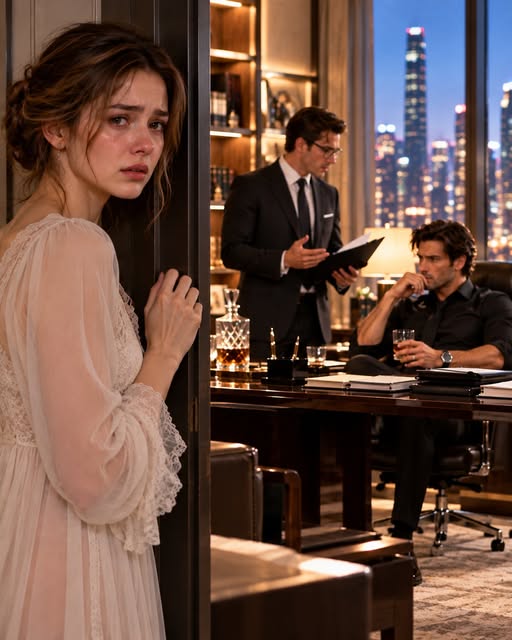
“You don’t have to come back.”
The words caught me off guard.
I waited.
“I know what I said,” he continued. “I know exactly what I said.”
“You said you wouldn’t care.”
“I was wrong.”
I looked down at my notebook.
“You weren’t confused, Nico. You said it clearly.”
“I know.”
“You said I stayed because your life was comfortable.”
“I know.”
“You said you’d forget my name by Friday.”
He breathed out slowly.
“I know.”
I waited for him to defend himself.
He didn’t.
“I don’t expect you to forgive me,” he said.
“That isn’t the point.”
“I know.”
“Then what is the point?”
His answer came quietly.
“The point is that I finally understand you weren’t asking me for money.”
I swallowed.
“What were you asking for?”
“Me.”
The word hurt more than I expected.
I stared at the steam rising from my coffee.
“I asked for that for three years.”
“I know.”
“No, you don’t.”
“I didn’t then.”
That was the first honest thing he had said.
I rubbed my thumb over the edge of the notebook.
“You can’t fix this with an apology.”
“I know.”
“You can’t buy me another apartment.”
“I know.”
“You can’t send flowers.”
“I won’t.”
“You can’t have security follow me.”
“I told them not to.”
“And you can’t expect me to come home because you finally feel bad.”
“I don’t.”
I waited.
“Then why are you calling?”
There was a long pause.
“Because you deserve to hear one thing from me without having to wonder whether I’m saying it because I want something.”
I said nothing.
“I loved having you there,” he said. “But I treated what you gave me like it was guaranteed.”
My throat tightened.
“I don’t know whether that is love.”
“I don’t either.”
The honesty stopped me.
“I think I confused being loved with being taken care of,” he continued. “And when I wanted to avoid feeling guilty, I gave you things instead of giving you what you were actually asking for.”
I looked at the notebook.
My list.
My new life.
“I can’t promise you anything,” I said.
“I know.”
“I don’t know if I want to see you.”
“I know.”
“I might never come back.”
He was quiet.
Then he said, “I know.”
For some reason, that was the moment I believed him.
Not because he sounded devastated.
Not because he apologized.
Because for once, he wasn’t trying to control the answer.
“I’ll send your passport back,” he said.
“No.”
He paused.
“I’ll come get it.”
“When?”
“I don’t know yet.”
“That’s fine.”
We ended the call.
I sat there for several minutes without moving.
The woman at the next table had stopped arguing with her son.
The delivery man was gone.
My coffee was cold.
I picked up my notebook.
Under the list of things I needed, I added one more line.
Don’t confuse being wanted with being valued.
Then I crossed it out.
It sounded too much like a lesson.
I didn’t need a lesson.
I needed a life.
A week later, I found a small apartment in Brooklyn.
It had crooked floors, a narrow kitchen, two windows, and a radiator that made a terrible knocking sound at night.
It was perfect.
I bought secondhand furniture.
I found work at a small technology consulting firm where nobody knew Nico’s name mattered to half the people in Manhattan.
My first paycheck was modest.
I stared at it for a long time before depositing it.
No black card.
No private account.
No billionaire’s signature.
Just money I had earned.
I felt proud.
Months passed.
Nico never appeared outside my apartment.
He never sent security.
He never demanded that I return.
He never asked Arthur to betray me.
Sometimes Arthur called.
Never about Nico unless I asked.
Mostly, he asked whether I had found a better apartment or whether my new job was going well.
One afternoon, he said, “He’s different.”
I laughed.
“I didn’t ask.”
“I know.”
“Then don’t tell me.”
Arthur was quiet.
“Fair enough.”
We changed the subject.
I didn’t need to know whether Nico was changing.
I needed to know whether I was.
And I was.
Not dramatically.
Not all at once.
I stopped checking my phone every five minutes.
I stopped wondering whether someone was angry with me.
I learned to sleep without waiting for an elevator.
I learned that dinner didn’t have to stay warm for anyone.
I learned that silence could mean peace instead of punishment.
Six months after I left, I received an envelope.
Inside was my passport.
Nothing else.
No jewelry.
No money.
No letter.
Just my passport.
I almost smiled.
Then I noticed the handwriting on the front of the envelope.
Nico’s.
He had written only my name.
Not “Come home.”
Not “Please.”
Not “I miss you.”
Just my name.
For the first time, he had remembered it without trying to possess it.
I put the passport in the drawer beside my keys.
That night, I cooked dinner for myself.
I made too much.
Old habits.
I laughed when I noticed.
Then I put the extra food into a container instead of leaving it warm on the stove.
I ate at the small table beside the window while the city moved outside.
Later, I heard the radiator knock three times.
I looked toward the sound.
The apartment was quiet.
My apartment.
Not Nico’s penthouse.
Not a place someone could lock me out of by morning.
Mine.
I opened the drawer and touched the edge of my passport.
Then I closed it again.
The black card was still sitting in a safe across the city.
The diamonds were still there too.
I had left them behind because I finally understood something Nico had taken three years to learn.
The things that mattered most had never belonged in a safe.
And that night, when I turned off the kitchen light, there was no private elevator opening downstairs, no security team waiting for instructions, and no man deciding whether I was worth remembering.
There was only the soft click of my own front door locking from the inside.
And for the first time, I was the one choosing to stay.