My fifteen-year-old daughter kept telling me her stomach hurt and that she felt sick almost every day.
PART 4
The surgeon led us into a quiet consultation room.
He placed the pathology report on the table before speaking.
“The mass was completely benign.”
I covered my face with both hands and cried harder than I had in years.
“She has cancer?” Robert asked nervously.
“No.”
“The growth was a rare fetiform teratoma.”
“It formed before birth and slowly enlarged over many years.”
“There is no evidence of cancer.”
“The surgery removed it completely.”
For several seconds nobody spoke.
The fear that had wrapped itself around my chest for weeks finally loosened.
Maya spent two days in intensive recovery before she was moved into a regular pediatric room.
Color slowly returned to her face.
She smiled for the first time in what felt like forever.
Even eating half a bowl of soup became something worth celebrating.
The nurses decorated her room with paper stars after hearing she loved taking sunset pictures.
When I handed her phone back, the first picture she took wasn’t of herself.
It was the sunrise outside her hospital window.
Robert visited every day.
He brought flowers.
Books.
Her favorite fuzzy blanket.
None of it erased what had happened.
One afternoon he quietly asked if we could speak in the hallway.
“I failed both of you.”
His voice cracked.
“I kept thinking about money.”
“I convinced myself she was exaggerating because admitting something was wrong scared me.”
“I almost lost our daughter because I wouldn’t listen.”
I didn’t answer immediately.
Some apologies deserve silence before forgiveness.
“You don’t need me to forgive you first,” I finally said.
“You need Maya to know you’ll never ignore her again.”
He nodded with tears running down his face.
When Maya was strong enough, he walked into her room alone.
I stayed outside.
Through the small glass window I watched him sit beside her bed.
He cried before he managed to speak.
She listened quietly.
Then she reached over and hugged him.
Not because everything had been fixed.
But because healing sometimes begins before trust fully returns.
Months later Maya was back on the soccer field.
She laughed with her friends again.
The oversized hoodies disappeared into the back of her closet.
One Saturday evening she carried her camera outside just before sunset.
The sky glowed orange above our mailbox.
She snapped a blurry picture exactly the way she used to.
I realized then that I wasn’t just watching my daughter take another photograph.
I was watching her reclaim the life she almost lost.
Robert still keeps every follow-up appointment written on the family calendar.
If Maya says she doesn’t feel well, he asks questions instead of making assumptions.
Fear once made him protect money more fiercely than his child.
He has spent every day since trying to become the father she deserved all along.
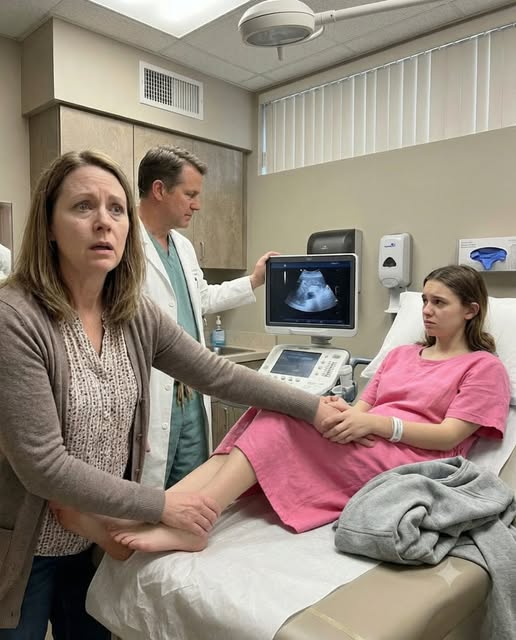
Sometimes I think back to that terrible afternoon in the ultrasound room.
To the doctor quietly saying, “There’s something inside her.”
Those words nearly destroyed me.
But listening to my daughter when no one else would saved her life.
And every time I hear a soccer ball strike the old garage door outside, I’m reminded that believing someone you love can be the difference between losing them forever and getting to hear them laugh again.