Disgraced Test Pilot Saves 187 Passengers on Dying Plane Before Reuniting With Daughter
PART 3 (FULL STORY)
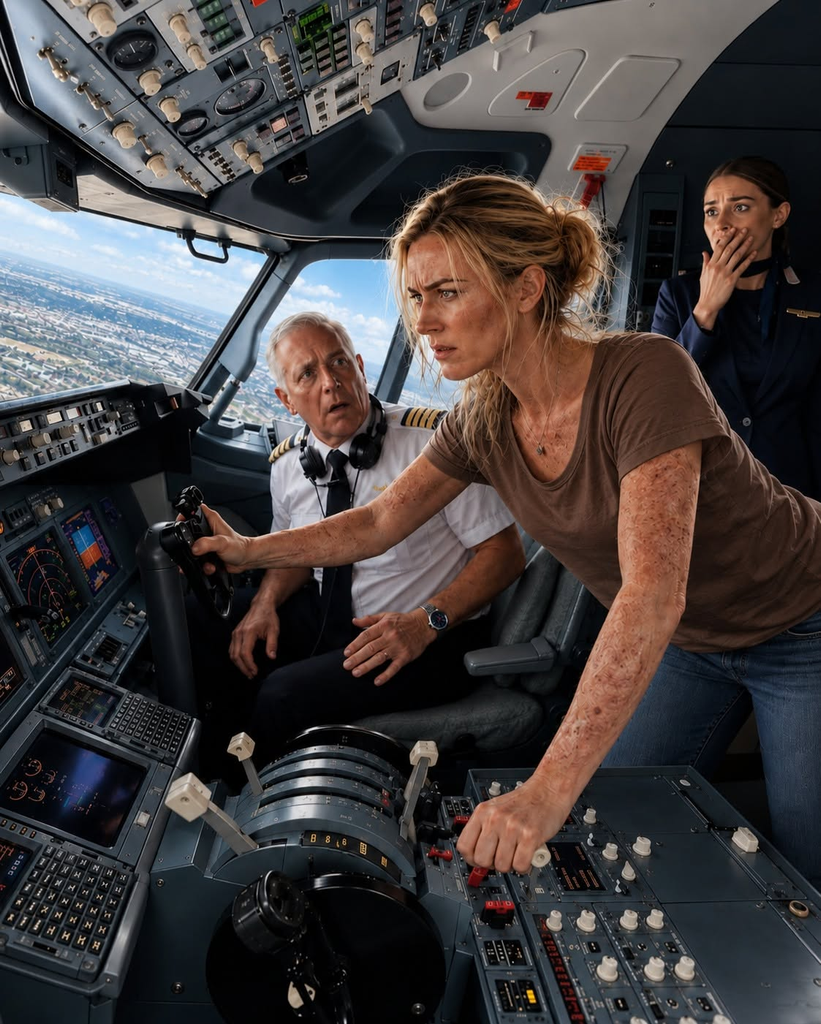
The twin turbofan engines roared like thunder as I flared the throttles three feet above the foam-covered tarmac of Runway 16L. The main landing gear struck the concrete with a heavy jolt and a puff of white tire smoke, screaming down the center line as reverse thrust roared through the morning air.
With zero hydraulic steering, I balanced the pedal brakes and modulated the left and right engine reversers, guiding seventy tons of screeching metal to a complete, safe stop fifty yards before the overrun barrier.
Inside the cockpit, the master warning sirens went silent.
For three seconds, the only sound was the heavy, ragged breathing of two commercial aviators who had prepared to die minutes earlier.
Captain Thomas Reed slowly turned in his seat, his hands shaking as tears spilled down his weathered cheeks. He unbuckled his harness, stood up in the narrow cockpit, and snapped a crisp, trembling military salute.
“Colonel Mitchell,” Captain Reed whispered, his voice cracking with reverence. “In thirty years of commercial aviation, that was the most magnificent piece of airmanship I have ever witnessed. You just saved one hundred and ninety-three lives.”
Behind the cockpit door, the passenger cabin erupted into an explosion of deafening cheers, sobbing prayers, and thundering applause.
When the flight attendants opened the main cabin door, passengers surged into the aisle, reaching out to touch my shoulders, weeping tears of pure, overwhelming gratitude as emergency paramedics and Seattle firefighters flooded the jetway.
I walked through the terminal gate in my faded jeans and scarred hands.
Standing beyond the security perimeter, surrounded by airport police and news cameras, was my twenty-eight-year-old daughter, Emily.
She was holding her wedding planner binder to her chest, her dark eyes wide with disbelieving shock as she saw my name flashing across the terminal breaking news screens: FORMER AIR FORCE TEST PILOT SAVES CRIPPLED AIRLINER AT SEA-TAC.
Emily pushed past the security barricades, running full speed across the polished floor, throwing her arms around my neck and burying her face against my shoulder as she wept uncontrollably.
“Mom!” Emily cried, clutching my black shirt as if she would never let go. “You came back… you saved everyone! I thought I lost you forever!”
I wrapped my scarred arms around my daughter, burying my face in her hair, thirty-two years of buried grief and loneliness dissolving in the warmth of her embrace.
“I promised I would be here for your wedding, sweetheart,” I whispered through tears of joyful relief. “Phoenix always comes home.”
Over the next seventy-two hours, the story of Flight 842 ignited an international firestorm.
The National Transportation Safety Board and the Federal Aviation Administration completed their preliminary analysis of the black box telemetry, confirming that a total catastrophic hydraulic severance had rendered the flight controls completely dead, and that only manual differential engine thrust had prevented a catastrophic crash.
Faced with undeniable flight data and the resurgence of the declassified 1994 Edwards Air Force Base logs, the Department of Defense was forced to reckon with thirty-two years of injustice.
Four days later, in a live televised ceremony held at Joint Base Lewis-McChord in Washington, the Secretary of the Air Force and the Chief of Staff stood before the national press.
“Thirty-two years ago,” the Secretary announced solemnly, “the United States Air Force made a grievous error in scapegoating one of the finest aviators in American history to cover corporate engineering defects. Today, we correct the historical record.”
Before the cameras, the Secretary formally reinstated my full rank of Lieutenant Colonel, restored thirty-two years of back pay and military pensions, and presented me with the Air Force Cross alongside the Distinguished Flying Cross with Valor.
Three days later, beneath the towering cedar trees of a historic chapel overlooking the Puget Sound, the music of the wedding march echoed through the sanctuary.
I stood at the back of the chapel dressed in my immaculate, medal-decorated Air Force dress blue uniform, my white service gloves concealing the old burn scars.
Emily took my arm in her lace wedding gown, her face glowing with radiant pride and happiness as she looked at her mother.
“Ready, Colonel?” Emily whispered with a bright, loving smile.
“Ready, my girl,” I replied, squeezing her hand.
Together, we walked down the sunlit aisle to thunderous applause from one hundred and fifty guests—including Captain Thomas Reed and the entire crew of Flight 842, who had flown in to honor the woman who gave them their tomorrows.
The following morning, Emily and I sat together on the wooden bench of a private rocky beach along the Seattle waterfront.
The morning sun was rising over the majestic, snow-covered peak of Mount Rainier, painting the sky in brilliant hues of rose, amber, and gold.
The cool Pacific breeze carried the fresh, salty scent of the tide as white seagulls circled lazily over the calm waters.
Emily rested her head gently against my shoulder, her fingers interlaced with mine, holding the scarred hand that had piloted her mother through the fire and brought her safely home.
I took a deep, unburdened breath of the crisp morning air, feeling the warm sunshine on my face. The thirty-two years of shadows, shame, and silence were gone forever. Sitting beside the daughter who had restored my life, watching the peaceful waters stretch to the horizon, I knew that my wings were whole, my honor was eternal, and I was finally, permanently free.