A Quiet Wife Refused To Fund Her In-Laws Before Dismantling Their Entitled Empire
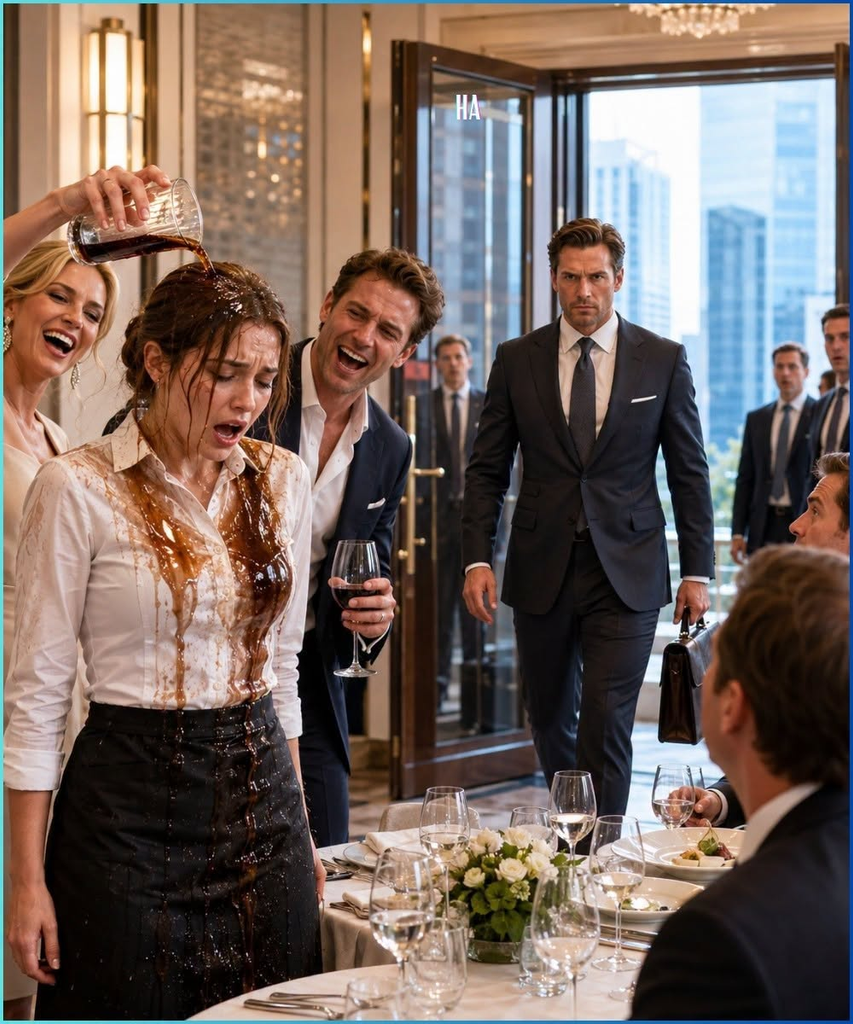
PART 3 (FULL STORY)
The humiliation my husband intended as a public punishment dissolved the moment the steel handcuffs clicked around his wrists. The private dining room, which only minutes earlier had hummed with the polished arrogance of fifty wealthy guests, was dead silent. The pianist sat motionless at his bench, his hands frozen above the keys, while waiters quietly stepped back against the mahogany walls.
“Do you have any idea who I am?” my husband snarled, his face crimson as two uniformed officers pushed him toward the restaurant’s private exit. “My family built the foundation of this district! You take your hands off me right now, or I’ll have both of your badges before sunrise!”
Officer Miller didn’t even blink. He kept a firm, professional grip on my husband’s arms, nodding toward the high-definition security camera mounted directly above our table. “We have clear audio and video of you throwing a glass of wine into your wife’s face after an argument over a commercial bill, sir. You’re under arrest for misdemeanor assault and disorderly conduct. You can make your phone calls from central booking.”
My mother-in-law, Victoria, finally found her voice. She rose from her seat, her diamond necklace catching the chandelier light, her eyes blazing with indignation. “This is an outrage! Clara, tell these men to release my son immediately! You are making a grotesque spectacle of this family over a petty misunderstanding!”
I didn’t answer her. I didn’t shout, and I didn’t raise my voice. I took a fresh napkin from the waiter, dabbed the last drops of Cabernet from my collarbone, and looked Victoria directly in the eyes. For six years, that woman’s approval had felt like oxygen I had to beg for. Now, looking at her smeared lipstick and trembling hands, I saw only an aging bully whose power existed entirely on borrowed credit.
“The only spectacle here, Victoria,” I said, my voice cutting through the room with quiet certainty, “is that you spent six years believing you could treat me like domestic help while living entirely on my money.”
Victoria gasped, glancing around the room as several prominent society figures shifted uncomfortably in their seats. “How dare you! My family has centuries of pedigree! You were nothing before Nathan married you!”
Mr. Henderson, the restaurant’s general manager, stepped forward with a black leather folder containing the thirty-eight-thousand-dollar dinner invoice and placed it squarely in front of Victoria.
“Madam,” Mr. Henderson said in a tone of cold formality, “the dining room was reserved under Nathan’s name, but the commercial billing account on file belongs exclusively to Clara’s corporate holding firm, which also happens to own the deed to this building. Because Mrs. Sterling has formally severed your family’s authorization, this bill must be settled by you or your son before anyone at this table leaves the premises.”
Victoria stared at the invoice as if it were a venomous snake. Her fingers trembled as she pulled a gold card from her beaded clutch and handed it to the waiter. Seconds later, the terminal returned with a high-pitched rejection chime.
“Declined,” Mr. Henderson announced smoothly. “It appears the auxiliary credit line was frozen ten minutes ago.”
Panic finally broke through Victoria’s aristocratic mask. For six years, she had bragged at charity galas about her son’s brilliant investments and their family’s boundless generosity. What nobody in their social circle knew was that the Sterling estate had been ninety days from foreclosure when Nathan married me. My late father had spent forty years building a logistics and commercial real estate empire, leaving me with full control of a multi-million-dollar trust.
When I met Nathan, I fell in love with a man who pretended to be humble, hardworking, and devoted. But the moment the marriage license was signed, his family’s true nature emerged. Nathan quietly diverted my dividend payments into his speculative ventures, while Victoria treated my wealth as an endless revolving fund for her country club memberships, private jet rentals, and lavish birthday parties.
Whenever I questioned the spending, Nathan would corner me at home, lowering his voice into that cold, manipulative murmur. “You’re ungrateful, Clara. My family gave you status. We gave you a name people respect. Paying the bills is the least you can do for the family.”
I had swallowed the manipulation because I was terrified of being alone. I had paid for their five-course dinners, their European vacations, their luxury vehicles, and their designer wardrobes, convincing myself that if I just gave a little more, they would finally see me as human.
The illusion ended two weeks before Victoria’s birthday.
While conducting an annual audit of my commercial holdings, my forensic accountant uncovered a series of unauthorized wire transfers totaling four million dollars, routed from my primary trust into an offshore shell company registered in the Cayman Islands. Attached to the transfers were luxury lease agreements for a beachfront penthouse in Miami, signed under Nathan’s name and co-leased with a twenty-four-year-old marketing assistant from his office.
Nathan had not just been using my money to fund his family; he was actively preparing to drain my accounts and abandon me the moment his offshore accounts were secure.
That was the moment I realized that patience with cruelty isn’t grace—it’s complicity in your own destruction.
I didn’t confront him. I didn’t scream or cry. I spent fourteen days working with my legal counsel, systematically stripping Nathan’s name from every joint asset, revoking his power of attorney, and filing an emergency injunction to freeze the offshore transfers before they could clear international escrow.
I knew Nathan would pull his usual routine at his mother’s birthday dinner. I knew he would slide the bill across the table, expecting the same terrified, obedient woman to pick it up.
And for the first time in six years, I let the trap snap shut on him instead.
As Nathan was escorted out the front doors into a waiting police cruiser, Victoria stood in the middle of the private dining room, surrounded by fifty guests who were now whispering behind their menus. Several of her closest friends had already called their drivers, slipping out through the side doors to avoid being associated with the scandal.
“Clara, please,” Victoria whispered, her voice cracking as her pride crumbled into desperation. “We can discuss this at home. We are family.”
“You don’t have a home to discuss this in, Victoria,” I replied, standing tall in my wine-stained silk dress. “The penthouse on Fifth Avenue is owned by my holding corporation. The locks are being re-keyed as we speak, and your personal belongings will be placed in storage by tomorrow afternoon.”
Victoria collapsed back into her chair, her face utterly blank with shock.
I picked up my coat from the attendant, tipped the waiter five hundred dollars in cash for his trouble, and walked out into the crisp autumn night.
The legal battle that followed over the next three months was swift and decisive. Armed with forensic financial logs, bank records, and the restaurant’s security footage, my attorneys secured an immediate decree of divorce on grounds of felony fraud, adultery, and domestic battery.
The courts ordered the complete liquidation of Nathan’s shell accounts, returning every stolen dollar to my primary trust. Without my financial backing, Nathan’s commercial firm went into bankruptcy within forty-five days, and his pending criminal trial resulted in eighteen months of probation and mandatory restitution. Victoria was forced to move into a modest two-bedroom rental outside Newark, her social circle vanishing overnight like smoke in a windstorm.
Six months after that glittering dinner, I sat alone at a corner table in a quiet, sunlit bistro overlooking the river.
The table was simple—a white tablecloth, a vase of fresh yellow freesia, and a plate of grilled sea bass. There was no pretense, no performance, and no cruel family demanding applause for their existence.
The waiter approached and gently set down the leather bill folder beside my coffee cup.
I looked at the bill, smiled warmly, and slid my card inside without a trace of fear or hesitation.
For the first time in my life, I wasn’t paying to keep the peace. I wasn’t paying to buy love or avoid someone else’s anger. I was paying for my own meal, in my own life, on my own terms.
I took a sip of my coffee, looked out at the sunlight dancing across the water, and finally breathed in the quiet, priceless beauty of my freedom.