The heavy brass key caught the bright afternoon sun. Sarah’s smirk faltered. She took a half-step back, her pristine white sneakers squeaking against the concrete tiles.
“I don’t care what you think you have in your pocket, Thomas,” Sarah snapped, her voice losing its polished, corporate veneer. She pulled a sleek tablet from her scrub pocket and tapped the screen aggressively. “The commercial lease for the HealthGuardian Patient Services building covers the entire structural footprint. Including the roof. You are a squatter occupying a restricted emergency zone.”
Officer Miller shifted his weight, his hand instinctively dropping to his duty belt. “Ma’am is right, Mr. Vance. If you don’t vacate the premises voluntarily, I’m authorized to remove you for trespassing. And the demolition crew arrives at 0600 hours.”
My heart hammered against my ribs. The air on the rooftop felt suddenly thin, suffocating. I looked out at the sprawling garden. The vibrant purple lupines, the bright yellow marigolds, the delicate white daisies. Clara had designed every single inch of it before the cancer took her.
“You didn’t read the addendum, Sarah,” I said. My voice was barely a rasp, but it carried across the quiet rooftop. “When you bought the building from the estate, you bought the commercial floors. One through ten.”
Sarah laughed. A short, sharp sound that bounced off the brick parapet. “We bought the whole building, Thomas. The deed is clear. Stop playing the senile old man and hand over the keys.”
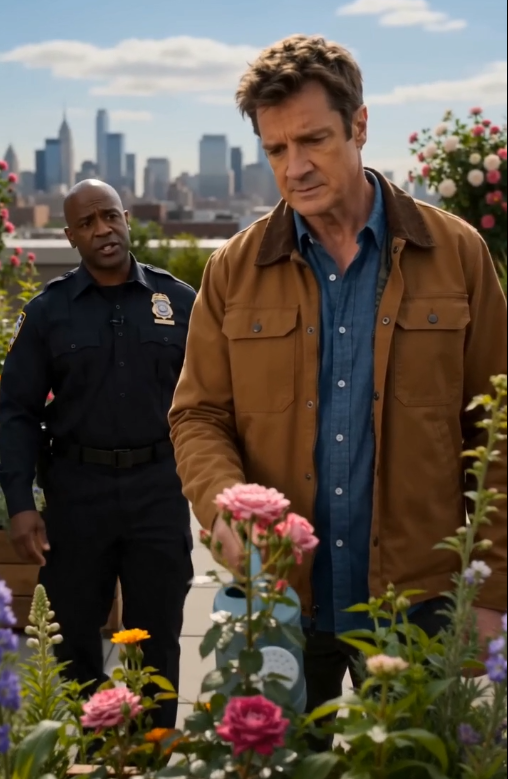
I didn’t hand over the keys. Instead, I reached into the deep inner pocket of my brown jacket. My fingers brushed the worn, leather-bound folder I had carried every day for the last six months. I pulled it out and opened it. The paper inside was thick, yellowed with age, and stamped with the heavy, embossed seal of the Manhattan Zoning Board.
“Look at page four,” I said, holding the document out.
Sarah didn’t take it. She just glared at me. “I’m not looking at your forged papers.”
“It’s not forged,” I said. I stepped forward, closing the distance between us. “It’s the 1982 Air Rights Exemption. When this building was originally constructed, the city granted the rooftop to the original owner as a private residential easement. It was never part of the commercial zoning.”
I tapped the yellowed paper. “When my wife died, I transferred the rooftop easement into the Clara Vance Memorial Trust. I am the sole trustee. HealthGuardian doesn’t own this roof, Sarah. You’re leasing the air above it. And your lease explicitly forbids altering the structural integrity of the rooftop garden.”
The silence that followed wasn’t just quiet. It was a physical weight. It crushed the air out of the space between us. The wind stopped. The distant hum of the city traffic faded into a dull roar.
Sarah’s face went completely pale. The color drained from her cheeks, leaving her looking sickly under the bright sun. She looked at the document, then at the tablet in her hand, then at Officer Miller. The arrogance was completely gone. She looked like a trapped animal.
“That’s… that’s impossible,” Sarah stammered, her voice cracking. “The legal team cleared the title. They said there were no easements.”
“Your legal team was lazy,” I said coldly. “And you didn’t do your due diligence. If you send a demolition crew up here, you will be violating a protected historical landmark status. I filed the paperwork with the city this morning.”
Officer Miller looked at the document, then at Sarah. His jaw tightened. “Ma’am, if he has a valid easement and a historical landmark filing, I can’t arrest him. In fact, if you proceed with demolition, you’re the one committing a misdemeanor.”
Sarah’s jaw clenched so hard I thought her teeth might crack. She lunged forward, her hands shaking. “You’re lying! You’re trying to extort the board! I’ll have you evicted! I’ll have you thrown out on the street!”
“You can’t evict me from a property I own,” I said. I closed the leather folder and slipped it back into my jacket. “But the board can fire you for gross negligence and misrepresenting property lines to the investors.”
The heavy metal door at the top of the stairs swung open. Richard Sterling, the CEO of HealthGuardian, stepped out. He was wearing a tailored charcoal suit, his face twisted in fury. He had been listening from the stairwell.
“Sarah,” Richard said, his voice echoing off the brick walls. “My office. Now.”
Sarah froze. She looked at Richard, then at me. “Richard, he’s bluffing. The garden is a liability. I was just trying to protect the company’s assets.”
“You just tried to authorize an illegal demolition on a protected landmark,” Richard said, his voice dropping to a dangerous, icy whisper. “The board just received the injunction from the city. We are facing a two-million-dollar fine because of your incompetence. You’re fired. Hand over your badge and your keys.”
Sarah’s mouth opened, but no sound came out. She looked at the pink roses, then at the sprawling garden, then at the ground. The fight was completely gone. She unclipped her ID badge, dropped it on the concrete, and handed over her keys. The metallic clatter echoed in the quiet rooftop. She walked past me, her shoulders slumped, entirely defeated, and disappeared down the stairs.
Richard turned to me. The anger vanished from his face, replaced by a deep, respectful warmth. “I’m sorry, Thomas. We’ll make sure the new management respects the easement. The garden stays.”
I nodded. I picked up the blue watering can. I walked over to the pink roses and gently poured the water over the roots.
The heavy metal door clicked shut behind Richard, leaving only the sound of the water soaking into the damp earth.