Richard stared at the plaque. The heavy gold letters caught the light of the crystal chandeliers, casting long, jagged shadows across the parquet floor. The hum of the string quartet suddenly sounded like a roaring jet engine in the suffocating silence of the ballroom. The air felt thick, heavy with the scent of floor wax and expensive perfume.
“This is a mistake,” Richard stammered. His voice cracked. The arrogant, booming baritone he used on the board of directors was completely gone. He looked at the plaque, then at me. His eyes were wide, the pupils dilated in the dim, romantic lighting.
A woman in a sequined gown dropped her champagne flute. It shattered against the floor, the sound like a gunshot in the quiet room. No one moved to clean it up.
“Ellie, stop this,” Richard whispered, stepping closer. His manicured fingers dug into my bare arm. His nails left half-moon crescents in my skin. “You’re making a scene. You’re embarrassing yourself. You’re just a bitter ex-wife with a grudge and a cheap dress.”
I didn’t pull away. I just looked at his hand.
“Don’t touch me, Richard,” I said. My voice was barely above a whisper, but it cut through the room like a scalpel. “You’re wrinkling my dress.”
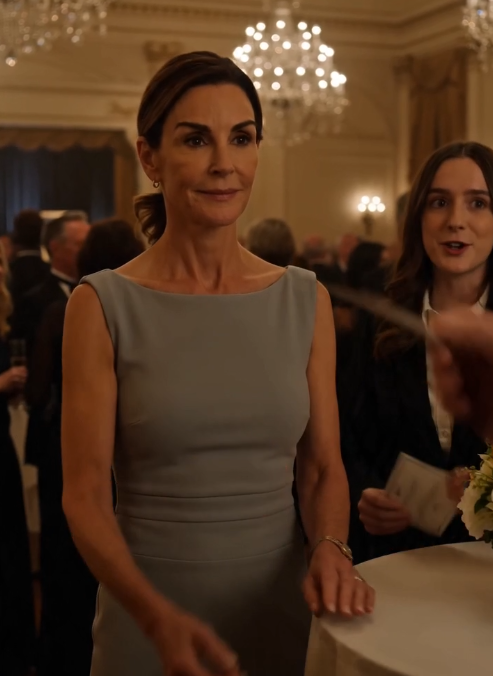
He scoffed, releasing my arm and adjusting his cuffs. He tried to regain his footing, puffing out his chest. “You think a piece of wood changes anything? I have the legal team. I have the mayor. I have the press. I have the controlling interest in the foundation. You are legally barred from this property.”
“I’m not your ex-wife,” I said. The words hung in the air, sharp and cold. “And I’m not legally barred. Because I’m the majority shareholder.”
I opened the white envelope the volunteer had handed me. Inside wasn’t a silent auction bid. It was a single, crisp legal document. The original Articles of Incorporation for the Sterling Foundation. Dated fifteen years ago. The paper was heavy, textured, and smelled like old ink.
“You forgot about the vesting clause, Richard,” I continued, my voice echoing off the vaulted ceiling. “The one your expensive lawyers missed when they drafted the divorce settlement. The one your husband didn’t tell you about.”
Richard’s face flushed a deep, ugly crimson. He took a half-step back, his polished leather shoes squeaking against the floor. “That’s… that’s a myth. A legal loophole. It was invalidated in the 2018 settlement.”
“It was invalidated because I wasn’t present to sign it,” I said. I tapped the document. “But the bylaws state that if the founder returns to the anniversary gala on the tenth year, and presents the original charter, the controlling interest automatically reverts to her. I’m the founder. I’m at the gala. And the ten years are up at midnight.”
The silence in the ballroom didn’t just fall. It collapsed.
Richard looked at the plaque again. It didn’t say Richard Sterling, Humanitarian of the Year. It said Eleanor Vance, Founder and CEO. The gold letters gleamed, undeniable and permanent.
The board of directors, a group of old men in tuxedos, were already walking toward us. They moved with a slow, deliberate purpose. The lead director, a man named Arthur with a silver pocket watch, stopped in front of Richard.
“Mr. Sterling,” Arthur said, his voice flat, devoid of any sympathy. “Your access to the foundation’s accounts has been suspended. Effective immediately. The legal team has already filed the injunction with the state. Please leave the premises.”
Richard looked at Arthur, then at the board members, then at me. He opened his mouth to argue, to scream, to threaten. But no sound came out. He just slumped, his expensive tuxedo suddenly looking like a cheap costume. He turned and walked out the heavy oak doors, his footsteps dragging, disappearing into the dark hallway.
I turned back to the plaque. The string quartet started playing a new song, something bright and loud. I touched the cold gold letters, my fingers tracing my own name, while the crowd slowly began to clap.