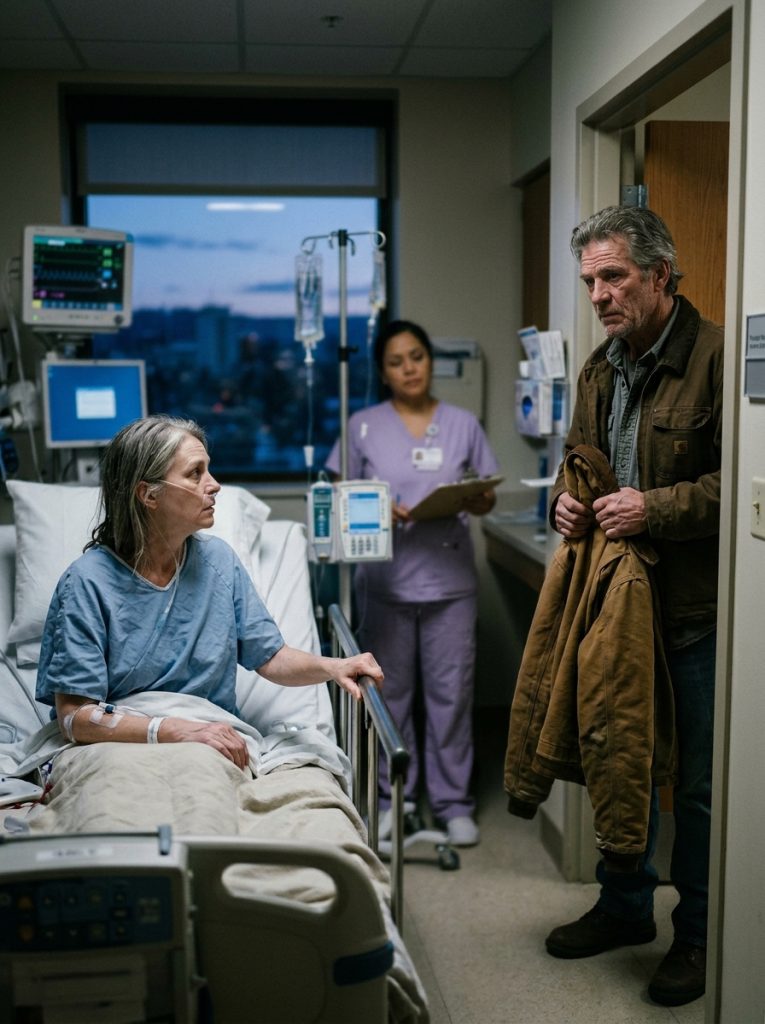
He told me about the letters first.
“I wrote you every year,” Peter said. “Your birthday. Every single one. Twenty letters, Maggie. I never got a reply, so after a while I figured you were throwing them away. I kept writing them anyway.”
“I never got a single letter,” I said.
The words landed in the room and just sat there.
We looked at each other across twenty years and one cruel, simple fact.
I had been told he never wrote. He had believed I never answered.
Someone had been standing between us the whole time.
Her name was Lorraine. Our father’s second wife.
I won’t spend Peter’s gift of a night cataloguing everything she did. The short version is this: after Dad died, there was a little money and an aging mother to be cared for, and Lorraine wanted control of both. The easiest way to control a family is to make sure the family can’t talk to one another.
So she told me things Peter supposedly said. Cruel things. That my husband was beneath us. That I had embarrassed the family. That Peter wanted nothing to do with me.
And she told Peter his own version. That I blamed him for Dad’s death. That I’d said he wasn’t welcome at my door.
We were young and grieving, and we believed her — because she was careful, and because the lies were shaped exactly like our worst fears.
The night of the fight, the one I swore was final, the words I said that I can’t repeat — they were words someone else had loaded into me. I just never knew whose ammunition I was firing.
Lorraine handled Mom’s mail for the last decade of her life.
Twenty birthday letters from Peter to me. However many he wrote to Mom. All of it passed through her hands.
None of it ever arrived.
“How did you find out?” I asked him.
“Lorraine died in February,” he said. “Her daughter was clearing out the house. She found a box.” His jaw worked. “Not destroyed. Kept. Mom’s letters to both of us, returned unopened. My letters to you. Yours to me, I’d guess — did you write?”
“For the first few years,” I whispered. “Then I stopped. I thought you were ignoring me.”
“They’re probably in that box too,” he said.
We sat with that.
A whole family, writing into the dark, every letter caught in the hands of a woman who needed us alone.
Then he told me the part that broke me.
“Mom asked for you,” he said. “At the end. She asked for both of us. She held on a long time, Maggie. The nurses said she kept telling them she was waiting for her kids to come.” His voice failed. “I didn’t know until February. I would have carried her to you myself if I’d known she wanted it. I thought you’d cut her off too. Lorraine told me you had.”
Our mother died last spring believing her children hated each other, and her.
She died waiting in a room neither of us knew to come to.
That is the part I will carry for the rest of whatever life Peter is about to give me.
The surgery was the next morning.
They wheeled him out first. He reached for my hand in the hallway, both of us in gowns, twenty years and one quiet wrecking-ball of a stepmother behind us.
“Don’t waste it,” he said. Meaning the kidney. Meaning the rest.
“I won’t,” I said. Meaning all of it.
His kidney took. My numbers climbed back within the week. The doctors finally used the word they’d been avoiding for months: recovery.
I’m going to live.
That is not a small thing. I know it. I am grateful in a way I don’t have the words for.
But grief and gratitude can share a bed, and mine do.
We drove to the cemetery together as soon as I was strong enough.
Two graying people, scarred now in the same place, standing over our mother’s stone.
Peter set down flowers. I set down a letter — one of his, from a year I never got to read, that he let me keep.
“She waited for us,” I said.
“I know.” He took my hand. “We’re here now, Maggie. Late. But here.”
The wind moved through the grass.
And for the first time in twenty years, my brother and I stood on the same side of something — too late for the one person we both ached to see it, and just in time for each other.
We don’t get the twenty years back.
We just get the rest of them.
I intend to write him every year.
And this time, I’ll hand the letters to him myself.