My Family Mocked My Crying Daughter Until My Father Read The Legal Envelope
PART 3 (FULL STORY)
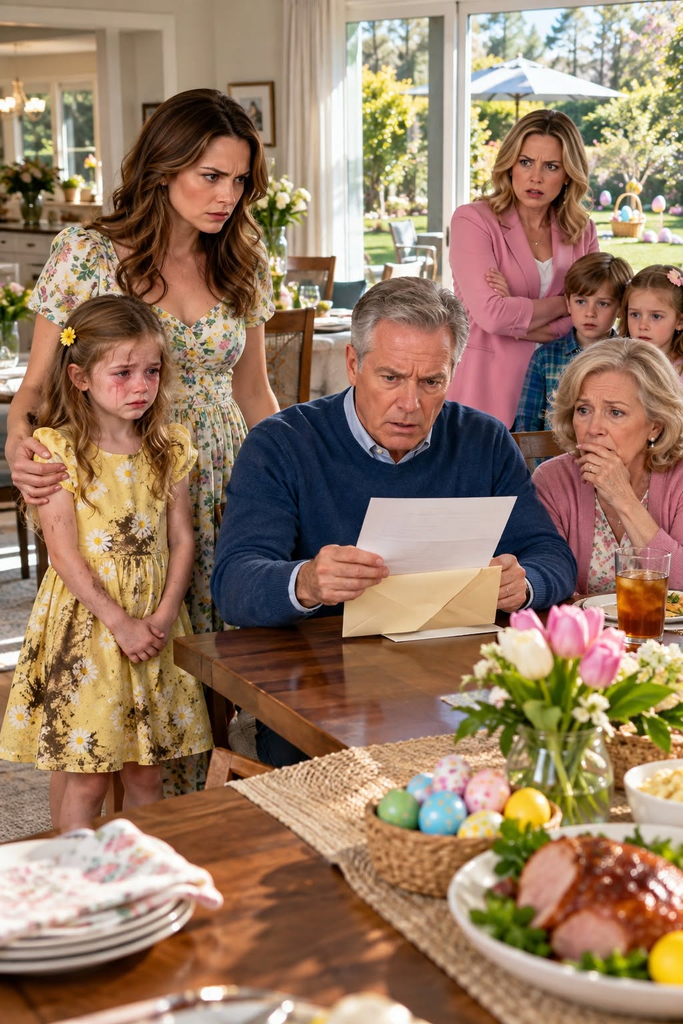
The dining room fell into an icy, paralyzed silence that felt heavy enough to suffocate the room. My father sat motionless in his chair, the legal notice trembling between his fingers, his eyes fixed on the bold typeface of the termination clause. Across the table, my mother looked as though she had stopped breathing, her hand hovering over her glass of melting iced tea. Tessa stood frozen, the angry smirk that had lived on her face for years suddenly dissolving into raw, panicked realization.
“Crystal, you can’t be serious,” Dad stammered, his voice dropping into a desperate, pleading register that I had never heard him use before. “You own the duplex Tessa lives in. You’ve been paying our property taxes and supplemental medical insurance for four years out of your grandfather’s trust. If you pull those subsidies, your mother and I will have to drain our retirement savings, and Tessa has nowhere else to go!”
“Tessa had four years to save for a down payment, Dad,” I said, my voice steady, clear, and perfectly measured. “I bought that property and offered it to her rent-free on one condition: that she and her husband build their financial future. Instead, she bought brand-new luxury SUVs, took three vacations to Mexico every year, and treated me like an unpaid catering service whenever the holidays rolled around.”
“We are your family!” Tessa screamed, slamming both palms down onto the tablecloth so hard the porcelain plates rattled. “You have hundreds of thousands of dollars in trust assets! You’re going to put your own sister and your niece and nephew out on the street because my kids got a few drops of mud on a sixty-dollar dress?”
“This was never about sixty-four dollars of mud, Tessa,” I replied, looking directly into her frantic eyes. “This is about the fact that your children cornered my six-year-old daughter, ruined something she loved, and ignored her when she begged them to stop. And when she cried in her own home, you told me to silence her because her pain was inconvenient for your Easter dinner.”
I stepped closer to the table, wrapping my arm gently around Maisie’s shoulders. My daughter looked up at me, the tears drying on her flushed cheeks, her small hand gripping mine with unshakeable trust.
“For thirty years, this family has operated on a single unspoken rule: Crystal absorbs the cost,” I said, looking from Tessa to my parents. “Whenever Tessa was reckless, I was told to be understanding. Whenever Dad was harsh, I was told to let it go. Whenever Mom wanted to pretend we were a happy family, I was expected to swallow my self-respect and write another check. I spent my entire adult life being the bigger person until I almost taught my daughter that she should let people walk over her too.”
Mom covered her face with both hands, weeping softly into her linen napkin. “Crystal, please… it’s Easter. Don’t tear this family apart over a disagreement. We can talk about this like adults.”
“We are talking like adults, Mom,” I said calmly. “And as an adult, I am setting a boundary that will never be crossed again. The termination notice is already filed with my commercial property manager. Tessa, you have thirty days to sign a standard residential lease at eighteen hundred dollars a month, or my management company will initiate formal vacancy proceedings. And Dad, your annual property tax bill will arrive in your mailbox next month. I am done subsidizing people who treat my child like a second-class citizen.”
Dad stared down at the documents, unable to utter a single defense. The entitlement they had weaponized for decades had met the cold, unyielding reality of property deeds and legal ownership.
“Get your coats and leave,” I said, pointing toward the open foyer. “Right now.”
Tessa grabbed her designer purse from the chair, her face contorted with bitter fury. “You’re going to regret this, Crystal! Don’t ever expect us to come back to this house!”
“I don’t,” I replied simply.
For the next ten minutes, the sound of slamming doors and hurried footsteps echoed through the hallway. Owen and Laya were ushered out in sullen silence, while my parents gathered their jackets with their heads bowed in deep humiliation. When the front door finally clicked shut, the heavy, artificial tension that had filled my house for years evaporated into the quiet spring afternoon.
I walked back into the living room, knelt down in front of Maisie, and looked into her bright, brown eyes.
“Are you okay, sweetheart?” I asked softly.
Maisie sniffled once, looked toward the front door, and then wrapped her small arms tightly around my neck. “Thank you for not making me apologize, Mommy,” she whispered into my shoulder.
I held her close, feeling a wave of fierce, protective love wash over me. “You never have to apologize for having feelings, Maisie. And you never have to stay quiet when someone hurts you.”
The fallout over the next two months unfolded exactly as the contracts dictated. Tessa attempted to ignore the thirty-day notice, assuming I would back down out of guilt. But my property management company acted with strict legal precision, serving her with a formal three-day notice to vacate followed by an expedited eviction filing. Faced with the public shame of an eviction record, Tessa and her husband packed their belongings and moved into a cramped, expensive two-bedroom rental across town, forced for the first time in their lives to budget their own income.
My parents had to cancel their expensive country club memberships and liquidate personal savings to cover their own property taxes and medical bills. When Mom tried calling me with long, tearful voicemails pleading for financial reconciliation, I set clear terms: I would gladly maintain a polite personal relationship, but the bank of family subsidies was permanently closed.
I placed the duplex on the open rental market, leasing both units to a lovely young family and a retired schoolteacher. The thirty-six hundred dollars in monthly rental income went directly into an automated high-yield trust fund established exclusively for Maisie’s future education.
That evening, while soft spring sunlight streamed through the kitchen windows, Maisie and I filled a basin with warm water and gentle soap. Together, we carefully hand-washed the pale yellow dress, watching the dark mud dissolve and rinse away until the delicate embroidered daisies gleamed clean and bright once more.
We hung the dress on a wooden hanger by the window to dry in the warm breeze, baked a batch of vanilla cupcakes with pastel sprinkles, and planted a fresh bed of yellow daisies along the garden walkway.
As we sat on the patio eating cupcakes in the quiet evening air, Maisie looked up at me with her radiant, joyful smile.
“Mommy?” she asked.
“Yes, my spring princess?”
“This is the best Easter ever.”
I smiled, looked out over our peaceful backyard, and knew with absolute certainty that protecting my daughter’s dignity was the greatest gift I would ever give her.