The hangar smelled of aviation fuel and polished metal. Captain Lucas Bennett had just finished pre-flight checks on the restored C-47 when he noticed the older woman sweeping near the tail section. Her movements were precise, almost reverent. He approached quickly. “Ma’am, please don’t touch the plane. It’s a historical artifact.”
She turned, gray hair catching the light, and looked him square in the eye. “I landed it once. After the pilot lost his hands.”
Lucas stared, mouth slightly open. The woman’s name tag read “E. Thompson — Volunteer.” But her posture spoke of command. She continued sweeping as if the revelation was casual, yet her eyes held the weight of stories untold.
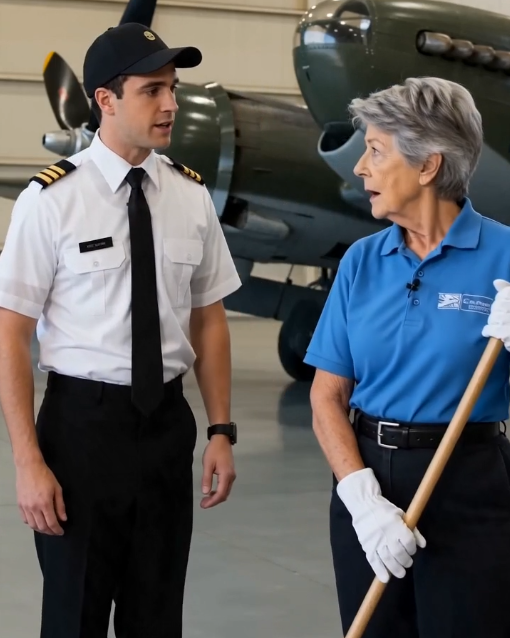
They sat together on a workbench as she recounted 1944. Pilot Officer Eleanor Thompson had been ferrying troops when flak hit the cockpit. The pilot was badly wounded, hands mangled. With the aircraft shuddering and altitude dropping, Eleanor — a ferry pilot with nerves of steel — took control. She brought the damaged plane down safely behind Allied lines, saving everyone aboard.
“I never flew combat after that,” she said quietly, “but I kept flying where they needed me.” Now in her eighties, she volunteered at the museum, cleaning and maintaining the very type of aircraft she once mastered.
Lucas listened, humbled. He had thousands of flight hours, but none forged in the fire she described. He offered her the controls for a taxi run around the hangar. Eleanor’s hands, though wrinkled, moved with remembered precision on the yoke. The old plane responded as if greeting an old friend.
That afternoon, the museum added a new plaque beside the C-47: “Flown and saved by Eleanor Thompson, 1944.” Some heroes never sought the spotlight — they simply showed up, did what was needed, and later swept the floors where legends rested.