Her Ex Said She Would Never Matter Before a Billionaire Bowed to Her
PART 3 (FULL STORY)
The towering digital screens of the Grand Lennox ballroom illuminated the four hundred assembled donors with the high-resolution glow of certified forensic medical files. A collective gasp rolled through the room as society elites recognized the official seal of the Cook County Superior Court and the Illinois Department of Vital Records stamped across the ninety-nine point nine percent genetic match. The documents laid bare an unassailable truth: Mara Dawson was the biological daughter of the late Evelyn Whitmore, Theodore’s younger sister, who had died of postpartum complications days after her infant daughter vanished from Saint Jude’s Maternity Pavilion in 1994.
Nathan Cole stepped to the podium, adjusting the microphone as Theodore remained standing beside Mara, shielding her stained silk dress with his own stature. Nathan informed the stunned assembly that four months earlier, when Mara had submitted Horizon’s corporate compliance background checks for the gala bidding process, the biometric and genealogical markers automatically triggered an internal red-flag audit within the Whitmore Family Trust’s permanent missing-heir registry. For thirty-two years, Theodore had maintained an active genetic search file, renewing the investigation every single year while funding nationwide pediatric clinics in his lost niece’s name.
The archival records displayed on the screen revealed that Ruth Dawson was never a criminal. On the snowy morning of November 14, 1994, Ruth was a twenty-four-year-old neonatal intensive care nurse who discovered that a private broker operating within the hospital had forged death certificates to sell Evelyn Whitmore’s newborn to an overseas black-market syndicate. Knowing the institutional power of the predators involved, Ruth had smuggled the infant out of the facility inside a medical transport crate, walking away from her nursing career, her savings, and her family name to raise Mara in quiet, working-class anonymity in Albany Park. On her deathbed eight months earlier, Ruth had fastened the silver flower pendant around Mara’s neck, whispering that the stars represented truth, endurance, and a family who had never stopped loving her.
Celeste Blackwood’s hands began to shake uncontrollably, her champagne glass slipping from her grasp and shattering against the marble floor. Her mother, Vivian Blackwood, lunged forward from table one, her face flushed with frantic desperation as she attempted to grab Theodore’s sleeve, pleading that the gala was a celebration of commercial partnerships and that family lineage shouldn’t disrupt the Blackwood family’s pending equity allocations. But Theodore pulled his arm away with cold, unyielding revulsion.
“Your family has sat on my board for twelve years, Vivian,” Theodore said, his baritone slicing through the silence like an iron blade. “And tonight, your daughter poured wine over my sister’s child and mocked the handmade dress sewn by the brave woman who saved her life. As of eight o’clock tonight, Whitmore Holdings has exercised its right of first refusal to buy out every share of Blackwood equity at par value. Your seats on the foundation board are permanently revoked.”
Grant Mercer stood frozen between the banquet tables, the color completely drained from his face, his mouth opening and closing like a stranded fish. The arrogant smirk that had defined his climb through the corporate ranks evaporated into sheer, pathetic terror. He took two stumbling steps toward Mara, his hands outstretched in a desperate, pleading gesture. “Mara… please, listen to me,” Grant stammered, his voice cracking beneath the weight of hundreds of watching eyes. “You know how much I always cared for you and Lily. I was under enormous pressure from the Blackwoods… I was protecting your contract… we can rebuild everything together!”
Mara looked at the man who had discarded nine years of shared devotion to purchase a seat at tables he didn’t understand. Her gray-blue eyes were calm, unclouded by anger, and utterly free of sorrow. “You told me twenty minutes ago that I was born to serve people in rooms like this, Grant,” Mara said, her voice clear, steady, and carrying across the ballroom without the aid of a microphone. “You were wrong. I was born to own them.”
Theodore tapped his ebony cane against the stone floor, signaling the six private executive security officers stationed along the grand mezzanine. “Mr. Mercer,” Theodore announced, looking at the former executive as if inspecting dirt on his shoes. “Your employment with Whitmore Holdings is terminated effective immediately for gross breach of executive ethics, workplace harassment, and intentional tortious interference. You have thirty minutes to vacate your corporate apartment before building management changes the electronic locks.” As security guards took Grant by his tuxedo sleeves and escorted him toward the service exit, not a single colleague, donor, or former friend met his pleading gaze. The currency of arrogance Grant had traded his soul to acquire had dissolved the second truth entered the room.
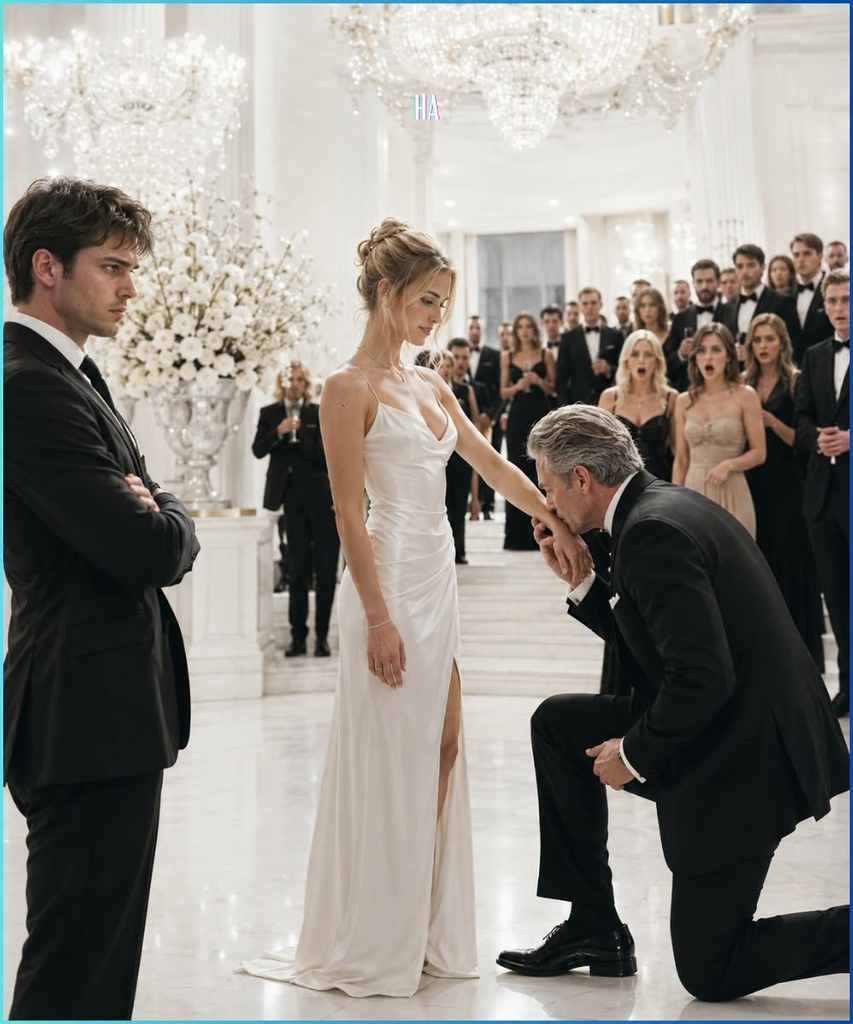
Turning toward Mara, Theodore’s stern composure softened into a profound, tearful reverence. Before four hundred watching titans of industry, the seventy-three-year-old patriarch lowered his head and bowed from the waist, offering the formal family salute of the Whitmore house. “For thirty-two years, my home has been empty, my child,” Theodore whispered as he straightened and gently wiped a drop of red wine from her shoulder with his pocket square. “Tomorrow morning, the board convenes to ratify your appointment as the primary voting trustee of the Evelyn Whitmore Memorial Endowment and executive vice-chair of Whitmore Holdings. You and little Lily will never live in the shadows again.”
The subsequent restructuring of Whitmore Holdings over the following six months was swift, methodical, and just. Grant Mercer was blacklisted across the metropolitan financial sector, facing civil restitution suits filed by Horizon Events for contractual sabotage that completely wiped out his personal savings and left him working as an entry-level clerk in downstate Illinois. The Blackwood syndicate retreated entirely from Chicago society, liquidating their real estate assets to pay off margin loans called in by the Whitmore trust.
Mara assumed her leadership role with the exact same quiet discipline and unpretentious grace she had practiced in Albany Park. She acquired Horizon Events, transforming it into a premier national production firm that guaranteed equitable wages, comprehensive healthcare, and full profit-sharing for every creative vendor and working-class contractor. More importantly, she established the Ruth Dawson Maternal Foundation, dedicating fifty million dollars to providing free legal defense, healthcare advocacy, and safe housing for single mothers and pediatric nurses across the state.
Eighteen months later, the golden autumn sun streams through the floor-to-ceiling windows of a historic stone estate overlooking Lake Michigan. On the wide emerald lawn sweeping down to the water, seven-year-old Lily runs through the falling leaves, laughing with unbridled joy as she chases an energetic golden retriever puppy Theodore had gifted her for her birthday.
Mara stands on the wide brick terrace, dressed in a comfortable cashmere sweater and slacks, holding a steaming mug of tea. Resting against her collarbone, catching the warm morning light, is the restored silver pendant—its eight delicate petals and three bright stars polished clean, gleaming with the unbreakable dignity of the mother who raised her and the family who reclaimed her.
Theodore steps out onto the terrace beside her, resting his hand warmly on her shoulder as they watch Lily’s bright red jacket flutter across the grass. Mara reaches up and touches the cool silver pendant with steady, untrembling fingers, feeling the deep, enduring peace of a life finally anchored in truth—cherished, protected, and completely home.