The Thanksgiving Vacation That Left One Mother With Nothing to Lose
PART 3 (FULL STORY)
I stared at Daniel’s message until the screen went dark.
“Mom, Rebecca says you’re moving our stuff. What are you doing?”
Our stuff.
The words almost made me laugh.
For four years, Daniel had called the house his family home. Rebecca had called the kitchen hers when she replaced the dishes I had bought. The children had called the guest room Grandma’s room, but only because they knew I slept there when relatives visited and they needed my bedroom for storage.
Yet the receipts in my blue folder told a different story.
The movers were carrying my dining chairs through the front door when I opened the folder again.
At the bottom was a document Arthur had insisted I keep after we bought the Scottsdale property.
I had forgotten about it because, for a long time, I never imagined I would need it.
The house wasn’t originally Daniel’s.
It wasn’t even something I had simply contributed to.
It was mine.
Arthur and I had bought it as an investment property years before his death. After he died, I had sold my Oak Park apartment and moved to Arizona because Daniel begged me to live with him.
When Daniel and Rebecca wanted a larger house, I agreed to use the Scottsdale property.
I had put money into the down payment and continued paying expenses.
But the deed had never changed.
My name was still on it.
I ran my finger over the line beneath my name.
Margaret.
Arthur had always called me Maggie.
For four years, I had acted like a guest in a house that belonged to me.
And my family had become so comfortable with that arrangement that they had started treating my presence as an inconvenience.
The phone rang again.
Daniel.
I answered.
“Mom, what is going on?”
His voice was tight.
“I could ask you the same thing.”
“We’re in Hawaii.”
“I know.”
“Then why are movers at the house?”
I looked toward the hallway.
One of the movers was carrying out the television.
“Because I’m moving.”
There was a long pause.
“Moving where?”
“Somewhere I can live without being treated like a burden.”
“Mom, this is ridiculous.”
“Is it?”
“Yes.”
“Daniel, you left me a note on Thanksgiving morning.”
“We thought you’d be happier staying home.”
“You didn’t ask me.”
“You get tired.”
“You didn’t ask me.”
He sighed.
“Mom, please don’t make this into something it isn’t.”
I looked at Rebecca’s handwriting still visible on the refrigerator.
“You already did.”
“What does that mean?”
“It means you made a decision about my life without me.”
“Because we were trying to do something nice for the kids.”
“You were trying to have a vacation without your seventy-three-year-old mother.”
“That isn’t fair.”
“Neither was leaving frozen soup in the freezer.”
He didn’t answer.
I could hear airport noise behind him.
A child laughing.
An announcement in the distance.
Then Rebecca’s voice.
“What is she saying?”
Daniel covered the phone, but not quickly enough.
“She’s moving the furniture.”
Rebecca said something I couldn’t hear.
Then Daniel came back on the line.
“Mom, you can’t just take everything.”
“Everything?”
“Yes.”
“The refrigerator?”
“Yes.”
“I bought it.”
“The sofas?”
“I bought them.”
“The dining set?”
“Me.”
“The coffee maker?”
“I paid for that too.”
He went quiet.
I opened the folder.
“And the house?”
That silence was different.
“Mom…”
“I have the deed.”
Rebecca’s voice came through the phone again.
“What deed?”
Daniel didn’t answer her.
I heard him move away.
Then his voice dropped.
“You never said anything about the house.”
“I never needed to.”
“You can’t just kick us out.”
“I haven’t.”
“But you’re moving.”
“Yes.”
“Where are we supposed to live?”
I closed the folder.
“You have a week.”
“A week?”
“The movers are taking my belongings. The rest of the house stays.”
“So we’re supposed to pack up and leave?”
“You’re adults, Daniel.”
“Mom, this is our home.”
“No.”
My voice surprised even me.
“It was my home before it was yours.”
He didn’t speak.
I continued.
“You and Rebecca are going to have to find another place to live.”
“Mom, please.”
That was the first time his voice sounded frightened.
Not angry.
Not offended.
Frightened.
And for a second, I remembered the little boy who used to crawl into my bed after thunderstorms.
I remembered Daniel at eight years old, holding Arthur’s hand at the county fair.
I remembered him at twenty-five, sitting beside me at the hospital after his father died.
I loved my son.
That was the hardest part.
But loving someone did not mean I had to keep financing the way they treated me.
“I’ll leave the keys with the property manager,” I said.
“You’re really doing this?”
“I already did.”
I ended the call.
My hand rested on the phone for several seconds.
Then I put it away.
The movers kept working.
By noon, the house looked unfamiliar.
The dining room was nearly empty.
The living room had only the things I had chosen not to take.
The kitchen counters were bare.
The refrigerator was gone.
The expensive coffee maker was wrapped in brown paper and sitting inside a box.
For the first time in years, there was space.
Real space.
I walked into the guest room and opened the closet.
There were toys on the floor.
A broken plastic airplane.
A pink sweater.
A stuffed rabbit with one ear bent forward.
Emily’s.
I sat on the edge of the bed.
I could already hear her voice.
“Grandma, are you coming with us?”
I hadn’t known she would ask that question.
I hadn’t known what I would say.
The truth was, I had spent four years trying to be useful enough to remain wanted.
And somewhere along the way, I had forgotten that grandchildren could love their grandmother without needing her to cook dinner first.
I picked up the stuffed rabbit.
Then I heard a vehicle outside.
The movers stopped.
A car door slammed.
Daniel had come back.
I stood.
He walked through the front door alone.
No Rebecca.
No children.
His face looked exhausted.
“You flew home?” I asked.
“I couldn’t stay.”
I looked at the clock.
“It isn’t even afternoon.”
“I took the first flight I could get.”
He looked around the house.
His eyes stopped on the empty place where the refrigerator had been.
“You really took it.”
“Yes.”
“Why?”
“You know why.”
“No, Mom.”
He shook his head.
“I don’t.”
I didn’t answer.
He stepped into the kitchen.
“Rebecca didn’t mean what you heard.”
That sentence was so familiar that it almost sounded rehearsed.
“You heard her.”
“I know what she said.”
“She was angry.”
“She was honest.”
Daniel looked down.
“She was talking about money.”
“She was talking about me.”
“She didn’t mean that she doesn’t care about you.”
“Maybe she does.”
He rubbed his face.
“Mom, things have been difficult.”
“I know.”
“You don’t understand.”
“Then explain it.”
He sat at the kitchen island.
The island I had paid for.
The stools I had bought.
The countertops I had chosen.
“We’ve been drowning,” he said.
I waited.
“Rebecca lost her job last year.”
I hadn’t known.
“She didn’t tell me.”
“She was embarrassed.”
“Daniel, I would have helped.”
“You always help.”
The way he said it made me stop.
“You always help,” he repeated.
“And maybe that’s the problem.”
He looked at me.
“I didn’t know how to stop.”
He swallowed.
“Every time something went wrong, you fixed it.”
“The refrigerator broke, you bought a new one.”
“Jack needed braces, you paid.”
“Emily needed summer camp, you paid.”
“Our mortgage got tight, you helped.”
“I thought you were being generous.”
“I was.”
“But we started depending on it.”
I sat across from him.
“That doesn’t explain Hawaii.”
“No.”
He looked toward the window.
“Rebecca wanted one week where we didn’t have to think about bills.”
“And you decided I was the bill.”
His eyes closed.
“No.”
“But that’s what you did.”
He didn’t argue.
That was worse.
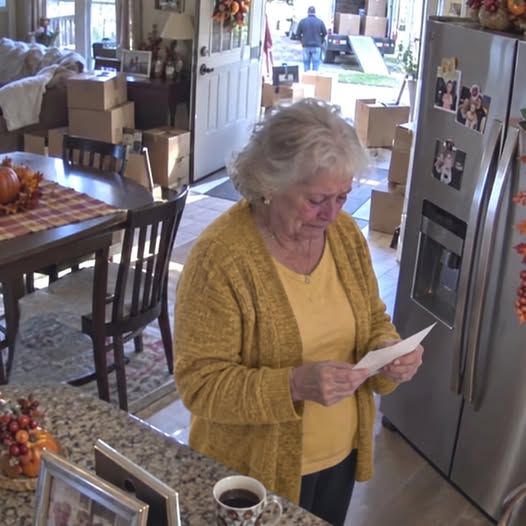
I opened my handbag and took out the note.
I placed it on the counter between us.
“I’ve read this more than once.”
He stared at it.
“We didn’t think you’d understand.”
“I understood every word.”
“She thought you would insist on coming.”
“I might have.”
“You’ve never traveled much since Dad died.”
“I would have liked to.”
He looked up.
“I didn’t know.”
“You didn’t ask.”
Another silence.
Then Daniel said something I wasn’t prepared for.
“Mom, I was ashamed.”
“Of what?”
“Of how much we needed you.”
I looked at my son.
For the first time that day, he looked like the little boy from the thunderstorm.
Not because he was helpless.
Because he finally looked honest.
“You should have told me,” I said.
“I know.”
“You should have told me Rebecca lost her job.”
“I know.”
“You should have told me the mortgage was difficult.”
“I know.”
“You should have told me you were angry that I was always there.”
His eyes filled.
“I wasn’t angry that you were there.”
“Then what?”
“I was angry that I couldn’t stand on my own.”
I let that sit between us.
There are some apologies that don’t repair anything immediately.
They simply make the truth impossible to avoid.
Daniel stood.
“Are you really leaving?”
“Yes.”
He nodded slowly.
“I understand.”
I almost asked whether he did.
Instead, I said, “You have seven days.”
He looked at the empty living room.
“Will you let the kids say goodbye?”
That question hurt more than everything else.
“Of course.”
He nodded.
Then he walked out.
I thought that was the end of the conversation.
It wasn’t.
An hour later, my phone rang.
Emily.
I answered.
“Grandma?”
“Hi, sweetheart.”
“Are you mad at us?”
“No.”
“Daddy said we’re coming home.”
“I know.”
“Are you leaving?”
I looked at the blue folder sitting on the counter.
“Yes.”
“Because we went to Hawaii?”
“No, honey.”
“Because we didn’t take you?”
I closed my eyes.
“Because Grandma needs a home of her own.”
There was silence.
Then Emily whispered, “Can we visit you?”
“Anytime.”
“Even if you’re not at our house?”
“Especially then.”
She laughed softly.
“Okay.”
Then she asked, “Did you get the soup?”
I laughed.
“Yes.”
“I don’t like that soup.”
“Neither do I.”
“Grandma?”
“Yes?”
“I love you.”
My throat tightened.
“I love you too.”
When the call ended, I stood alone in the kitchen.
The movers were almost finished.
The house was quieter than it had been that morning.
But it no longer felt empty.
It felt like a place waiting for something new.
The next week passed without drama.
Daniel and Rebecca packed.
They found a rental house across town.
Daniel hired movers of his own.
Rebecca never called me.
She left one message.
“I know you’re angry.”
I didn’t return it.
Not because I wanted to punish her.
Because I didn’t know what I would say.
When the last box left the house, Daniel came to the front door.
He handed me a small envelope.
“What is this?”
“Open it later.”
I waited until he was gone.
Inside was a photograph.
It was from four years earlier.
Arthur was sitting on the patio.
Daniel was beside him.
Rebecca stood behind them.
The children were still small.
On the back, Daniel had written:
“I forgot what you gave us because you never made us feel like we owed you.”
I sat down.
For a long time, I stared at Arthur’s face.
Then I understood something.
The money had never been the deepest wound.
The deepest wound was that I had allowed my usefulness to become the measure of my place in my own family.
I had mistaken being needed for being loved.
Those were not the same thing.
The following Monday, I moved into a smaller home.
Not far away.
But mine.
The movers placed my dining table near the window.
Arthur’s photograph went on the shelf above it.
The coffee maker sat beside the sink.
The curtains went up in the living room.
The refrigerator hummed quietly in the kitchen.
I stood there with my first cup of coffee.
No children were running down the hallway.
No one was asking what was for dinner.
No one was reminding me that my back hurt or that I should rest.
For the first time in four years, every sound in the house belonged to me.
My phone buzzed.
A message from Daniel.
“Emily wants to know if she can come Saturday.”
I smiled.
I typed back.
“Saturday works.”
A second message appeared.
“Can I come too?”
I stared at it for a moment.
Then I wrote:
“Yes.”
On Saturday afternoon, there was a knock at the door.
I opened it.
Emily ran past Daniel and wrapped her arms around my waist.
“Grandma!”
I held her tightly.
Jack followed, carrying the stuffed rabbit with the bent ear.
Rebecca stood behind them.
She looked nervous.
I stepped aside.
“Come in.”
She entered.
Nobody mentioned Hawaii.
Nobody mentioned the note.
Nobody pretended the last week had not happened.
We sat at my dining table.
The same table they had once treated as part of their household.
This time, it was simply my table.
Rebecca looked at me.
“I owe you an apology.”
I waited.
She looked down at her hands.
“What I said on the patio was cruel.”
“Yes.”
“I was scared.”
“I know.”
“But I was still cruel.”
“Yes.”
She nodded.
“I don’t expect you to forgive me today.”
“I appreciate that.”
Daniel looked at me.
“Mom.”
“Yes?”
“Thank you for not making us leave with nowhere to go.”
I thought about that.
“I was angry.”
“I know.”
“But I wasn’t trying to destroy your family.”
He nodded.
“I know.”
I looked at my grandchildren.
They were eating cookies and arguing over which one had more chocolate chips.
The house was no longer silent.
But this time, the noise didn’t come with an obligation.
It came with a choice.
Over the next few months, things changed slowly.
Daniel stopped asking me for money.
When something broke, he fixed it.
When Rebecca needed help, she asked rather than assuming.
Sometimes I said yes.
Sometimes I said no.
And when I said no, nobody treated it like betrayal.
Daniel also started taking the children to visit me every other weekend.
Emily learned how to make coffee.
Jack became obsessed with the little garden behind my house.
Rebecca and I never became close overnight.
Trust doesn’t return because someone says sorry.
It returns through small things done repeatedly.
A phone call.
A visit.
A promise kept.
A question asked before a decision is made.
One afternoon, Emily and I were sitting at the dining table when she looked toward the refrigerator.
“Grandma?”
“Yes?”
“Can I put something on your fridge?”
“Of course.”
She drew a picture with a purple marker.
It showed four people standing under a giant yellow sun.
At the bottom she had written, in uneven letters:
GRANDMA’S HOUSE.
She held it up proudly.
I found a magnet and placed it on the refrigerator.
Right beside it was the old Thanksgiving note.
I had kept it.
Not because I wanted to remember the hurt.
Because I wanted to remember the morning I finally understood something I should have known much earlier.
Family isn’t the person who decides where you belong.
It isn’t the person who accepts your money while quietly resenting your presence.
And it isn’t the person who tells you that age has made your world smaller.
Family is the person who leaves room for you at the table.
I looked at Emily’s drawing.
Then I looked at Arthur’s photograph across the room.
For a moment, I imagined him sitting there, smiling over his coffee.
“Maggie,” I could almost hear him say, “you’d keep the receipt for a loaf of bread.”
I smiled.
“Maybe.”
Then I reached for my coffee.
The refrigerator hummed beside me.
This time, I didn’t hear loneliness in the sound.
I heard home.