The Night My Husband Tried to Turn Our Daughter’s Recital Against Me
PART 3 (FULL STORY)
Then she told me why Nathan had been so certain I would lose control.
“Before the recital,” the director said, “your husband asked whether the school had a procedure for documenting parental disturbances.”
I sat very still.
“Disturbances?”
“He used that word.”
I looked down at the email on my laptop.
The security report was still open.
7:46 p.m.
The same time I had photographed the lobby clock.
“What else did he say?”
There was a pause.
“He told us there had been conflict between you two. He said he was concerned you might become emotional if his girlfriend attended. He specifically asked whether staff could document your behavior if you caused a scene.”
I closed my eyes.
Nathan had not been improvising.
The seat.
The flowers.
Brooke’s public announcement.
His repeated warnings.
The audience.
He had arranged every piece of the evening around one expected outcome.
Me losing control.
The director continued.
“And Vivian, there is something else. He gave us a written statement before the performance even started.”
I opened the attachment again.
There it was.
A document titled PARENTAL INCIDENT SUMMARY.
Nathan’s name was at the bottom.
The date line was blank.
The rest had already been written.
He claimed I had been increasingly hostile toward Brooke.
He claimed I had threatened to interfere with his relationship with Lila.
He claimed I had become unpredictable around school events.
And then there was a sentence that made me read it twice.
“I am concerned Vivian may create a public disturbance in front of our daughter.”
I almost laughed.
He had written the ending before the scene even happened.
The director told me she had refused to sign or accept the statement as an official complaint because nothing had happened.
Then Nathan had asked what would happen if I did become disruptive.
She had explained that staff would document what they witnessed.
That was all.
But Nathan had apparently been satisfied.
He had his witnesses.
He had his prepared statement.
He had Brooke.
He had the audience.
All he needed was me.
The woman he had spent four months telling everyone was “struggling to adjust.”
I looked at the photographs on my phone.
The bouquet.
The card.
Nathan’s hand on Lila’s shoulder.
Brooke standing beside him.
The recital poster.
7:46 p.m.
For the first time, I understood why Nathan had looked disappointed when I sat three rows behind him.
He needed me close enough to provoke.
He needed me visible.
He needed me angry.
And when I refused, he had tried harder.
My mother was sitting across from me at the kitchen table.
She had been quiet since I told her what the director said.
Finally, she asked, “What are you going to do?”
“I don’t know yet.”
That was true.
I did not want revenge.
I wanted something much more boring.
A record.
A complete one.
I forwarded the email from the school to my attorney.
Then I sent the photographs.
Then I photographed the original parenting order.
I did not edit anything.
I did not add commentary.
I simply put every piece of information in one folder.
At 9:17 that morning, Nathan texted me.
You really need to stop making everything about you.
I stared at the message.
A second text arrived.
Lila had a beautiful night until you made things awkward.
Then another.
Brooke was only trying to be kind.
I placed the phone face down.
My mother looked at me.
“You’re not answering?”
“No.”
“Why?”
“Because I think he’s still waiting.”
“For what?”
“For me to prove his story.”
I was right.
An hour later, Nathan sent another message.
My lawyer will be hearing about this.
That one I saved.
Not because it frightened me.
Because it confirmed something.
He had already been preparing for a legal fight.
The recital had not been the beginning.
It had been evidence he hoped to manufacture.
My attorney called just before noon.
“I read the school report,” she said.
“And?”
“And don’t contact Nathan about this.”
I frowned.
“Why?”
“Because the school has something you don’t.”
“What?”
“Their own records.”
She explained that the school had security footage, staff notes, the incident report, and the original communication Nathan had sent before the recital.
“Your photographs help,” she said. “But the strongest evidence is that the school documented his request before anything happened.”
I leaned back in my chair.
“He expected me to explode.”
“Yes.”
“And if I had?”
“Then he would have had a story.”
I looked at the bouquet photograph again.
There was something I had missed.
The card.
I zoomed in.
LOVE, DAD & BROOKE.
Underneath the printed message was a handwritten line.
YOU’LL GET USED TO US.
I felt something cold move through me.
I had assumed Brooke wrote it.
My attorney asked me to send her the photograph.
I did.
Then she called back.
“Vivian, don’t confront either of them.”
“I wasn’t planning to.”
“Good. Because the school may have more.”
She was right.
The director called again that afternoon.
This time, she asked me to come in.
I arrived alone.
She closed her office door.
On her desk was a folder.
“I need you to understand something,” she said. “We don’t take sides in family matters.”
“I know.”
“But we do have to protect children.”
She opened the folder.
Inside was a printed email from Nathan.
It had been sent three days before the recital.
He had asked the school to confirm whether Brooke could be present.
The school had replied that both parents were allowed to attend unless a court order or school safety concern required otherwise.
Nathan had then written back.
He said he believed Vivian might become hostile if she saw Brooke.
The director had replied that the school could not prevent an adult from attending solely because another adult might object.
Nathan’s final response was only one sentence.
Understood. I’ll handle it myself.
I stared at those words.
“I didn’t know about this,” I said.
“We didn’t think it was relevant until last night.”
“What changed?”
She looked at me.
“Last night, after you left, Nathan came back into the lobby.”
My stomach tightened.
“Why?”
“He asked whether we had documented your behavior.”
I almost smiled.
“Of course he did.”
“He seemed frustrated when we told him there was nothing to document.”
The director slid another page toward me.
“This is a note from our assistant director.”
I read it.
At approximately 7:52 p.m., Nathan asked whether staff had witnessed Vivian yelling, threatening, or approaching Brooke aggressively.
The answer was no.
The note continued.
Nathan appeared disappointed and asked whether the school could still make a report based on “the tension in the room.”
The assistant director had refused.
I looked up.
“He really thought he could turn tension into evidence.”
The director nodded.
“I don’t know what was happening between you and your husband before this,” she said. “But I know what happened here.”
She pointed to the folder.
“You brought your daughter to her recital.”
“You sat where the school assigned you.”
“You did not confront Brooke.”
“You did not raise your voice.”
“You photographed your daughter receiving flowers.”
“And you left with your daughter.”
That was all.
No dramatic speech.
No public victory.
Just facts.
And suddenly I realized why facts were frightening Nathan.
Facts did not care who looked more convincing.
They did not care who smiled.
They did not care who sounded calm.
They stayed where you put them.
I thanked the director and left.
On the drive home, Lila called me from my mother’s house.
“Mom?”
“Hi, sweetheart.”
“Are you mad at Dad?”
I tightened my grip on the steering wheel.
“No.”
There was a long pause.
“Are you mad at Brooke?”
I considered lying.
Instead, I said, “I’m upset about what happened.”
“Me too.”
Her voice was small.
“I told Dad not to bring her.”
“I know.”
“I thought he listened.”
“He should have.”
Another pause.
“Mom?”
“Yes?”
“Did Brooke know I didn’t want her there?”
That question hurt more than anything else.
“I don’t know,” I said.
Lila was quiet.
Then she said, “She told me Dad said it would make me happy.”
I pulled the car to the side of the road.
“What?”
“She said he told her I wanted flowers from both of them.”
I closed my eyes.
Nathan had lied to Brooke about Lila.
He had lied to Lila about Brooke.
And he had expected me to carry the blame when the lie collapsed.
“Did Dad say anything else?”
“He said I needed to be nicer.”
I felt my jaw tighten.
“Nicer to who?”
“Brooke.”
I took a breath.
“You don’t have to be rude to anyone, Lila.”
“I wasn’t.”
“I know.”
“But I don’t want her at my dance stuff.”
“You can say that.”
“Even if Dad gets mad?”
“Yes.”
She was silent for a moment.
“Okay.”
Then she asked if I could come get her.
I said yes.
When I arrived, she ran to the car with her dance bag bouncing against her hip.
The bouquet was not with her.
I noticed.
“Where are the flowers?”
She shrugged.
“I left them at Grandma’s.”
I knew she hadn’t.
She was nine.
She was trying to protect me from the answer.
“That’s okay,” I said.
She climbed into the passenger seat.
After a few minutes, she whispered, “I put them in the trash.”
I didn’t react.
Not because I wasn’t upset.
Because I knew those flowers had become something they were never supposed to be.
A nine-year-old’s celebration had been turned into a prop.
I reached across the console and took her hand.
“You didn’t do anything wrong.”
She nodded.
We drove home.
That evening, Nathan arrived at the house.
He was not supposed to come inside without notice, but he stood on the porch anyway.
“I need to talk to Vivian.”
Lila was upstairs.
I stepped outside and closed the door behind me.
Nathan looked different from the night before.
Not angry.
Careful.
That was worse.
“You’ve been talking to the school.”
“Yes.”
“You’re making this bigger than it needs to be.”
“I didn’t make the report.”
His jaw tightened.
“Vivian, Brooke was trying to be supportive.”
“I know what you told her.”
“What does that mean?”
“It means I know Lila told you not to bring her.”
His expression shifted.
Only slightly.
But I saw it.
“I don’t know what you’re talking about.”
“You do.”
He looked toward the house.
“Where is Lila?”
“Upstairs.”
“Can I see her?”
“Not tonight.”
His face hardened.
“You don’t get to withhold my daughter because you’re angry.”
“I am not withholding her.”
“Then let me in.”
“No.”
He stepped closer.
“You’re proving exactly what I said.”
I looked at him.
“What did you say?”
He didn’t answer.
“What did you tell the school, Nathan?”
He looked away.
I continued.
“Did you tell them I was unstable?”
“No.”
“Did you tell them you were afraid I’d cause a disturbance?”
He said nothing.
“Did you submit a statement before the recital?”
His silence answered for him.
For the first time since I had known him, Nathan looked trapped by his own words.
Then his phone rang.
He glanced at the screen.
Brooke.
He rejected the call.
I noticed.
So did he.
“You should talk to her,” I said.
“Stay out of it.”
“You brought her into it.”
He stepped back.
“You don’t understand what’s happening.”
“I understand perfectly.”
“No, you don’t.”
He looked toward the upstairs windows.
“I was trying to make things easier.”
“For who?”
He didn’t answer.
“For yourself?”
Still nothing.
“For Brooke?”
His eyes narrowed.
“Enough.”
“For Lila?”
That stopped him.
He looked at me for several seconds.
Then he said quietly, “You have no idea what she needs.”
I opened the door.
“Neither do you, apparently.”
He left.
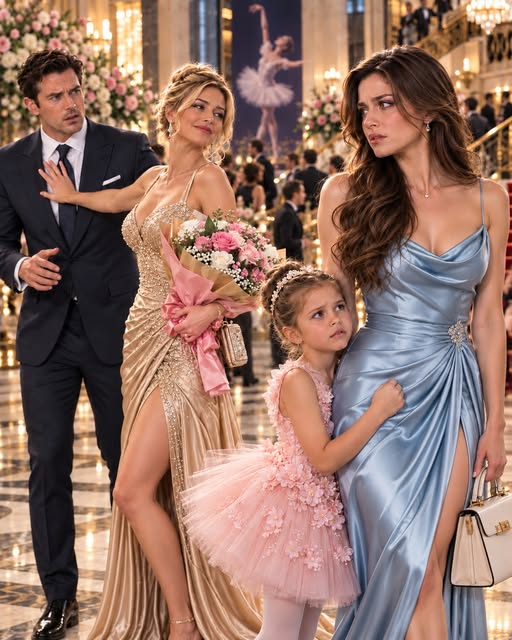
I thought that would be the end of it.
It wasn’t.
Two days later, my attorney received a formal request from Nathan’s lawyer.
He was asking the court to reconsider the temporary parenting arrangement.
The stated reason was “ongoing parental conflict and concerns regarding Vivian’s conduct around Nathan’s partner.”
There it was.
The story he had been trying to build.
Not an affair.
Not Brooke.
Not the recital.
Me.
The problem was supposed to be me.
My attorney attached the school’s records to our response.
Then she added the photographs.
Then the parenting order.
Then the messages Nathan had sent me after the recital.
And finally, she included the email he had sent the school three days before the recital.
The judge would decide what weight to give any of it.
I did not know what would happen.
But Nathan’s carefully prepared story was no longer the only story in the room.
A week later, we attended a court hearing.
Nathan sat beside his attorney.
Brooke was not there.
My attorney handed over the documents.
Nathan’s attorney argued that the situation demonstrated “persistent hostility.”
My attorney asked the court to review the school’s records.
The judge did.
Then she asked Nathan’s attorney one question.
“Was this statement prepared before the alleged incident?”
There was a pause.
“Yes.”
“And was it completed afterward?”
“No.”
The judge looked down at the document.
Then she looked at Nathan.
“Mr. Hale, if the statement was prepared before the incident, how could it accurately describe conduct that had not yet occurred?”
Nathan’s attorney began to answer.
Nathan interrupted.
“It was a precaution.”
The judge looked at him.
“A precaution?”
“Yes.”
“Against what?”
Nathan hesitated.
“My wife’s behavior.”
The judge returned her attention to the file.
“The school’s records indicate that no disruptive behavior occurred.”
Nathan said nothing.
“The school also indicates that you asked whether staff could document such behavior before the recital.”
Still nothing.
“And you brought a romantic partner whom your daughter had specifically asked you not to bring.”
His attorney shifted in his chair.
The judge did not raise her voice.
She did not need to.
“Whatever the disagreements between the adults in this family may be, your child cannot be used as a setting for manufacturing conflict.”
Nathan stared at the table.
The hearing did not produce some dramatic punishment.
It was more ordinary than that.
The temporary parenting arrangement remained in place.
The court ordered both parents to follow the existing provisions concerning Lila’s activities and to communicate through the designated parenting channel about scheduling.
And there was another instruction.
Neither parent was to involve Lila in disputes about romantic relationships.
That mattered more to me than anything else.
After the hearing, Nathan walked past me without speaking.
Outside, his attorney said something to him.
Nathan stopped.
He looked back at me.
For a second, I saw the man I had married.
Then I saw the man who had sat in my seat and waited for me to become someone he could use against myself.
He looked away.
Three weeks passed.
Lila returned to dance class.
Nathan stopped attending rehearsals.
Brooke never appeared at another recital.
The flowers were gone.
The photographs remained.
I kept them in a folder with the school report and the parenting order.
Not because I wanted to relive that night.
Because I had learned something about records.
People could argue about memories.
They could reinterpret conversations.
They could say someone was emotional, difficult, hostile, unreasonable.
But a timestamp was a timestamp.
A photograph was a photograph.
An email sent three days before an event could not suddenly become a message written afterward.
And a child saying, “I told Dad not to bring her,” could not be rewritten simply because an adult preferred a different story.
One afternoon, Lila came home from dance carrying a small paper bag.
“What is that?” I asked.
She smiled.
“A present.”
“For me?”
She nodded.
Inside was a little wooden picture frame.
She had decorated it with crooked purple stars.
There was a photograph inside.
It was from her recital.
Not the photograph of the bouquet.
A different one.
Lila standing onstage in her costume, smiling beneath the theater lights.
On the back, in her careful handwriting, she had written:
MOM WAS THERE.
I ran my finger over the words.
“You like it?”
“I love it.”
She leaned against me.
“Mom?”
“Yes?”
“Next recital, can we sit together?”
I smiled.
“Absolutely.”
She looked toward the kitchen.
“Can we bring Grandma too?”
“Of course.”
She nodded, satisfied.
Then she ran upstairs to practice a new dance.
I stood alone in the living room holding the frame.
For months, Nathan had tried to convince people that our marriage ending had made me bitter.
Maybe he needed that story.
It gave him a simple explanation.
It made him the calm one.
It made Brooke the supportive one.
And it made me the woman everyone needed to manage.
But that night in the theater, I had not defeated Nathan by humiliating him.
I had not even confronted him.
I simply refused to perform the role he had written for me.
He had brought the bouquet.
He had chosen the seat.
He had prepared the statement.
He had asked the school for witnesses.
He had counted on my anger completing the story.
Instead, the only thing I gave him was a photograph of a bouquet, a photograph of a card, a photograph of a clock, and the truth.
7:46 p.m.
The next recital came six months later.
I arrived early.
This time, my seat was waiting for me.
Lila’s dance bag was beside my chair.
My mother sat on my other side.
There were no flowers from Brooke.
No prepared statement.
No whispered warning.
Just the low murmur of parents finding their seats and the faint music coming from backstage.
The lights dimmed.
Lila stepped onto the stage.
She found me in the audience.
Then she smiled.
I raised the little wooden frame in my lap just enough for her to see it.
She smiled wider.
And when the music began, I watched my daughter dance without looking over my shoulder once.