The Wife He Thought He Controlled Was Holding the Key to His Family Empire
PART 3 (FULL STORY)
And then Raymond sent me the first document.
I opened the attachment with trembling fingers, expecting some old legal instruction or perhaps a letter from my father.
It was neither.
It was a corporate ownership chart.
At the top was Fairchild Holdings, the private company that controlled most of Brendan’s family’s wealth. Beneath it were the subsidiaries, investment entities, properties, and trusts I had heard about over the years but never been allowed to see.
Then I saw my name.
Not as Brendan’s wife.
As a beneficiary.
I looked at the percentage beside it twice.
It was large enough to make my hands go cold.
Brendan was still standing between me and the door.
“What did he leave you?” he asked again.
I locked the screen.
“Nothing you need to worry about tonight.”
His expression tightened.
“You’re my wife.”
“I was.”
The word came out more easily than I expected.
Brendan stared at me.
“What is that supposed to mean?”
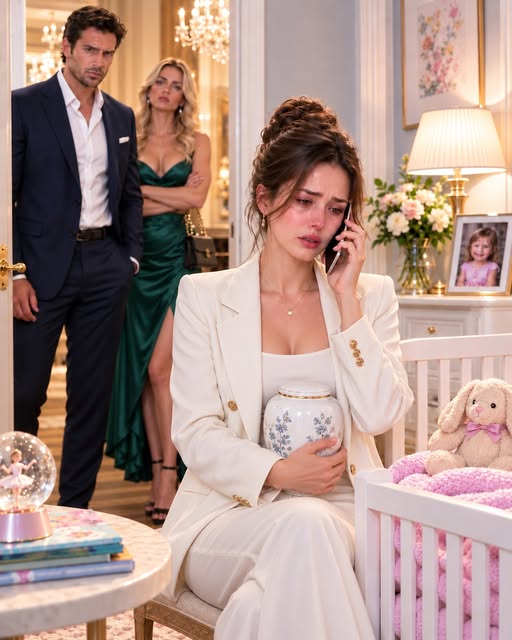
I looked toward the empty crib.
“It means our daughter is dead, and you still haven’t asked me how she died.”
He opened his mouth.
No words came.
I turned away from him and answered Raymond’s call.
“Tell me everything.”
Raymond’s voice was quiet.
“Your father believed Brendan would eventually try to isolate you financially. He also believed the Fairchild family would treat your contribution to the marriage as insignificant.”
“They did.”
“He anticipated that.”
I listened as he explained what my father had done three years earlier.
Before my wedding, my father had transferred a portion of his investment holdings into an independent trust in my name.
He had also purchased a substantial position in Fairchild Holdings through a series of legitimate investment entities.
The shares were placed under a voting agreement that could become active if certain conditions were met.
Those conditions included financial coercion, misuse of marital assets, and the deliberate withholding of essential medical care from a dependent child.
I closed my eyes.
My father hadn’t known Chloe would die.
But he had known enough about Brendan to prepare for the possibility that money would someday become a weapon.
“Why didn’t you tell me?” I asked.
“Because your father made me promise not to interfere unless you called.”
I looked at Brendan.
He had started pacing.
“Raymond,” I said, “did my father know about the Fairchild accounts?”
“He knew enough to ask questions. I spent three years verifying what he suspected.”
“And?”
A pause.
“Your husband has been moving company money through several related entities.”
Brendan stopped pacing.
He couldn’t hear Raymond through the phone, but he could see my face changing.
“What are you doing?” he demanded.
I ignored him.
Raymond continued.
“Some of those transfers appear to benefit Samantha Hayes.”
My stomach tightened.
“So she isn’t just an affair.”
“No.”
He sent another file.
This one contained transaction records.
Luxury apartment payments.
Travel expenses.
Consulting fees to a company Samantha controlled.
Private transfers from accounts connected to Fairchild Holdings.
I stared at the numbers.
Brendan had spent years telling me I was irresponsible with money.
Meanwhile, he had been moving company funds to finance another woman’s life.
“How much?” I whispered.
Raymond named the amount.
I couldn’t speak for several seconds.
It wasn’t just infidelity.
It was theft.
And if Raymond’s findings were correct, it wasn’t limited to Samantha.
Several payments had gone to Brendan’s sister.
Others had gone to entities controlled by senior members of the Fairchild family.
My father’s attorney had been quietly collecting evidence for years.
“There’s more,” Raymond said.
“What?”
“The medical records.”
I looked at the empty crib.
“What about them?”
“Your daughter’s medication request was rejected seven days before her death.”
“I know.”
“No, Nora. You know it was rejected.”
I waited.
“We have evidence that Ximena received an instruction from someone above her to delay the approval.”
My fingers tightened around the phone.
“Who?”
Raymond didn’t answer immediately.
Then he said, “Brendan.”
The room seemed smaller.
I looked at my husband.
He was watching me carefully now.
“What did he authorize?” I asked.
“A written instruction stating that Chloe’s emergency medication was outside the approved family expenditure.”
“But he told me he had authorized the money.”
“That statement was made after Chloe had already died.”
I remembered his voice from the phone.
Stop causing a scene and bring the child home. I already authorized the money for her treatment.
He hadn’t known she was dead.
Or perhaps he hadn’t cared enough to ask.
I swallowed.
“Raymond, can we prove it?”
“Yes.”
“Then don’t send anything to me.”
Brendan looked suspicious.
“Who are you talking to?”
I ended the call.
“An attorney.”
His face changed.
“You hired a lawyer?”
“My father hired him.”
“Your father is dead.”
“He left instructions.”
Brendan laughed once.
It wasn’t a happy sound.
“Nora, you don’t understand how this works.”
I looked at him.
“No. I think I understand exactly how it works.”
He stepped closer.
“You have no money. No job. No control over the company. And whatever little inheritance your father left is not going to protect you from this family.”
I looked down at Chloe’s urn.
“You’re still talking about money.”
His expression hardened.
“What else am I supposed to talk about?”
“Our daughter.”
He looked toward the crib.
“She was sick.”
I felt something inside me break for the last time.
“She was your daughter.”
Brendan said nothing.
I walked past him.
At the bedroom door, his sister was standing in the hallway.
She had clearly been listening.
“What’s happening?” she asked.
Brendan immediately changed his tone.
“Nothing. Nora is upset.”
I looked at her.
“Your brother told you Ximena was right to delay Chloe’s expenses.”
Her face went pale.
“I never said that.”
“I heard you.”
She looked at Brendan.
He shook his head slightly.
That tiny movement told me more than any confession could have.
They were already coordinating their stories.
I went downstairs.
For the first time since I had married Brendan, I walked through the Fairchild estate without asking permission to be anywhere.
I placed Chloe’s urn on the dining table.
Then I sat across from Brendan’s family.
His mother had arrived by then.
Samantha was there too.
I didn’t know why she had come to the house until she walked in holding a leather folder.
Brendan stood immediately.
“Samantha, this isn’t a good time.”
She looked at me.
Then at the urn.
For once, she didn’t smile.
“I came because I was told there was a problem with the accounts.”
Brendan went completely still.
I watched Samantha’s face.
She wasn’t pretending not to understand.
She knew.
Maybe not everything.
But enough.
I opened the folder Raymond had sent me.
“You should sit down.”
Brendan’s mother frowned.
“You have no right to interrogate anyone in this house.”
I looked at her.
“Actually, I may have more right than you realize.”
I placed a single document on the table.
Nobody touched it.
Then I placed another beside it.
And another.
Transaction records.
Corporate ownership records.
Medical authorization logs.
Emails.
Every document had been obtained legally.
Every one had been independently verified.
Brendan’s sister picked up the first page.
Her eyes moved across it.
Then she looked at Brendan.
“Is this real?”
He didn’t answer.
Samantha slowly opened the folder she had brought.
Inside were copies of invoices.
She looked confused.
“Brendan told me these were legitimate consulting payments.”
I turned toward her.
“Were you actually providing consulting services?”
She hesitated.
“I… handled some communications.”
“For how much?”
She gave me the amount.
I looked at Raymond’s records.
It was almost ten times higher.
Samantha’s face changed.
“You told me that was my contract.”
Brendan stepped toward her.
“Not here.”
She backed away.
“You told me everything was clean.”
His mother suddenly stood.
“This is absurd.”
“No,” I said. “What’s absurd is that my daughter needed medication while this family was paying for luxury apartments and fake consulting contracts.”
Nobody spoke.
I pushed the medical records across the table.
“This was Chloe’s final medication request.”
Brendan looked at it.
I watched his eyes move down the page.
Then I saw the moment he recognized his own authorization.
His face lost its confidence.
“You don’t understand.”
“Then explain it.”
“It was an administrative decision.”
“You approved it.”
“I didn’t know she was that sick.”
I stared at him.
“You didn’t know because you didn’t answer seventeen calls.”
He looked away.
I continued.
“I waited five hours outside your office.”
“I was working.”
“You were with Samantha.”
His silence was enough.
The Fairchild family’s attorney arrived less than an hour later.
Raymond had already contacted him.
The meeting was no longer a family argument.
It was a corporate crisis.
The attorney read through the documents without speaking.
When he reached the ownership agreement, he stopped.
He looked at Brendan.
“Where did this come from?”
“My father,” I said.
He looked at me.
“Your father?”
“Yes.”
The attorney read the agreement again.
Then he sat back.
“This is enforceable.”
Brendan’s mother turned toward him.
“What does that mean?”
“It means Nora has voting rights that may become immediately effective under the conditions described here.”
Brendan stared at me.
“You knew about this?”
“I didn’t.”
“You’ve been hiding this from me for three years?”
I almost smiled.
“You were the one who insisted I have no access to anything.”
His attorney lowered the document.
“There is another issue.”
Everyone looked at him.
“If these transfers are confirmed as company funds used for personal expenses, the board will have grounds to suspend Mr. Fairchild pending an investigation.”
Brendan stood.
“You can’t do that.”
The attorney looked at me.
“I don’t make that decision.”
I understood.
The decision belonged to the shareholders.
And my father’s trust held enough voting power to matter.
Raymond had already arranged the emergency shareholder meeting.
It took place two days later.
Brendan arrived with his family.
I arrived with Raymond.
For the first time in years, I wore a suit I had bought with my own money.
I had almost forgotten what it felt like to dress for myself.
The meeting was not dramatic.
There were no shouting matches.
No one threw anything.
That made it worse for Brendan.
The evidence was read aloud.
The transfers were reviewed.
The medical authorization was included.
When the vote came, Brendan lost his position as chief executive pending a full forensic investigation.
His sister resigned before the vote on her own removal.
His mother left the board entirely.
Samantha’s consulting agreement was terminated.
The investigation later found additional unauthorized transactions.
Some were small.
Some were enormous.
But the most important finding wasn’t financial.
It was that Brendan had knowingly created a system in which his wife and daughter depended on his approval for basic medical expenses while he used corporate resources for personal purposes.
The Fairchild family couldn’t explain that away as poor judgment.
Neither could Brendan.
A month later, I moved out of the estate.
I didn’t take anything extravagant.
Clothes.
Books.
My old laptop.
And Chloe’s white urn.
Raymond helped me reactivate my professional licenses and rebuild my career.
I didn’t need to take over Fairchild Holdings.
That had never been what I wanted.
The voting shares remained in the trust.
I used them to force independent oversight and prevent Brendan from quietly regaining control.
Then I returned to actuarial work.
It was strange sitting at a desk again.
The first time I opened a financial model, I stared at the numbers for several minutes.
Three years earlier, I had believed leaving my career was the price of being loved.
Now I understood it had simply been the price Brendan expected me to pay for staying dependent on him.
The divorce took several months.
Brendan fought hard.
He argued that I had abandoned the marriage emotionally.
He argued that I had hidden assets.
He argued that my father’s trust was unfair.
But the documents spoke for themselves.
The settlement gave me enough to rebuild my life without depending on him again.
I didn’t ask for the Fairchild estate.
I didn’t want it.
I wanted a life that belonged to me.
The last time I saw Brendan was outside the courthouse.
He looked older.
Not broken.
Just smaller than I remembered.
“Nora.”
I stopped.
He looked at me for several seconds.
“I loved Chloe.”
I didn’t answer immediately.
Then I said, “You should have acted like it.”
He lowered his eyes.
“I can’t change what happened.”
“No.”
I looked toward the street.
“But you can live with knowing that your choices had consequences.”
He nodded once.
Neither of us said goodbye.
I walked away carrying Chloe’s urn.
Months later, I moved into a small house with large windows and a garden in the back.
I placed Chloe’s urn on a shelf beside a framed photograph.
I kept the old phone my father had given me.
It no longer held a secret number.
Raymond had told me to throw it away.
I couldn’t.
One evening, I was sitting at my desk reviewing a financial report when the phone suddenly lit up.
For a moment, I thought it was Raymond.
It wasn’t.
It was an old recording notification.
A message my father had scheduled three years earlier.
I pressed play.
His voice filled the quiet room.
“If you’re hearing this, Nora, then you finally decided to protect yourself.”
I closed my eyes.
“You don’t owe anyone your silence just because you love them.”
The recording ended.
I sat there for a long time.
Then I picked up the phone and placed it beside Chloe’s urn.
The little white urn caught the last light coming through the window.
I reached out and touched it gently.
For years, I had believed I had lost everything when Chloe died.
But sitting there, with my father’s old phone beside her ashes and my own work waiting on the desk, I finally understood something different.
I had lost a daughter.
I had lost a marriage.
I had lost three years of believing I needed someone else’s permission to live.
But I had not lost myself.
And this time, nobody was going to take that from me.