The Money I Sent Home Was Paying for Luxury While My Wife Fought Cancer
PART 3 (FULL STORY)
The woman on the phone repeated the information slowly, as if she could tell I was having trouble processing it.
“The account connected to the patient file was closed before the first treatment could be scheduled,” she said. “There is an unpaid balance for the biopsy, and the specialist referral was never completed.”
I thanked her and ended the call.
For several seconds, I sat in my truck without moving.
Five months.
That was how long Gwen had known there was something growing inside her.
Five months of being afraid.
Five months of being told she was imagining things.
And five months during which my mother and sister had been spending my money on things they wanted.
I opened the folder the bank had given me again.
The transfers were worse than I expected.
Every month, my military pay had been divided between accounts I had never authorized. Some were labeled as household expenses. Others were transfers to Margaret. Several went to Paige.
The amounts weren’t always large.
That was what made them easy to miss.
Three hundred dollars here.
Eight hundred there.
Two thousand for “repairs.”
Four thousand for “insurance.”
Six thousand for “property improvements.”
Over four years, those little withdrawals had become nearly $100,000.
I had been overseas believing I was protecting my family.
They had been at home treating my paycheck like a family inheritance.
I took photographs of every page.
Then I called my attorney.
He had handled some paperwork for me before my last deployment, and I trusted him because he had always been blunt.
I told him I needed help tracing every dollar.
I told him about Gwen.
I told him what I had found.
He didn’t interrupt.
When I finished, he said, “Don’t confront them yet.”
“I wasn’t planning to.”
“Good. Preserve everything. Bank records, property records, messages, medical records. If they used your identity or forged authorization, we need proof before they know you’re looking.”
“I have one more problem.”
“What?”
“My wife needs treatment.”
“Then that’s the first thing we solve.”
By noon, my attorney had connected me with a cancer specialist.
The appointment was scheduled for the next morning.
I drove home carrying a folder of documents and a paper bag containing food for Gwen.
When I entered through the back door, Margaret was in the kitchen.
She was wearing a silk robe.
She looked at the food in my hand.
“Don’t give her too much,” she said. “She’ll complain about nausea again.”
I looked at her.
“How long have you known she was sick?”
Her face changed for only a fraction of a second.
Then she recovered.
“She told you that nonsense?”
“It’s not nonsense.”
Margaret sighed.
“She’s been unstable for months.”
“She had a biopsy.”
“Exactly. A biopsy doesn’t mean cancer.”
“You said she did it to herself.”
“Her hair?”
“Her weight.”
Margaret folded her arms.
“She stopped eating because she wanted attention. Then she put chemicals in her hair. We tried to help her.”
I almost laughed.
Not because anything was funny.
Because the story was so carefully prepared.
“Where are the medical bills?” I asked.
Her eyes narrowed.
“What?”
“The bills. If you’ve been helping her, you must have them.”
“Why would I keep those?”
“Because you handled the household money.”
She said nothing.
Then Paige entered the kitchen.
She was holding a shopping bag.
“I bought the curtains,” she announced.
She stopped when she saw me.
“What’s wrong?”
“Nothing.”
I smiled.
“Show me.”
She lifted the bag proudly.
“These were on sale.”
I nodded.
“How much?”
“Only eight hundred.”
I looked at Margaret.
Neither of them seemed to understand what I was doing.
That was exactly how I wanted it.
That evening, I gave Gwen the food in the storage room.
She ate slowly.
Halfway through, she stopped and looked at me.
“Are you angry?”
“Yes.”
Her eyes dropped.
“At me?”
“Never.”
She touched the edge of the paper bag.
“I should have told you.”
“You tried.”
“Not enough.”
“You were being watched.”
She looked toward the door.
“Paige used to take my phone.”
“I know.”
“No, you don’t.”
She swallowed.
“She read every message I wrote to you.”
I felt something tighten in my chest.
“Did she delete anything?”
Gwen nodded.
“Some.”
“Do you remember what?”
“Not everything.”
She hesitated.
“One message was about the hospital.”
“Did she say anything?”
Gwen looked at me.
“She told me you would leave me if you knew.”
I closed my eyes for a moment.
Then I asked, “Did she tell you that before or after your diagnosis?”
“After.”
That answer changed the room.
Because Paige hadn’t merely been protecting my mother’s lie.
She had known exactly what she was doing.
The next morning, I took Gwen to the specialist.
She was terrified.
The nurse spoke gently.
The doctor reviewed the biopsy results and ordered additional imaging and blood work.
Then he looked at Gwen.
“We’re going to take this one step at a time.”
Gwen nodded.
I sat beside her and held her hand.
For the first time in months, she wasn’t facing the hospital alone.
The treatment plan would take time.
It would be expensive.
But money was no longer the problem.
After the appointment, I drove Gwen to a small hotel.
She looked confused.
“We aren’t going home?”
“Not today.”
“I don’t understand.”
“You don’t have to.”
I had already arranged a room for her.
It wasn’t luxurious.
It didn’t need to be.
It was clean, quiet, and hers.
That night, while Gwen slept, I met my attorney.
He placed a stack of papers on the table.
“We found the property.”
“The one I didn’t know about?”
He nodded.
“It was purchased two years ago.”
“Under whose name?”
“Your name.”
I stared at him.
“That doesn’t make sense.”
“It does if someone used your identification.”
He slid the paperwork toward me.
The signature looked like mine.
Almost perfect.
But not quite.
“I never signed this.”
“I know.”
“Who lives there?”
“Nobody officially.”
“What does that mean?”
“Utilities are being paid. Property taxes are current. The mortgage is being paid from an account linked to your mother.”
I leaned back.
“So they bought a house with my money and put my name on it.”
“That’s what it looks like.”
I thought about the brand-new truck.
The expensive furniture.
The renovations.
The jewelry.
The vacations Paige had mentioned.
It wasn’t random spending.
They had been building assets.
Assets they believed I would never question.
My attorney opened another folder.
“There is more.”
Inside were copies of emails.
Some had been sent from an account I didn’t recognize.
Others were from Margaret.
One message was addressed to Paige.
The subject line read: Keep Him Away From Her.
I read the first paragraph.
Then the second.
They had discussed Gwen’s diagnosis.
They had discussed my deployment schedule.
They had discussed what to tell me.
And they had discussed selling Gwen’s belongings if she “became too difficult.”
My hands went cold.
“How did you get these?”
“Your wife gave us access to her old email.”
“She still has it?”
“She never deleted it.”
I stared at the screen.
There it was.
Proof.
Not suspicion.
Not a story.
Proof.
That afternoon, I went back to the house alone.
Margaret was sitting in the living room.
Paige was beside her.
They were discussing a vacation.
When they saw me, Paige smiled.
“So, how much did you say the new compensation was?”
“Almost four hundred thousand.”
Her smile widened.
“I knew it.”
Margaret leaned forward.
“You should think about investing it wisely.”
“I have.”
“Good.”
“I’ve already started.”
Neither of them noticed the phone recording in my pocket.
Paige crossed her legs.
“We could finally finish the upstairs bathroom.”
Margaret nodded.
“And the property.”
I looked at her.
“What property?”
She froze.
Paige answered too quickly.
“Nothing.”
I smiled.
“That’s strange.”
“What?”
“I thought you said there was no other property.”
Margaret stared at me.
Then I placed a copy of the deed on the coffee table.
Her face drained of color.
Paige reached for it.
I put my hand over the paper.
“Don’t.”
Neither spoke.
I looked at my mother.
“Why is my name on this?”
She opened her mouth.
Nothing came out.
Then Paige said, “You signed it.”
“No.”
“You were overseas.”
“Exactly.”
She looked at Margaret.
That was when I knew they hadn’t prepared for this question.
I stood.
“My attorney has the original records.”
Margaret’s voice changed.
“You wouldn’t do that to your family.”
I looked toward the hallway.
“Family doesn’t hide a cancer diagnosis from a woman whose husband is fighting overseas.”
She flinched.
“Family doesn’t take nearly a hundred thousand dollars and spend it on themselves.”
Paige stood up.
“We didn’t steal anything.”
“Then you won’t mind showing me the records.”
Silence.
“Every withdrawal.”
No answer.
“Every transfer.”
Nothing.
“Every payment connected to my name.”
Margaret’s eyes filled with anger.
“You’ve changed.”
I shook my head.
“No.”
I looked at the house around us.
“You just finally stopped pretending I wouldn’t notice.”
Paige grabbed her handbag.
“You can’t throw us out.”
“I own this house.”
She looked at Margaret.
Margaret looked away.
That was the first time Paige understood what was happening.
The next weeks were not dramatic.
They were exhausting.
There were lawyers.
Bank investigators.
Property records.
Questions about signatures.
Questions about transfers.
Questions about why my mother had access to accounts she had no right to touch.
Some money could be recovered.
Some couldn’t.
The property purchased in my name was placed under legal review.
The truck was sold.
The jewelry was returned where possible.
The furniture went piece by piece.
The life they had built from my paychecks slowly disappeared.
But none of that felt like victory.
Not while Gwen was undergoing treatment.
Her first chemotherapy session left her exhausted.
I sat beside her afterward and watched her sleep.
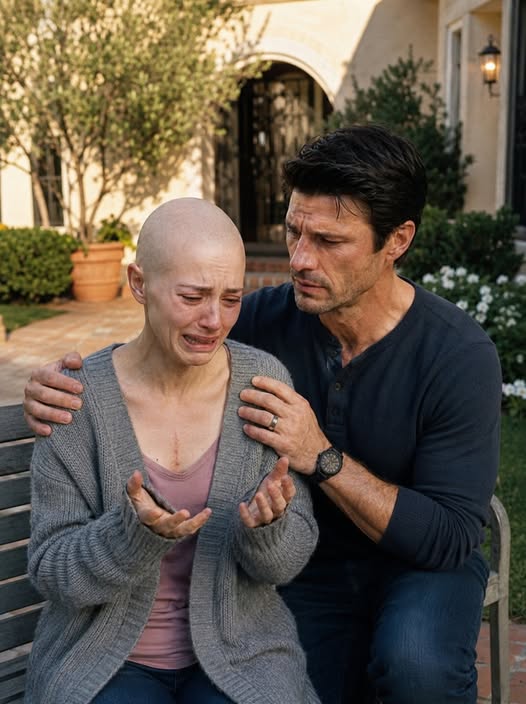
Her hair was already gone.
She no longer needed to hide that.
One afternoon, she woke and touched her bare head.
“I look terrible.”
“You look like my wife.”
She smiled faintly.
“That’s a terrible compliment.”
“It’s the only one I have.”
She laughed.
It was the first real laugh I’d heard from her in months.
The treatment continued.
There were good days.
There were bad days.
There were mornings when she could eat breakfast and afternoons when she couldn’t stand for more than a few minutes.
I learned which crackers she could tolerate.
Which tea she liked.
Which hospital entrance had the shortest walk.
I learned to sit quietly when she didn’t want to talk.
And slowly, the fear became something we could carry together.
Months later, my attorney called.
“The case is moving forward.”
I was standing in the kitchen making soup.
“What about my mother?”
“She has agreed to restitution.”
“And Paige?”
“She’s contesting part of it.”
I sighed.
“I expected that.”
There was a pause.
“There’s one more thing.”
“What?”
“The medical records.”
I stopped stirring.
“What about them?”
“Your mother did not just refuse to pay for treatment.”
“I know.”
“She contacted the clinic and told them you had instructed her to handle your wife’s medical affairs.”
I closed my eyes.
“She lied.”
“Yes.”
That lie had delayed Gwen’s care.
The consequences of that delay were now part of the legal case.
For the first time, I allowed myself to feel the anger I had been holding back.
Not the anger that wanted revenge.
The anger that wanted accountability.
I told my attorney to continue.
Then I went upstairs.
Gwen was sitting near the window.
She was wearing a soft gray sweater.
Her hair had begun growing back in small, uneven patches.
She looked at me.
“What’s wrong?”
I sat beside her.
“Nothing you need to carry.”
She studied my face.
“You always say that.”
“Because it’s true.”
She leaned her head against my shoulder.
Outside, the evening light fell across the yard.
The broken washbasin was still there.
I had thought about throwing it away.
I hadn’t.
A few days earlier, I had repaired it.
The old metal basin wasn’t worth anything.
But it had become the place where I first understood that something was terribly wrong.
Gwen looked through the window.
“Are you keeping that?”
“The basin?”
She nodded.
“Why?”
I smiled.
“Because I don’t want to forget.”
She was quiet for a moment.
Then she reached for my hand.
Neither of us said anything.
We didn’t need to.
The house was no longer filled with expensive furniture.
The jewelry was gone.
The truck was gone.
The stolen money was being accounted for.
The people who had treated my wife like an inconvenience could no longer control her life.
But none of that was the thing I cared about most.
I cared that Gwen was still here.
I cared that she no longer slept in a damp storage room.
I cared that when she was afraid, she no longer had to be afraid alone.
As the sun disappeared, she squeezed my hand.
I looked through the window at the old washbasin in the backyard.
For four years, I had believed the money I sent home was building a future.
I was wrong.
The future had never been in that house.
It was sitting beside me, holding my hand, quietly learning how to hope again.