Where My Son-In-Law Was Really Taking the Money Meant for My Granddaughter
PART 3 (FULL STORY)
The next morning, I parked my old pickup two blocks from Mark’s house and waited.
I had spent most of the night telling myself that Emma might have misunderstood something.
Children heard conversations without knowing the whole story.
Children saw one strange thing and built another story around it.
I repeated those thoughts until dawn.
None of them made the knot in my stomach disappear.
At 8:17, Mark came out of the house.
Emma was not with him.
He locked the front door, climbed into his black SUV, and drove away.
I waited thirty seconds before starting my truck.
I kept several cars between us whenever I could.
Mark headed toward the highway.
My hands tightened around the steering wheel when I saw the green sign for Highway 24.
That road already carried more memories than I wanted.
Seven years earlier, Laura had died there.
I still remembered the police officer standing on my porch, hat in his hands, explaining that the fire had destroyed so much of the vehicle that there could be no viewing.
I had never asked Mark many questions about the accident.
He had been grieving too.
Or so I had believed.
Mark eventually exited the highway and drove toward an industrial area on the edge of town.
He turned onto a narrow road lined with warehouses.
Then he pulled into the parking lot of a building with a faded sign that read: Riverside Family Services.
I parked across the street.
Mark got out carrying a brown envelope.
He looked around before entering.
I sat there for several minutes, wondering whether I had made a terrible mistake.
Then I saw him come back out.
The envelope was gone.
A woman in a gray cardigan followed him to the doorway.
They spoke briefly.
The woman touched Mark’s arm.
He nodded.
Then he returned to his SUV and drove away.
I stayed where I was.
Something about that exchange bothered me more than the money.
It looked familiar.
Not like a business transaction.
Like an arrangement between people who had been doing the same thing for a long time.
I drove home and searched the name of the organization.
Riverside Family Services was a small nonprofit that helped families dealing with housing problems, food insecurity, and emergency expenses.
I stared at the screen.
Then I noticed something on their website.
A photograph from a fundraising event showed the organization’s director standing beside several volunteers.
One of them was Mark.
The caption was dated six years earlier.
Six months after Eleanor died.
I leaned back in my chair.
Why had Mark never mentioned this?
I called the number listed on the website.
A receptionist answered.
I introduced myself and said I was trying to understand a donation made by a family member.
She asked for the name.
When I said Mark Stevens, there was a pause.
Not long.
Just long enough for me to notice.
“Mr. Stevens is one of our regular supporters,” she said.
“Supporter?”
“Yes.”
“How long has he been donating?”
Another pause.
“Several years.”
“Do you know how much?”
“I’m sorry, sir. We don’t discuss donor information.”
“I understand.”
I almost hung up.
Then I asked, “Does he ever donate in honor of someone?”
The receptionist hesitated.
“Yes.”
“Who?”
“I shouldn’t say.”
I thanked her and ended the call.
For the first time in seven years, I wondered whether my $40,000 checks had been going somewhere I had never bothered to look.
But I still needed proof.
That evening, I picked Emma up for our usual Saturday ice cream.
She climbed into the truck quietly.
I drove beneath the oak tree and parked.
Neither of us spoke until I handed her the strawberry swirl.
“Grandpa?”
“Yes?”
“Did you follow Dad?”
I looked at her.
She knew.
I nodded.
“I did.”
Her shoulders relaxed slightly.
“What did you see?”
“He went to Riverside Family Services.”
Emma looked down at her ice cream.
“I knew it.”
“You’ve been there?”
She nodded.
“Once.”
“When?”
“After Mom died.”
I felt my chest tighten.
“Why would your dad take you there?”
“He said he wanted me to see something.”
“What?”
She wiped melted ice cream from her thumb.
“He showed me a wall.”
“What was on it?”
“Pictures.”
“Pictures of who?”
“Kids.”
I waited.
“He said they needed help.”
I looked toward the branches above us.
“What did that have to do with the money I sent him?”
Emma’s eyes filled with tears.
“Dad said you wanted to help me.”
“And?”
“He told me the money was supposed to make sure I never had to worry.”
“That sounds right.”
She shook her head.
“He didn’t spend it on me.”
I felt anger rising, but I forced it back.
“What did he spend it on?”
“I don’t know everything.”
She looked toward the road.
“But every January, he would take an envelope to that building.”
“The same kind of envelope?”
“Yes.”
“And then?”
“He would come home and say everything was taken care of.”
I stared at her.
“Emma, did anyone ever tell you not to talk about this?”
She nodded.
“Dad.”
“What did he say?”
“He said adults would misunderstand.”
I closed my eyes for a moment.
That was when I understood what frightened me.
Emma wasn’t accusing her father because she hated him.
She was protecting him because she loved him.
And that meant whatever Mark was hiding had probably been weighing on her for a long time.
I drove her home before sunset.
Mark opened the door.
He smiled when he saw me.
“Good to see you, Daniel.”
I had known Mark for almost eight years.
I had attended his wedding to Laura.
I had watched him hold Emma after the funeral.
I had handed him check after check because I believed he was the only person standing between my granddaughter and a life without her parents.
Now I looked at his face and wondered how much of that history I had misunderstood.
“How’s work?” he asked.
“Fine.”
He nodded.
“Thanks again for helping with Emma.”
I looked at him.
“I’ll see you tomorrow.”
He smiled.
“Sure.”
I drove home.
I did not sleep.
At six the next morning, I returned to Riverside Family Services.
The same woman in the gray cardigan opened the door.
She recognized me.
“You’re Mr. Miller.”
“Yes.”
She looked uncomfortable.
“I called yesterday.”
“I remember.”
“I need to ask you something.”
She folded her hands.
“What about?”
“My son-in-law.”
Her expression changed.
“Mark Stevens.”
She said nothing.
I took a breath.
“For seven years, I’ve sent him forty thousand dollars every January.”
The woman looked at me for several seconds.
Then she said quietly, “I know.”
I felt the room tilt.
“You know?”
“He told us.”
“Why?”
She looked toward an office behind her.
“Because he wanted the donations to remain anonymous.”
“Donations?”
She nodded.
“He never wanted you to know.”
“Why?”
The woman hesitated.
Then she opened a drawer and removed a thin folder.
She placed it on the desk but kept her hand over it.
“I can’t give you confidential information about other families.”
“I don’t want information about other families.”
I pointed at the folder.
“I want to know what my money did.”
She slowly lifted her hand.
“The entire forty thousand was donated here every January.”
I stared at her.
“All of it?”
“Yes.”
“Every year?”
“Yes.”
“Why didn’t Mark tell me?”
She looked at me with an expression I couldn’t read.
“Because he promised your daughter.”
My breath caught.
“What did you just say?”
“Laura.”
I stood completely still.
“How do you know my daughter’s name?”
The woman opened the folder.
Inside was a letter.
The paper was old.
The handwriting was unmistakable.
I knew it before I saw the signature.
Laura.
My daughter’s handwriting.
My knees nearly gave out.
“Where did you get this?”
“Mark brought it to us six years ago.”
I picked up the letter.
The first line said:
Dad, if you’re reading this, something has happened to me.
I couldn’t breathe.
I read the next line.
I can’t know whether I’ll get to say goodbye, so I’m writing down what I need you to understand.
My hands began to shake.
Laura explained that before her death, she had learned about Riverside Family Services through Mark.
The organization helped children whose families had been destroyed by sudden loss.
She had volunteered there.
She had met families who reminded her of herself.
And she had made Mark promise that if anything happened to her, Emma would always have what she needed.
But Laura also knew that I would try to solve the problem with money.
She knew me.
She knew I had spent my entire life believing that if someone I loved was hurting, I could fix at least part of it by paying for something.
So she had asked Mark to make sure I didn’t turn Emma’s childhood into an accounting ledger.
The forty thousand dollars was never supposed to belong to Mark.
It was supposed to be donated in Laura’s name.
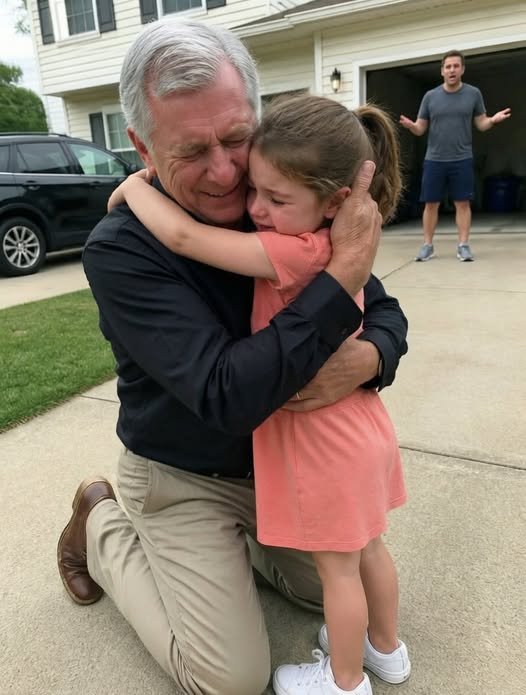
Every year.
Quietly.
For children who needed the same kind of help Emma had once needed.
I lowered the letter.
“Why did Mark let me believe he was keeping the money?”
The woman answered softly.
“Because you would have stopped sending it.”
I looked at her.
“And he knew your daughter wanted the program to continue.”
I sat down.
For seven years, I had thought I was paying a man to raise my granddaughter.
For seven years, I had resented the possibility that he might be wasting my daughter’s money.
And all that time, the money had been helping other children.
Children I had never met.
Children who had lost parents.
Children who were sitting in classrooms with empty chairs beside them.
Children who needed shoes, school supplies, counseling, food, or simply one adult who had decided their loss should not define the rest of their lives.
I looked again at Laura’s handwriting.
The last line was short.
Please don’t make Emma carry my death, Dad.
Let her grow up knowing that something good came from the worst thing that ever happened to us.
I covered my mouth.
The woman quietly stepped away and gave me a few minutes.
When I finally stood, I asked one more question.
“Does Emma know about this?”
“She knows some of it.”
“Why was she afraid to tell me?”
The woman smiled sadly.
“Because Mark told her that your generosity was meant to remain private.”
I left the building carrying a copy of Laura’s letter.
I drove straight to Mark’s house.
He opened the door.
One look at my face told him I knew.
He stepped outside and closed the door behind him.
“Dad—”
“Don’t call me that.”
He stopped.
I held up the letter.
His face changed.
For several seconds, neither of us spoke.
Then he lowered his head.
“I was going to tell you.”
“When?”
“I don’t know.”
“Seven years?”
He swallowed.
“I was scared.”
“Of me?”
“Of what you would do.”
I laughed once, but there was no humor in it.
“You were right.”
Mark looked at me.
“I would have stopped the money.”
“I know.”
“You should have told me.”
“I wanted to.”
“Then why didn’t you?”
His eyes became wet.
“Because Laura made me promise.”
I looked away.
He continued.
“She knew you would try to take care of Emma with money because that’s how you loved people.”
I said nothing.
“She told me you would need something to do with your grief.”
My jaw tightened.
“She was right about that too.”
Mark nodded.
“She wanted the money to go to Riverside.”
“And you took my checks.”
“I deposited them and donated the exact amount every January.”
“You could have shown me.”
“She made me promise not to.”
I looked at the house.
“Then why did Emma think you were stealing from her?”
Mark closed his eyes.
“Because she heard me arguing with the director once.”
“About what?”
“About keeping the donations anonymous.”
He rubbed his forehead.
“She thought I was hiding something bad.”
I looked toward the window.
Emma was standing behind the curtain.
She disappeared when she saw me looking.
Mark took a breath.
“I should have explained it to her.”
“Yes.”
“I was trying to protect Laura’s promise.”
“You were also protecting yourself from a difficult conversation.”
He nodded.
“Yes.”
That was the part I could not excuse.
Not the donations.
The silence.
Seven years of silence had allowed my granddaughter to believe her father was taking money meant for her.
Seven years had allowed me to believe the worst of a man who had been quietly keeping a promise to my daughter.
I was angry with him.
I was angry with myself.
Most of all, I was angry that Laura had known exactly how grief would make us behave and still hadn’t been able to stay.
I went inside.
Emma was sitting at the kitchen table.
She looked frightened.
I sat beside her.
“You were right to be worried,” I told her.
She stared at me.
“But you were wrong about one thing.”
“What?”
“Your dad wasn’t spending the money on himself.”
Her eyes widened.
“Then where did it go?”
I smiled through the ache in my throat.
“To kids who needed it.”
She looked at Mark.
He nodded.
Emma began to cry.
I pulled her into my arms.
“I was scared,” she whispered.
“I know.”
“I thought Dad was lying.”
“He was keeping a promise.”
“Is that why you were following him?”
“Yes.”
She wiped her eyes.
“Are you mad at him?”
I looked at Mark.
“Yes.”
He gave a small nod.
“I deserve some of it.”
Emma looked between us.
Then she asked the question that broke whatever remained of my anger.
“Does that mean you’ll stop helping those kids?”
I looked at her.
“No.”
She smiled through her tears.
“Good.”
The following January, I did something different.
I did not wire Mark $40,000.
I walked into Riverside Family Services myself.
Mark came with me.
So did Emma.
We stood in front of the wall of photographs.
There were dozens of children.
Some smiling.
Some serious.
Some holding school backpacks.
One little boy was sitting beneath an oak tree with a cup of ice cream in his hand.
I stared at that photograph for a long time.
Emma slipped her hand into mine.
“Grandpa?”
“Yeah?”
“Strawberry swirl later?”
I smiled.
“Definitely.”
I looked at Mark.
“Still forty thousand?”
He nodded.
“Every January?”
I shook my head.
“Not every January.”
He looked confused.
“Every year,” I said.
“Until we don’t have to.”
Mark smiled.
We never told the families where the money came from.
We never put Laura’s name on a giant plaque.
We simply kept the promise.
Years later, I still kept Laura’s letter in the top drawer of my desk at Miller’s Corner Market.
The paper had softened around the edges from being read too many times.
Whenever I felt the old grief return, I would take it out.
Not because I needed to remember how Laura died.
I remembered that without the letter.
I kept it because it reminded me how she had lived.
One Saturday afternoon, Emma came into the store carrying two strawberry ice creams.
She was older by then, tall enough to reach the top shelf without asking for help.
She placed one cup beside my register.
“Grandpa.”
“Yes?”
“You’re staring again.”
I looked at the photograph taped beside the register.
It was Laura.
She was laughing beneath the same oak tree where I had once taken Emma for ice cream.
I folded Laura’s letter and returned it to the drawer.
Then I picked up the ice cream.
“Come on,” I said.
“Where?”
“Under the oak tree.”
Emma smiled.
We locked the store and walked down the sidewalk together.
For the first time in years, I didn’t feel like I was walking away from the past.
I felt like I was carrying something forward.
And in my desk drawer, beside the old letter, the final January receipt waited quietly.
Forty thousand dollars.
Paid forward.