My Sister Seated Me in the Kitchen Before Her Lavish Wedding Collapsed
PART 3 (FULL STORY)
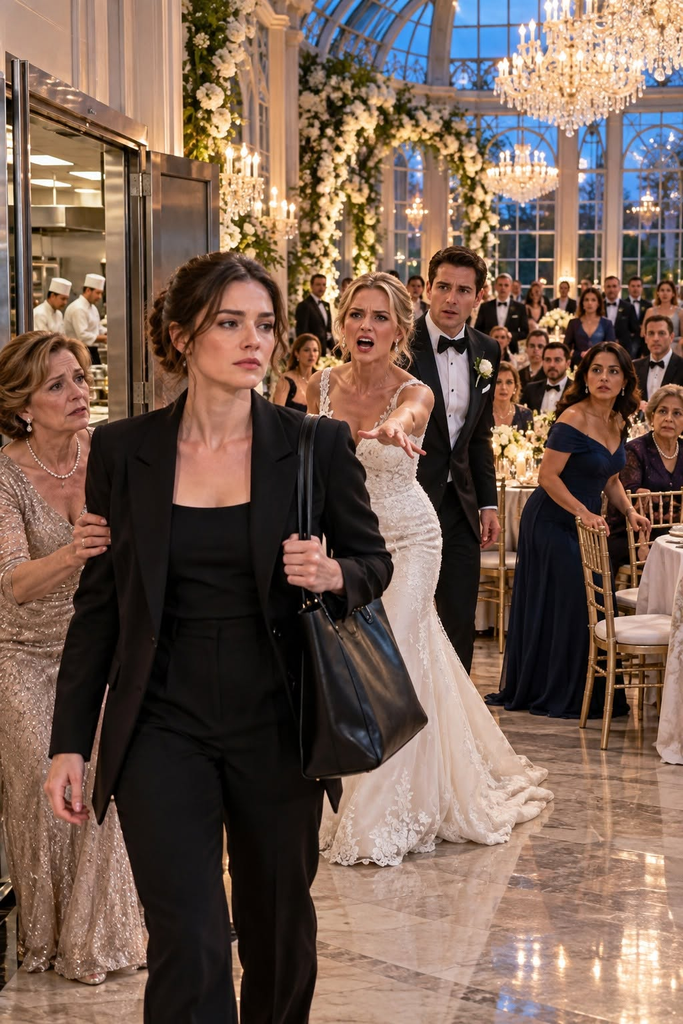
The glass pavilion fell into absolute stillness, broken only by the hum of the kitchen exhaust fans that had droned beside my banished chair all evening. The general manager of the Glasshouse Conservatory, Arthur Vance, stood in the center of the mosaic floor under the massive iron chandelier, holding the venue’s red billing binder against his chest. Behind him, two private security officers stood with their hands folded, their presence turning the glittering ballroom into an interrogation room.
“Mrs. Caldwell,” Arthur Vance said, addressing Lindsay with icy professional detachment, “when this reservation was executed six months ago, you provided the corporate tax identification number and credit authorization for Harbor House Family Center. You represented to our event staff that this gathering was an official donor cultivation gala and charity benefit for vulnerable families in the district, securing our municipal nonprofit discount of forty-five percent.”
A sharp, audible gasp tore through the Caldwell family’s table. Ethan’s mother, Eleanor, stared at Lindsay with mounting horror, her wine glass hovering motionless in her hand.
“Ten minutes ago,” Vance continued, looking around the room at the half-empty tables, “our accounting office received a formal stop-payment order and a legal affidavit of fraud from the foundation’s board of directors. The fifty-two thousand dollar balance currently due for venue hire, premium floral arrangements, and open-bar service has been rejected. Unless this invoice is settled with valid personal funds immediately, our staff will clear the tables and shut down all power to the pavilion.”
Lindsay’s painted face twisted into sheer hysteria. She gathered the heavy skirts of her lace gown and ran toward me in the wide corridor, her diamonds catching the dim lights of the courtyard. “Avery! Tell him it’s a mistake!” she begged, her voice cracking as tears cut tracks through her foundation. “You have executive authority on the corporate account! Just sign the authorization slip! You’ve always taken care of the family bills! You can sort out the paperwork with the board on Monday!”
My mother Diane rushed up behind her, grabbing both of my wrists with trembling, clammy hands. “Avery, please, listen to your sister,” Diane cried, her eyes darting toward the wealthy Caldwell relatives who were now gathering their coats. “The Caldwells are old money in this city. If this wedding ends in a police report, Ethan’s family will never let Lindsay into their circles! You have personal savings! Pay the venue, and we will pay you back every penny!”
I looked down at my mother’s hands, then at my sister, whose frantic gaze held no remorse—only the entitled desperation of someone who had never faced a consequence in her entire adult life.
“You won’t pay me back, Mom,” I said softly, my voice completely steady. “Just like you didn’t pay me back when I spent eighteen thousand dollars clearing Lindsay’s credit card judgments three years ago. Just like you didn’t pay me back when I covered your mortgage arrears while Lindsay was vacationing in Cabo.”
I reached into my leather tote and pulled out the crisp white folder containing the independent audit notice, turning it so that Lindsay could see the certified seal of the state accounting board on the cover page.
“Two weeks ago, our senior accountant noticed irregular invoices flowing through our outreach department,” I told her, loud enough for Mara Patel, Ethan, and Eleanor Caldwell to hear every word. “Lindsay was hired as a part-time outreach assistant two years ago because Mom pleaded with me to give her a steady income. Over the last eighteen months, thirty-four thousand dollars in Harbor House funds were diverted into private consulting accounts registered under Lindsay’s maiden name. She used charitable donations intended for homeless mothers to pay for her bridal shower, her designer shoes, and the deposit on this conservatory.”
A heavy silence descended upon the foyer. Ethan Caldwell stepped forward, his face dead white, looking at his bride as if seeing a complete stranger. “Lindsay…” Ethan whispered, his voice trembling with disbelief. “You told my parents you were paying for the reception out of your own inheritance.”
“Ethan, she’s lying!” Lindsay shrieked, turning on me with bared teeth. “She’s jealous because nobody ever married her! She’s trying to ruin my life because she wants to be the center of attention!”
“No one is lying, Lindsay,” Mara Patel said, stepping into the corridor. As board president and a seasoned forensic auditor, Mara carried an authority that silenced the room instantly. “Our board convened an emergency executive session at five o’clock this afternoon. We reviewed the ledger entries, the forged signature cards, and the IP addresses from which the venue authorizations were submitted. They all trace directly to your personal laptop. The board voted unanimously to terminate your employment and submit a formal referral to the county prosecutor’s financial crimes unit on Monday morning.”
Eleanor Caldwell didn’t wait to hear another syllable. She walked up to Ethan, took him firmly by the elbow, and turned him toward the exit. “We are leaving, Ethan,” Eleanor commanded in a voice of pure steel. “Take off your boutonnière. You are not spending another hour with a family of embezzlers.”
Ethan looked at Lindsay, who was weeping uncontrollably on the polished floor, then unpinned the white rose from his lapel and dropped it onto the carpet. Without a single word of defense, he followed his mother through the glass doors into the rainy evening, leaving his bride alone in the hallway.
Arthur Vance checked his watch, nodded to his security officers, and raised two fingers toward the sound booth. The classical music cut out instantly. Across the ballroom, the crystal chandeliers clicked off, plunging the lavish floral arrangements into darkness. The catering staff moved through the room with carts, clearing away untouched plates and champagne glasses, while the remaining guests hurried toward the valet stand in embarrassed silence.
Diane sank onto a velvet bench in the foyer, burying her face in her hands and sobbing about family disgrace. Lindsay knelt on the marble floor, her five-thousand-dollar gown bunched around her knees, surrounded by wilting orange blossoms and abandoned menus.
I looked at them both for a final moment. There was no hatred in my chest, no desire to gloat, and no lingering guilt. For nearly twenty years, I had carried the weight of their irresponsibility on my shoulders, believing that loyalty required self-destruction. Standing in the cool air of the courtyard, I felt only a profound, weightless relief.
“Avery?”
I turned toward the glass exit. Marisol Vega was standing under the covered portico with Robert Hayes, Mara Patel, and twelve other people who had walked out of the ballroom behind me. They were huddled in their coats, holding umbrellas against the light mist, their faces warm and expectant.
“We found an Italian place three blocks over that has a private room open,” Marisol said with a bright, wide smile. “They have garlic bread, good wine, and plenty of chairs that aren’t next to a kitchen door.”
Laughter rippled through the small group. For the first time all night, genuine warmth washed over me.
“Give me two minutes,” I smiled. “I’ll walk with you.”
We spent the next three hours crowded around long wooden tables, passing platters of pasta, sharing stories about Harbor House’s early days, and laughing until our sides ached. There were no fragile egos to appease, no social performances to maintain, and no demands for money. There were only people who understood that real family is defined by mutual honor, truth, and respect.
At midnight, after saying goodbye to everyone and watching the last of the families head home safely, I drove through the quiet streets of the city to the historic north district. I parked beneath the tall sycamore trees outside a charming brick townhouse with dark green shutters.
I pulled the solid brass key from my leather tote, inserted it into the lock, and pushed the heavy oak door open. Inside, the rooms were quiet, filled with the clean scent of fresh paint and polished hardwood. Through the front windows, the soft glow of the streetlamp illuminated the empty living room where my future would soon take root.
I laid the brass key on the wooden mantle, took off my blazer, and looked out over the quiet street. For thirty-eight years, I had lived inside other people’s expectations. Tonight, the door was locked behind me, and the life ahead was entirely my own.