My Husband Planned His Second Wedding Before I Was Gone, But My Father Knew His Secret
PART 3 (FULL STORY)
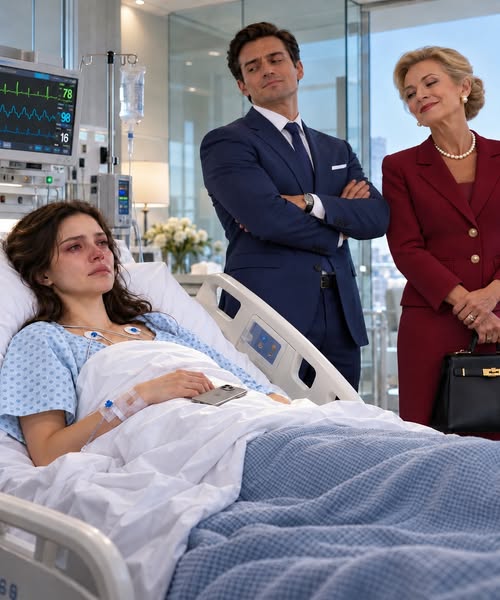
Daniel walked into my hospital room as if he owned the place. He carried a stack of papers in one hand and a silver pen in the other. Jennifer followed close behind, dressed in a cream-colored coat, her hair neatly arranged, her smile so practiced that I wondered how many times she had rehearsed it.
“Good morning,” Daniel said. His eyes flicked toward my father. “I didn’t know we were having visitors.”
“I’m her father,” Dad replied.
Daniel stopped for half a second.
I watched the recognition fail to arrive. Of course it did. As far as he knew, my father had been dead for years. He had never met him, never attended a funeral, never asked for a photograph beyond the few old pictures I kept in a drawer.
“Her father?” Daniel repeated. “I thought he—”
“You thought wrong,” Dad said.
Jennifer’s smile disappeared, but Daniel recovered quickly. He set the papers on my bedside table and gave me the expression he usually reserved for difficult clients.
“We can deal with family introductions later. These are the documents we discussed. You just need to sign them, and we can all stop worrying about the house.”
I looked at the top page.
The heading read PROPERTY TRANSFER AND IRREVOCABLE ASSIGNMENT.
Below it, in smaller print, were clauses granting Margaret control over the property and authorizing Daniel to act on my behalf. Another section gave him permission to transfer certain assets connected to the house.
It was much more than a simple transfer.
“You brought this the morning after a doctor told me I might die?” I asked.
Daniel shifted his weight. “I’m trying to make things easier for everyone.”
“Everyone except me.”
“Don’t start this again.” He slid the pen toward my hand. “You said you wanted things handled properly.”
“I said nothing of the sort.”
Margaret wasn’t there, but I could almost hear her reminding him that a sick woman was easier to pressure when she was alone. The trouble was that Daniel had mistaken my silence for weakness for so long that he couldn’t recognize the difference between a quiet woman and a woman who had finally made a decision.
My father reached for the papers.
Daniel pulled them back. “These are private.”
“So is her property,” Dad replied. “Yet you seem eager to take control of it.”
Jennifer glanced at the door. “Daniel, perhaps we should come back later.”
He ignored her. “This is between my wife and me.”
“Then you shouldn’t need a witness to pressure her into signing,” Dad said.
Daniel’s face tightened. “Who exactly are you?”
Dad didn’t answer. He opened his leather folder and placed a single business card on the table.
Daniel glanced at it.
Then he picked it up.
I saw the moment the name registered.
His fingers tightened around the card, and the confidence drained from his face so quickly that Jennifer noticed before he could hide it.
“No,” he said quietly.
Dad sat back in his chair. “Yes.”
For the first time since I had married Daniel, my husband looked at someone without knowing how to control the conversation.
My father was alive, and he was not the helpless, retired man Daniel had imagined. He had spent decades building a network of companies, investments, and partnerships that extended far beyond the small world Daniel thought he understood. Some of those investments were private. Others operated through holding companies and trusts. Dad had never needed his name on every door to know who held the keys.
Daniel had built his own company with ambition, charm, and a talent for persuading people to trust him. But several years earlier, when his business had been close to collapse, an investment had arrived at exactly the right moment. He had credited his recovery to a group of private investors. He had never asked who stood behind the final approval.
My father had.
Dad had agreed to help because I had asked him not to let my marriage become a business arrangement. He had invested through a separate entity, with clear contracts and protections. He had also insisted that Daniel’s company remain responsible for its debts and obligations. My father had offered an opportunity, not a blank check.
Daniel had accepted the money without ever discovering that the person he considered insignificant was connected to the family that had kept his company alive.
“Why are you here?” Daniel demanded.
“Because my daughter called me.”
“She told me you were dead.”
“She told you what she believed you needed to know at the time,” Dad replied. “You never asked her enough about her life to find out anything else.”
Daniel turned toward me. “You lied to me?”
I almost laughed at the question. He had arrived with a property transfer prepared before my death, accompanied by the woman he intended to marry, and he was offended that I had kept one part of my life private.
“You told me you loved me,” I said. “Was that true?”
He looked away.
That was an answer, even if it wasn’t the one he wanted to give.
My father opened the folder again and removed a copy of the proposed transfer. “Before you ask her to sign anything else, you should read the documents you brought.”
Daniel stiffened. “My lawyer prepared those.”
“Then your lawyer should be interested in what they contain.”
Dad pointed to the authorization clause. It allowed Daniel to manage certain assets and sign related documents if I became incapacitated. The language was broad enough to give him substantial control, and the accompanying transfer would place the house under Margaret’s authority.
The property had belonged to my mother. She had left it to me without conditions, and I had maintained it with my own money. Daniel had never paid the mortgage because there was no mortgage to pay. He had never paid the property taxes or the repair bills unless I specifically asked him to contribute to something he wanted changed.
He had enjoyed living there, but he had never owned it.
“You told me this was a temporary arrangement,” I said.
“It is,” Daniel answered quickly. “We just need to protect the family.”
“What family?”
He stared at me.
I continued before he could reply. “You told your mother she would get my house. You told Jennifer you would marry her after I died. Now you want me to sign documents that let you control my property before I’m even gone. Which part of that is supposed to protect me?”
Jennifer’s eyes moved toward the papers. She looked less certain now.
“Daniel said you wanted everything settled,” she murmured.
“Did he tell you I was dying before he told you he planned to marry you?”
She said nothing.
That silence hurt in a different way. I had suspected their affair for months, but hearing the truth confirmed by the woman herself would have made it real. Instead, I watched her struggle to decide whether the man beside her was still worth the future he had promised.
Daniel snatched the documents from the table.
“This is ridiculous. She’s sick, she’s emotional, and you’re taking advantage of her.”
Dad remained seated. “I’m not asking her to sign anything. You are.”
“I am her husband.”
“That gives you no right to take her property.”
Daniel turned toward the door, then stopped. “You have no idea what you’re interfering with.”
“I know more than you think.”
Dad took another document from the folder. It was a summary of the investment agreements supporting Daniel’s company. The details were straightforward: the investment had conditions, the company had reporting obligations, and certain material misrepresentations could trigger a formal review under the agreements.
Dad did not threaten to destroy Daniel’s business. He didn’t need to. The contracts already defined what would happen if Daniel had violated them.
“What is that?” Daniel asked.
“An agreement you signed when you accepted investment in your company.”
Daniel scanned the first page. “This has nothing to do with my marriage.”
“Perhaps not,” Dad said. “But your business affairs may become relevant if you’ve used company resources to conceal personal transactions or misrepresented the company’s finances.”
Daniel’s eyes narrowed. “You can’t prove anything.”
“I haven’t accused you of anything yet.”
I watched Daniel read the document a second time. His confidence returned in pieces, but the panic beneath it remained visible.
Dad closed the folder. “You should leave now. My daughter needs rest.”
Daniel pointed at me. “You can’t do this to me.”
I looked at the pen on my bedside table.
“You came here to make me sign away my home,” I said. “I’m simply refusing.”
He gathered the papers with stiff, angry movements. Jennifer hesitated before following him.
At the door, she turned back toward me. For a moment, I thought she might apologize.
Instead, she asked, “Did you know about the investment?”
“Yes,” I answered. “I knew my father had helped Daniel’s company. I didn’t know Daniel was planning to use my death to take my home.”
She lowered her eyes and left.
When the door closed, I finally allowed myself to breathe. My father put the documents away and moved his chair closer to the bed.
“Are you ready to tell me what happened?” he asked.
I told him everything.
I explained how Daniel had grown distant over the past year, how his late meetings had become overnight absences, and how Margaret had started making comments about the house. I told him about the messages I had seen on Daniel’s phone and the excuses he offered whenever I asked where he had been.
Then I told him about the diagnosis.
Dr. Harris had explained that my heart condition was severe and unpredictable. The medication was no longer controlling it adequately, and the next few days could be dangerous. He had not promised that I would die in exactly three days. He had warned that a catastrophic event could happen at any moment.
Daniel and Margaret had turned that uncertainty into a deadline.
Dad listened without interrupting. When I finished, he looked down at his hands.
“I should have checked on you more often.”
“You respected my wish to live my own life.”
“That doesn’t mean I should have mistaken silence for happiness.”
I reached for his hand. “I didn’t want you to worry.”
“And now?”
“Now I want the truth.”
Dad nodded. “Then we’ll get it carefully. No threats, no reckless decisions, and no signing anything under pressure.”
He called a lawyer he trusted, explained the situation, and arranged for the documents to be reviewed. He also asked for an independent medical consultation. He made it clear that my health came first and that no business dispute was worth putting me through unnecessary stress.
For the first time since hearing Dr. Harris’s prognosis, I felt as though someone was treating me as a living person rather than an inheritance waiting to be claimed.
By midday, the lawyer had confirmed that I should not sign the proposed transfer. Several clauses went far beyond the explanation Daniel had given me, and the arrangement could have handed control of my property to people I had never intended to benefit.
The lawyer also explained that the documents had no power simply because Daniel wanted them signed. My home remained mine, and any legitimate transfer would require the appropriate legal steps.
We arranged to preserve copies of every message and document Daniel had sent. I wrote down the dates of his most suspicious conversations while the details were fresh in my mind. Dad asked me not to access his private accounts or do anything that could compromise the evidence.
“We don’t need to guess,” he said. “We need to know.”
That afternoon, Margaret called.
I answered on speakerphone with Dad sitting beside me.
“Have you signed the papers?” she demanded.
“No.”
Her voice sharpened. “Daniel told me you were being difficult.”
“Daniel told you he would give you my house.”
There was a brief silence.
“Don’t be childish,” she said. “You’re not going to need it much longer.”
I looked at my father. He did not move, but I could see his jaw tighten.
“You should be careful about what you say to someone who is still alive,” I replied.
Margaret laughed bitterly. “You think your father can save you? A little money and a few connections won’t change your situation.”
“No,” I said. “But they might help me understand yours.”
I ended the call before she could answer.
Dad didn’t congratulate me or tell me I had won. He simply asked whether I wanted some water, then helped me adjust the pillow behind my back.
That small gesture meant more than any speech could have.
The next morning, my condition worsened. My heart rhythm became unstable, and the nurses moved quickly to monitor me. Dr. Harris returned with another specialist to discuss the options available to me. The outlook remained serious, but the team believed there were further interventions worth considering.
The three-day warning had never been a guarantee of death. It had been an urgent warning about how little margin for error remained.
I agreed to the additional treatment.
My father stayed through the consultations, but I asked him to leave the room when the doctors needed to speak with me privately. I wanted to make my own decisions, even if the choices were frightening.
For the first time in years, I wasn’t making them around Daniel’s moods or Margaret’s expectations.
Later that day, our lawyer called with an update.
Daniel had contacted the investment firm connected to his company and demanded an explanation for the documents Dad had shown him. He had apparently assumed that the old agreements were meaningless or that no one would enforce them.
The firm had confirmed that the contracts remained in effect. It had also requested a review of certain transactions after receiving information that required clarification.
Dad was careful not to claim that Daniel had committed fraud. The review was still ongoing, and suspicion was not proof. But the company would have to provide records, answer questions, and explain any discrepancies found.
Daniel called me less than an hour later.
“What did you tell your father?” he demanded.
“The truth.”
“You’re putting my entire business at risk.”
“I didn’t sign the documents you brought to my hospital room. If your business has a problem, you should speak to your lawyers.”
“You know what those investors will do if they think I’ve mismanaged anything.”
“Then show them the records and explain what happened.”
He fell silent for a moment.
Then his voice softened, as though he had remembered an old technique that used to work on me.
“Listen, sweetheart. We’re both under pressure. I know I said some things I shouldn’t have said. Your mother-in-law—my mother—was upset, and Jennifer misunderstood the situation.”
I closed my eyes.
“Did Jennifer misunderstand when you said you would marry her after I died?”
He said nothing.
“Did your mother misunderstand when you promised her my house?”
“It’s not that simple.”
“It was simple enough when you thought I couldn’t do anything about it.”
“Please,” he said. “Let’s talk when you’re feeling better.”
I ended the call.
For years, I had accepted his apologies because I wanted to believe that the good parts of our marriage were real. I had explained away his absences and excused the little cruelties that accumulated over time. I had treated each betrayal as a problem we could solve if I were patient enough.
But there was no misunderstanding to solve now.
Daniel had seen my illness as an opportunity. He had calculated what he wanted, decided who should receive it, and arrived at my bedside with a pen.
I could forgive myself for not seeing the truth sooner.
I did not have to forgive him for acting on it.
That evening, Jennifer sent me a message.
I read it twice before replying.
She said Daniel had told her our marriage was effectively over and that I had agreed to let him arrange the property transfer. She claimed she had believed him. She also admitted that she had known about our marriage, the house, and my condition before she came to the hospital.
She had chosen to believe the version of events that made her future comfortable.
I wrote back only one sentence.
“You knew I was alive, and you knew he was still my husband.”
I didn’t ask her to apologize. I didn’t ask whether she loved him. Her answers would not change what had happened.
I saved the message and put my phone away.
The next two days were filled with tests, consultations, and difficult decisions. My condition remained unstable, but the treatment began to help. The doctors were cautious, and no one promised a quick recovery. Still, I was no longer being told that there was nothing left to try.
Dad visited every day. Sometimes we talked about the legal review, but more often we discussed ordinary things: the old garden behind my mother’s house, the chipped blue cup she always used for tea, and the small tree she had planted near the kitchen window.
I had spent so much time worrying about losing my life that I had forgotten how much of it was still mine.
On the fourth morning, Dr. Harris came to see me with an update. My heart was responding better than expected to the treatment, although I would need continued monitoring and a careful recovery plan.
“You’re not out of danger yet,” he said. “But we’re no longer treating the next few days as though they are necessarily the end.”
I thanked him, and after he left, I cried.
Not because I had defeated Daniel. Not because I imagined a perfect future waiting for me. I cried because I had been given a little more time, and for the first time in months, that time belonged to me.
The legal review continued over the following weeks. Daniel’s company had to produce records and explain several transactions. The process did not lead to an instant collapse, and Dad never claimed it would. Some questions were resolved through ordinary accounting explanations; others required further review by the company’s advisers.
What mattered to me was that Daniel could no longer use his position or his confidence to make me surrender my rights. The proposed property transfer was withdrawn, and I instructed my lawyer to make it clear that no one had permission to act on my behalf without my informed consent.
I also began the process of ending the marriage.
Daniel resisted at first. He sent long messages about our history, our vows, and the life we had planned. He reminded me of the trips we had taken and the evenings when he had cooked for me. Some of those memories were genuinely good. I did not need to pretend otherwise to recognize what he had become.
When he asked to see me, I agreed to one meeting in the presence of my lawyer.
He arrived looking tired. His expensive watch was still on his wrist, but he kept turning it as though the movement might help him find the right words.
“I never wanted things to happen this way,” he said.
“You wanted the house.”
“I was worried about the future.”
“You planned my replacement before you knew whether I would survive.”
He looked down.
“I made mistakes.”
“You made decisions.”
He flinched at that, perhaps because the distinction left him with less room to hide.
He said he had been under pressure from Margaret. He said Jennifer had encouraged him to think about starting over. He said he had become frightened of the financial uncertainty surrounding my illness.
Some of that might have been true. None of it changed the fact that he had chosen to act as though my death were a convenient solution to his problems.
“I did love you,” he said finally.
I studied his face. Once, those words would have been enough to make me search for a way to save us.
“Maybe you did,” I replied. “But when I needed you to treat me like a person, you treated me like an obstacle.”
He began to cry, quietly and without looking at me.
I didn’t comfort him.
That wasn’t cruelty. It was the first honest boundary I had set in our marriage.
The divorce process took time, as these things do. There were documents to review, financial matters to settle, and decisions that could not be made simply because I was angry. I followed my lawyer’s advice and kept the house separate from the dispute. Margaret received no ownership interest, and Daniel had no authority to transfer it.
Jennifer eventually left his company. I heard through the lawyer that their relationship had become strained once the future Daniel had promised was no longer guaranteed. I didn’t investigate their private lives, and I didn’t need to know whether they stayed together. Whatever happened between them belonged to them.
My father never used his financial position to punish Daniel beyond the terms of the agreements he had signed. He insisted that business decisions remain grounded in the contracts and the evidence. That restraint mattered to me. I had not called him because I wanted someone to ruin my husband’s life. I had called because I needed help protecting my own.
Months later, I returned to my mother’s house for the first time since leaving for the hospital.
The rooms smelled faintly of cedar and the lemon polish I had used on the furniture before my illness. A thin layer of dust had gathered on the windowsills. In the kitchen, the blue cup still sat in the cabinet where I had left it.
I took it down and ran my thumb along the small chip near its handle.
My mother had never owned an expensive home, and she had never treated the house as a measure of anyone’s worth. She had kept it because it was a place where people could come in from the rain, sit at the table, and speak honestly without having to earn the right to be heard.
For a while, I had allowed Daniel and Margaret to make me feel that keeping it was selfish. I had let them turn an inheritance into an obligation, as though the house were waiting for a more deserving owner.
Standing in the quiet kitchen, I understood that I did not have to justify keeping what my mother had left me.
I could repair the roof, repaint the bedrooms, or sell the place someday if I chose. But that choice would be mine.
My recovery was not immediate. I had follow-up appointments, medication adjustments, and days when even walking across the room left me exhausted. Some mornings I woke with the fear that the doctors had missed something, and other nights I wondered how close I had come to losing the chance to make any decisions at all.
Dad never told me to be strong. He brought groceries, checked that I had made it to my appointments, and listened when I needed to talk about the marriage without turning every conversation into a lesson.
Slowly, the house began to feel like home again.
I put fresh flowers on the kitchen table. I opened the windows on cool mornings and let the air move through the rooms. I planted new herbs beside the back steps, replacing the pots that had dried out while I was in the hospital.
One afternoon, I found the old envelope in which my mother had kept the receipt for the blue cup. The paper was yellowed, and the ink had nearly faded. I laughed when I saw how little it had cost.
I placed the receipt back in the drawer, not because it was valuable, but because it reminded me that a life was made of small things that could not be measured on a balance sheet.
Daniel had once told me that love didn’t pay mortgages.
He had been right about one thing: love alone could not pay every bill, cure every illness, or guarantee a safe future. But that was never what I had asked love to do.
I had asked him to stay beside me when I was frightened. To tell the truth when it would have been easier to lie. To see a wife in the hospital bed instead of a house he could inherit.
He had failed those tests long before the doctor gave me three days.
I never learned whether he eventually understood the difference.
I no longer needed him to.
On a quiet morning near the end of summer, I stood at the kitchen window with the blue cup warming my hands. Sunlight fell across the table, touching the place where my mother’s flowers used to stand. Outside, the small tree she had planted stirred in the breeze.
My phone rang.
It was Dad, calling to ask whether I wanted him to bring lunch.
I looked at the garden, at the open back door, and at the sunlight stretching across the floor.
“Yes,” I told him. “Come over.”
After we hung up, I filled the blue cup with tea and carried it outside. I sat beneath the tree, listened to the leaves moving above me, and let the morning unfold without rushing toward the next thing.
For the first time in a long while, I wasn’t counting how many days I had left.
I was deciding what to do with the one I had.