A Simple Note Under A Hotel Door Saved A Broken Man’s Life
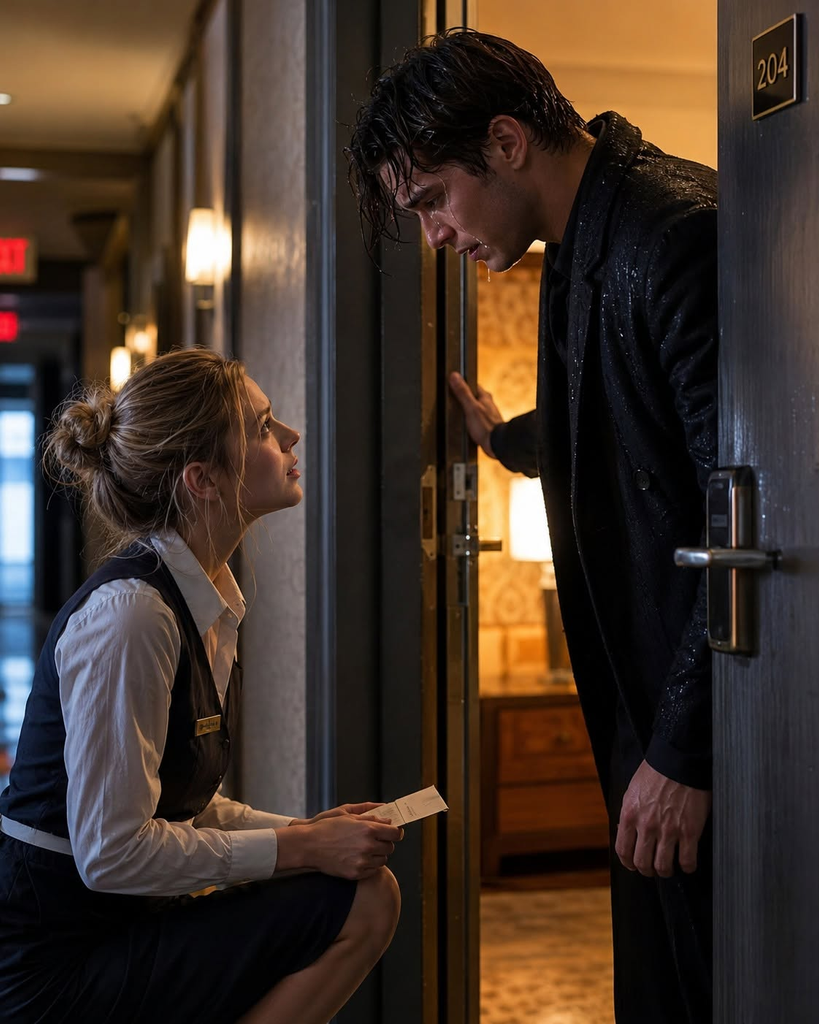
PART 3 (FULL STORY)
The shrill alarm from Graham Weston’s phone cut through the quiet lobby like a siren. On the illuminated screen, red emergency telemetry flashed from the Saint Jude Children’s Specialty Pavilion, thirty miles down the valley.
The torrential downpour had triggered a catastrophic mudslide along the hillside foundation, threatening the pediatric intensive care wing where twenty-four critically ill children were receiving oxygen therapy. The onsite engineers were in a panic, unable to access the proprietary hydraulic stabilization sequence that only Graham had designed.
For three seconds, Graham stood motionless in the kitchen doorway. Then, something profound shifted in his eyes. The suffocating fog of despair that had consumed him for twelve months dissolved, replaced by the fierce, unyielding focus of a man who suddenly remembered who he was.
“Put the site supervisor on speaker,” Graham commanded, his voice deep, steady, and clear. “Tell him to isolate the eastern retaining wall, shut off the municipal gas mains, and stage the secondary hydraulic pumps in the sub-basement. I’m thirty minutes away.”
We sprinted out into the gray light of dawn. The hotel parking lot was half-submerged in muddy runoff, and Graham’s low-slung luxury sedan was stalled against the curb. Without hesitating, I unlocked my battered all-wheel-drive Subaru. “Get in. I know the back mountain roads.”
We tore through the flooded valley roads as the storm began its slow retreat. Mud and water sprayed against the windshield while Graham worked frantically on his tablet, coordinating with emergency dispatchers, city structural teams, and hospital administrators.
When we arrived at the hospital grounds, the scene was chaotic. Fire engines, search-and-rescue squads, and ambulances lined the perimeter with flashing lights. The lower foundation of the new pavilion had shifted four inches, and water was pouring into the mechanical basement.
Graham jumped from the car before it had even fully stopped. He pulled on a borrowed yellow hardhat and heavy rubber boots, wading straight into the knee-deep floodwaters toward the compromised utility vault.
I watched from the safety line as Graham disappeared beneath the concrete foundation with two municipal engineers. For twenty agonizing minutes, the only sound was the roar of emergency diesel generators and the shouts of rescue workers.
Then, with a deep mechanical groan that vibrated through the earth, the building’s primary structural shoring locked into place. The automated floodgates engaged, sealing the lower level and diverting the rushing mud into the river basin.
The foundation held.
A cheer erupted from the assembled fire crews as Graham emerged from the basement access hatch, drenched in muddy water and grease, but standing completely upright.
Upstairs on the second-floor terrace, nurses were moving small cribs and incubators back to the dry recovery suites. A young mother stood near the glass railing holding her three-year-old boy wrapped in a warm fleece blanket, waving down with tearful gratitude at the rescue workers below.
Graham stood beside the ambulance bay, looking up at that mother and child. Tears tracked through the grime on his cheeks, but they were no longer the tears of a man wishing to disappear. They were the tears of a father who had finally realized that honoring his family’s memory didn’t mean joining them in the dark—it meant carrying their light forward to protect others.
He walked over to where I stood beside my car, pulling the damp, folded scrap of paper from his pocket. The ink was slightly blurred from the rain, but the words remained clear: “Stay until sunrise; the storm always ends.”
“You gave me back my life tonight,” Graham whispered, his voice trembling with quiet emotion. “If you hadn’t slipped this note under my door, I wouldn’t have been here to save those children.”
“You saved them, Graham,” I replied softly. “I just reminded you to wait for the morning.”
Over the next eighteen months, our lives rebuilt themselves into something purposeful, beautiful, and lasting. Graham returned to full leadership of his architectural firm, transforming his multi-million-dollar fortune into a global philanthropic foundation dedicated to building resilient pediatric hospitals and emergency family shelters across the country.
He purchased the aging roadside hotel where we had met, completely renovating the historic property into the Clara & Sarah Hope Center—a fully staffed crisis sanctuary and temporary housing facility for families navigating medical emergencies and grief.
Graham asked me to serve as the foundation’s Executive Director, trusting my empathy and grounded perspective to guide their community outreach programs. Together, we built an organization that ensured no struggling soul in our valley would ever feel entirely forgotten.
One bright spring morning, exactly two years after that stormy night, the warm sun illuminated the courtyard garden of the newly opened Clara Pavilion. The air smelled of blooming lilac bushes, damp pine, and freshly brewed coffee.
Across the sunlit lawn, dozens of healthy, laughing children were playing on the wooden playground, their joyful voices echoing through the valley.
Graham sat beside me on a stone bench beneath a flowering dogwood tree, holding a warm mug of tea. Mounted on the brick garden wall behind us, encased within a small bronze-and-glass shadowbox, was that original, weathered hotel notepad sheet.
Graham looked out over the thriving garden, then turned to me with a warm, genuine smile.
Two years earlier, two strangers had crossed paths in a dark and lonely lobby, surrounded by the howling wind of a storm that felt endless. But sitting in the golden morning sunlight, listening to the laughter of children who had a future because of one night of courage, we knew the enduring truth: even in the deepest darkness, a single word of kindness can become the bridge that leads a broken heart home.